Bringing home a new reptile is exciting, but many owners become worried when their pet seems shy, inactive, or refuses food during the first few days. This reaction is completely normal. Understanding reptile acclimation can help you avoid unnecessary stress and give your new companion the best possible start.
Every reptile experiences an adjustment period when moving to a new environment. New sights, smells, sounds, and enclosure conditions can feel overwhelming. Knowing what to expect during this transition can help you provide proper care and recognize the difference between normal behavior and potential problems.
Understanding the Reptile Acclimation Process
Why Reptiles Need Time to Adjust
Unlike dogs or cats, reptiles rely heavily on environmental stability. A sudden move can temporarily disrupt their normal behaviors.
Factors that influence adjustment include:
- Species type
- Age of the reptile
- Previous care conditions
- Transportation stress
- Enclosure setup quality
- Handling frequency
Most reptiles prefer consistency, and even positive changes can cause temporary stress.
Common Signs of Reptile Stress After Relocation
During the acclimation period, you may notice:
- Hiding more than usual
- Reduced appetite
- Less activity
- Defensive behavior
- Temporary color changes in some species
- Increased sleeping or resting
These signs are usually normal if they improve over time.
How Long Does It Take a New Reptile to Adjust?
Typical Reptile Acclimation Timeline
The adjustment period varies by species and individual temperament.
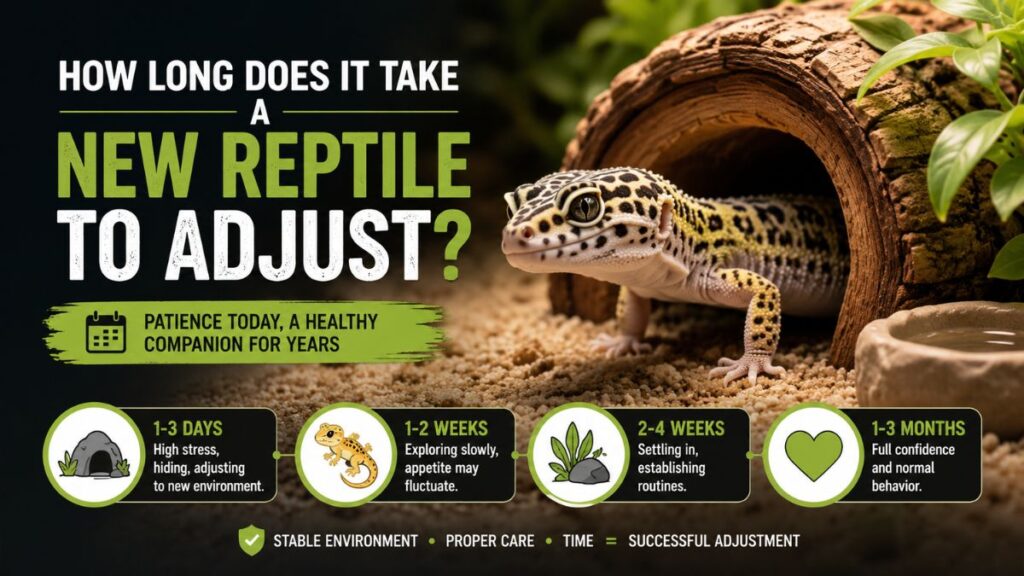
General timeline:
- First 24–72 hours: High stress and hiding behavior
- First 1–2 weeks: Exploration begins, appetite may fluctuate
- 2–4 weeks: Most reptiles settle into routines
- 1–3 months: Full confidence and normal behavior often develop
For many species, the answer to “how long does it take a new reptile to adjust” is around two to four weeks. However, shy reptiles may require longer.
Species-Specific Adjustment Periods
Different reptiles adapt at different speeds.
Leopard Geckos
Leopard geckos often settle within 1–2 weeks but may refuse food initially.
Bearded Dragons
Bearded dragons are generally confident and may adjust within several days to two weeks.
Ball Pythons
Ball pythons commonly require several weeks before displaying consistent feeding and activity patterns.
Crested Geckos
These nocturnal reptiles may take 2–4 weeks before becoming fully comfortable.
Creating the Ideal Environment for Faster Adjustment
Set Up the Enclosure Before Arrival
One of the most effective ways to reduce stress is preparing the habitat in advance.
Make sure the enclosure includes:
- Proper heating
- Correct humidity levels
- Suitable lighting
- Secure hiding spots
- Fresh water
- Appropriate substrate
A stable environment supports a smoother new reptile adjustment period.
Avoid Frequent Changes
Many owners unintentionally increase stress by constantly modifying the enclosure.
Avoid:
- Rearranging decorations
- Changing substrates frequently
- Moving the enclosure repeatedly
- Introducing tank mates
Consistency helps reptiles feel secure.
Handling a New Reptile During Acclimation
Give Your Pet Space Initially
A common mistake is excessive handling during the first few days.
For the best results:
- Avoid handling for at least 5–7 days
- Allow natural exploration
- Observe from a distance
- Let feeding routines establish first
This approach significantly reduces relocation stress.
Build Trust Gradually
Once your reptile begins eating consistently and behaving normally, you can start short handling sessions.
Keep sessions:
- Calm
- Gentle
- Predictable
- Brief at first
Trust develops over time rather than overnight.
When Should You Be Concerned?
Normal vs. Abnormal Adjustment Behaviors
Some behaviors are expected, but others may require attention.
Contact an experienced reptile veterinarian if you notice:
- Significant weight loss
- Severe lethargy
- Persistent breathing problems
- Refusal to eat for an extended period beyond species norms
- Visible injuries or illness symptoms
Knowing the difference between normal acclimation and health concerns is essential for successful reptile ownership.
Track Progress Effectively
Monitoring behavior helps you recognize improvement.
Consider tracking:
- Feeding activity
- Shedding cycles
- Weight
- Movement patterns
- Basking behavior
For a more accurate estimate of your pet’s adjustment period, use the Reptile Acclimation Timeline Calculator: https://reptilecalc.com/tool/reptile-acclimation-timeline-calculator/
FAQs:
1. Can a new reptile stop eating after coming home?
Yes. Many reptiles temporarily lose their appetite due to stress. Most resume normal feeding once they feel secure.
2. How long should I wait before handling a new reptile?
Generally, wait at least 5–7 days and ensure the reptile is eating consistently before beginning regular handling.
3. What is the biggest factor affecting reptile acclimation?
Environmental stability is often the most important factor. Proper temperature, humidity, and hiding spaces greatly influence adjustment speed.
Conclusion:
Patience is the key to successful reptile acclimation. While most reptiles begin settling within a few weeks, every animal adjusts at its own pace. By providing a stable habitat, minimizing handling, and carefully monitoring behavior, you can help your new reptile feel safe and comfortable in its new home.