Few things are more exciting than bringing home a ball python. These calm, fascinating snakes quickly become beloved pets, but one question confuses many owners: How often should a ball python eat? Getting the ball python feeding schedule right is one of the most important parts of keeping your snake healthy, active, and stress-free.
Feed too often, and your ball python may become overweight. Feed too little, and it may struggle to maintain proper growth and body condition. The good news is that once you understand your snake’s age, size, and life stage, creating the perfect feeding routine becomes much easier.
In this guide, you’ll learn exactly how often to feed a ball python, what factors affect feeding frequency, and how to avoid common feeding mistakes.
Understanding Ball Python Feeding Needs
Why Feeding Frequency Matters
Ball pythons have slower metabolisms than many other pets. Unlike dogs or cats, they do not need daily meals.
A proper feeding schedule helps:
- Maintain healthy growth
- Prevent obesity
- Support proper shedding
- Reduce feeding stress
- Improve overall health
The ideal feeding routine depends primarily on the snake’s age and weight.
Factors That Affect Feeding Schedule
Several factors influence feeding frequency:
- Age
- Weight
- Activity level
- Seasonal behavior
- Breeding condition
- Overall health
Because every snake is unique, feeding schedules should serve as guidelines rather than strict rules.
Ball Python Feeding Schedule by Age
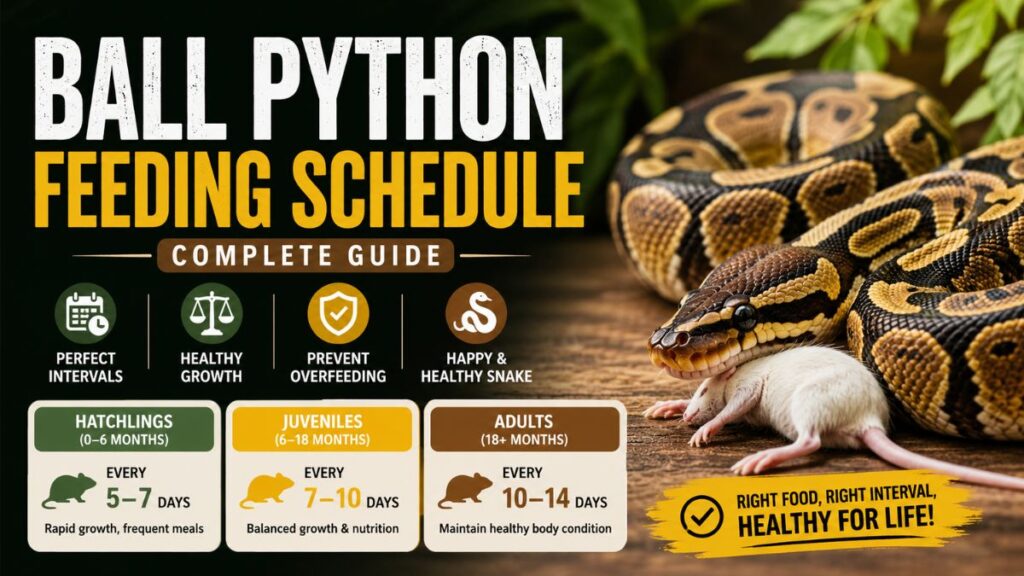
Hatchlings (0–6 Months)
Young ball pythons grow rapidly and require more frequent meals.
Recommended schedule:
- Feed every 5–7 days
- Offer appropriately sized prey
- Monitor growth regularly
Hatchlings need consistent nutrition to support healthy development.
Juveniles (6–18 Months)
As growth begins to slow, feeding intervals can increase slightly.
Recommended schedule:
- Feed every 7–10 days
- Increase prey size gradually
- Monitor body condition
This stage is crucial for building a healthy adult body structure.
Adults (18 Months and Older)
Adult ball pythons require less frequent feeding.
Recommended schedule:
- Feed every 10–14 days
- Larger adults may eat every 14–21 days
- Adjust based on body condition
Most healthy adult ball pythons thrive on a moderate feeding routine rather than frequent meals.
Ball Python Feeding Schedule for Healthy Growth
Choosing the Right Prey Size
Feeding frequency works best when combined with proper prey sizing.
A good rule:
- Prey should be roughly equal to the widest part of the snake’s body
- Avoid prey that is excessively large
- Gradually increase prey size as the snake grows
Oversized meals can lead to digestion issues and feeding reluctance.
Frozen-Thawed vs. Live Prey
Most reptile experts recommend frozen-thawed rodents.
Benefits include:
- Reduced injury risk
- Easier storage
- Better feeding safety
- More convenient scheduling
Many ball pythons transition successfully to frozen-thawed prey with patience.
Common Feeding Mistakes to Avoid
Feeding Too Frequently
Many new keepers mistakenly assume frequent feeding promotes faster growth.
Overfeeding can cause:
- Obesity
- Fatty liver disease
- Reduced lifespan
- Poor overall health
A healthy snake is not necessarily a heavy snake.
Ignoring Body Condition
Every ball python processes food differently.
Watch for signs such as:
- Excessive weight gain
- Visible spine prominence
- Loss of muscle tone
- Changes in activity
Body condition is often a better indicator than strict calendar schedules.
Handling After Feeding
Avoid handling your snake immediately after meals.
Wait:
- At least 48 hours after feeding
- Longer for larger meals if necessary
This helps prevent regurgitation and digestive stress.
What If Your Ball Python Refuses Food?
Seasonal Feeding Strikes
Ball pythons are known for occasional feeding strikes.
Common causes include:
- Seasonal changes
- Breeding behavior
- Temperature issues
- Stress
- Environmental changes
Healthy adult ball pythons can safely go weeks or even months without eating under certain conditions.
When to Be Concerned
Contact a reptile veterinarian if:
- Significant weight loss occurs
- The snake appears lethargic
- Respiratory symptoms develop
- Refusal lasts unusually long in young snakes
Monitoring weight is often more important than monitoring individual meals.
Using a Feeding Calculator for Accuracy
Simplify Your Feeding Routine
If you’re unsure how often to feed your snake, using a calculator can help remove the guesswork.
The Ball Python Feeding Interval Calculator provides feeding recommendations based on your snake’s age and size. Try it here:
Ball Python Feeding Interval Calculator: https://reptilecalc.com/tool/ball-python-feeding-interval-calculator/
This tool can help you create a more personalized feeding schedule and maintain consistent care.
FAQs:
How often should an adult ball python eat?
Most adult ball pythons do well eating every 10–14 days, though larger adults may eat every 14–21 days.
Can I feed my ball python every week?
Yes. Weekly feeding is generally appropriate for hatchlings and some juveniles, but many adults require less frequent meals.
Why is my ball python not eating?
Common reasons include seasonal fasting, stress, enclosure issues, breeding behavior, or improper temperatures.
Conclusion:
Creating the right ball python feeding schedule is one of the best things you can do for your pet’s long-term health. By adjusting feeding frequency according to age, size, and body condition, you can avoid common mistakes and help your snake thrive.