Have you ever wondered how many eggs a reptile can produce in a single breeding season? Whether you’re keeping geckos, snakes, turtles, or lizards, understanding reptile clutch size is one of the most important aspects of successful breeding. Clutch size affects everything from incubation planning to enclosure preparation and future hatchling care.
For beginner and experienced reptile keepers alike, learning what influences egg production can help improve breeding outcomes while ensuring the health of both parents and offspring. This guide explains the essentials of reptile breeding, clutch sizes, and the factors that determine reproductive success.
Understanding Reptile Reproduction
What Is a Clutch?
A clutch refers to the group of eggs laid by a female reptile during a single reproductive event. Different species produce dramatically different numbers of eggs.
For example:
- Leopard geckos often lay 2 eggs per clutch.
- Corn snakes may lay 10–30 eggs.
- Some turtles can produce over 100 eggs in a season.
The average reptile clutch size depends largely on species, age, genetics, and environmental conditions.
Oviparous vs. Viviparous Reptiles
Most reptiles are oviparous, meaning they lay eggs. However, some species are viviparous and give birth to live young.
Examples include:
- Egg-laying reptiles: geckos, pythons, tortoises
- Live-bearing reptiles: certain boas and skinks
Understanding the reproductive method is essential when planning a breeding project.
Reptile Clutch Size Guide by Species
Common Clutch Size Ranges
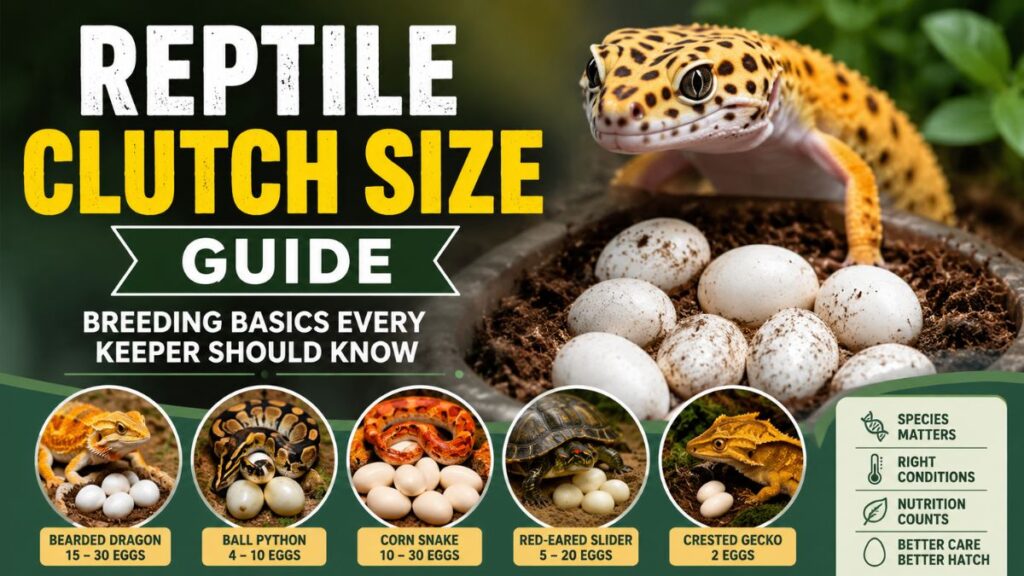
Here are typical clutch sizes for popular reptile species:
| Species | Average Clutch Size |
|---|---|
| Leopard Gecko | 2 eggs |
| Crested Gecko | 2 eggs |
| Corn Snake | 10–30 eggs |
| Ball Python | 4–10 eggs |
| Bearded Dragon | 15–30 eggs |
| Red-Eared Slider | 5–20 eggs |
These numbers are averages and can vary significantly between individual animals.
Multiple Clutches Per Year
Many reptiles can produce several clutches annually.
Factors that influence multiple clutches include:
- Species biology
- Nutrition quality
- Environmental conditions
- Female health status
Some geckos and bearded dragons may lay multiple clutches within a single breeding season.
Factors That Affect Reptile Clutch Size
Age and Maturity
Young females often produce fewer eggs than mature adults.
As reptiles reach full reproductive maturity:
- Egg quality improves
- Fertility rates increase
- Clutch sizes typically become larger
Breeding animals too early can negatively impact their health.
Nutrition and Body Condition
Proper nutrition plays a major role in determining reptile breeding egg production.
Breeding females require:
- Adequate calcium
- Balanced vitamins
- High-quality protein sources
- Proper hydration
Poor nutrition can result in smaller clutches or infertile eggs.
Environmental Conditions
Temperature, humidity, and photoperiod can strongly influence breeding success.
Key environmental factors include:
- Seasonal temperature changes
- Appropriate humidity levels
- Consistent day-night cycles
- Stress-free housing
Replicating natural conditions often encourages healthy reproduction.
Preparing for Successful Breeding
Selecting Healthy Breeding Pairs
Healthy parents are the foundation of successful reptile breeding.
Look for:
- Strong body condition
- Healthy feeding response
- No signs of illness
- Appropriate breeding age
Avoid breeding reptiles with known health issues or genetic defects.
Creating a Proper Nesting Area
Most egg-laying reptiles require a secure nesting site.
A good nesting area should provide:
- Slightly moist substrate
- Privacy and security
- Easy access for the female
- Appropriate temperature
Providing a suitable laying area reduces stress and helps prevent egg retention.
Incubation and Hatchling Expectations
Egg Incubation Basics
After eggs are laid, successful incubation becomes the next priority.
Important factors include:
- Stable temperatures
- Correct humidity levels
- Minimal handling
- Clean incubation containers
Even small fluctuations can affect hatch rates and hatchling quality.
Predicting Hatchling Numbers
Not every egg will hatch successfully. Fertility rates vary depending on species and breeding conditions.
If you want a quick way to estimate potential offspring numbers, try the Reptile Clutch Size & Breeding Yield Estimator:
https://reptilecalc.com/tool/reptile-clutch-size-breeding-yield-calculator/
This tool can help breeders plan enclosure space, resources, and future care requirements more effectively.
Common Breeding Challenges
Infertile Eggs
Infertile eggs may result from:
- Poor breeding timing
- Inexperienced breeders
- Nutritional deficiencies
- Health problems
Regular health checks can help minimize issues.
Egg Binding
Egg binding occurs when a female cannot lay her eggs naturally.
Warning signs include:
- Lethargy
- Loss of appetite
- Swollen abdomen
- Frequent digging without laying
Veterinary attention may be required if symptoms appear.
FAQs:
How many eggs do reptiles usually lay?
The number varies by species. Some geckos lay only 2 eggs, while larger reptiles may produce dozens in a single clutch.
What affects reptile clutch size the most?
Species, age, nutrition, genetics, and environmental conditions are the primary factors influencing clutch size.
Can reptiles lay multiple clutches each year?
Yes. Many species, including geckos and bearded dragons, can produce several clutches during one breeding season.
Conclusion:
Understanding reptile clutch size is essential for anyone interested in reptile breeding. From selecting healthy breeding pairs to providing proper nutrition and incubation conditions, every step influences reproductive success. By learning the factors that affect clutch size and preparing carefully, you can improve breeding outcomes while protecting the health of your reptiles.