
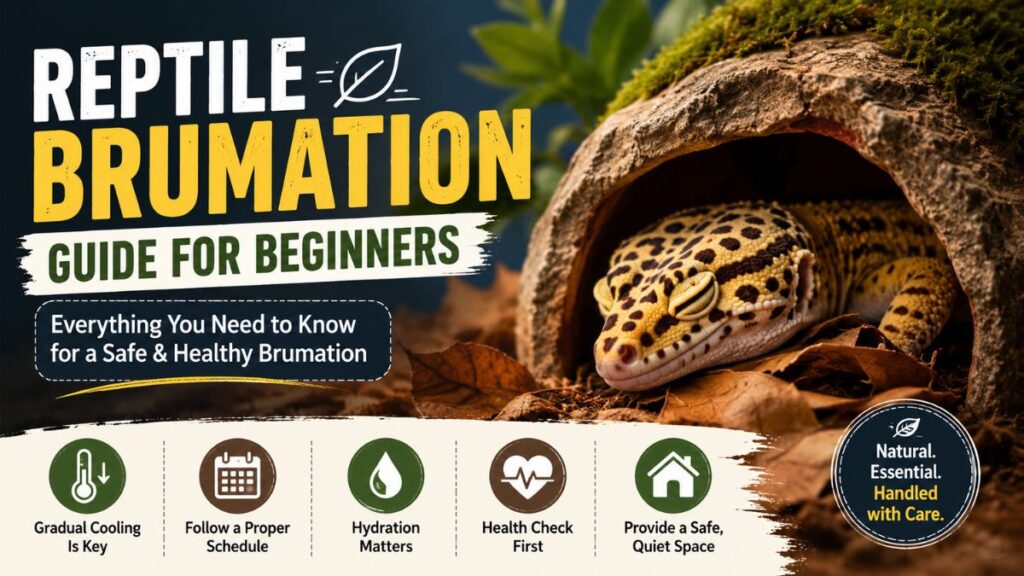
Your bearded dragon stopped eating. Your snake has been tucked in the same corner for two weeks. Your usually curious pet barely reacts when you open the enclosure. Before you panic, check the calendar. Shorter days and cooler evenings can trigger reptile brumation, a natural slow-down that many species go through each year.
Brumation looks alarming the first time you see it, because it can resemble illness. It is also easy to get wrong in the other direction and miss a real health problem. This guide shows you how to tell the difference, how to prepare your reptile, and how to keep things safe from the first sleepy day to the first hungry morning afterward.
What Is Reptile Brumation (and Why Does It Happen)?
Brumation is a period of reduced activity that reptiles enter when temperature and daylight drop. Their metabolism slows, they eat much less (or not at all), and they spend most of the day resting.
Brumation vs. Hibernation
The two are often confused, but they aren’t the same:
- Hibernation is deep, continuous sleep in mammals. They live off stored body fat and rarely wake.
- Brumation is lighter. Reptiles often wake up to drink water, shift position, or bask briefly on a warm day.
Think of hibernation as a sound sleep and brumation as a long, drowsy nap.
Why Reptiles Do It
In the wild, winter means less food and colder weather. Slowing down saves energy until conditions improve. For many species, brumation is also tied to breeding. A cool period followed by warming often prompts reproductive cycles.
Captive reptiles keep these instincts even with heat lamps and steady feeding. Some brumate heavily, some lightly, and some skip it entirely.
Which Reptiles Brumate?
Not every reptile does, and age and species matter a lot.
Bearded Dragons
Brumation in bearded dragons is one of the most commonly searched topics among new keepers. Adults often start somewhere between their first and second year, usually in autumn or winter. Some dragons sleep for weeks, while others only slow down a little. Babies and juveniles generally shouldn’t brumate because they need steady food and warmth to grow.
Snakes
Many temperate species, such as corn snakes, king snakes, and garter snakes, naturally slow down in colder months. Tropical species like ball pythons and boas often don’t need a true cool-down, though they may eat less at certain times of year.
Tortoises and Others
Several tortoise species, some turtles, and certain lizards brumate. Others, like most tropical geckos and chameleons, don’t. Always check the needs of your specific species rather than assuming.
Signs Your Reptile Is Entering Brumation
Learning the signs of brumation in reptiles helps you act calmly instead of guessing. Most reptiles show several of these together.
Common Behavior Changes
- Sleeping much more than usual, often for days
- Eating less, refusing food, or skipping meals completely
- Hiding, burrowing, or staying in the cool end of the enclosure
- Less basking, or leaving the heat lamp unused
- Fewer droppings (because they eat less)
- Slower movement and less interest in handling
Is It Brumation or Illness?
This is the most important question a beginner can ask. The same signs can point to parasites, infection, impaction, poor temperatures, or other problems. Use this quick checklist:
- Check your setup first. Wrong temperatures or weak UVB lighting can cause lethargy and appetite loss.
- Look at body condition. A healthy reptile entering brumation should be at a good weight, with no sunken eyes or visible weight loss.
- Watch for red flags. Wheezing, bubbles at the nose or mouth, swelling, discolored skin, or a limp body are not normal brumation.
When in doubt, call a reptile-experienced vet. A quick exam costs far less than a missed illness.
Before You Start: The Health Check
Never begin a cooling period without making sure your pet is fit for it.
Get a Vet Check
Ask for a fecal test and a general exam before brumation. Hidden parasites can get worse while a reptile’s immune system is running slowly. This step alone prevents many winter emergencies.
Who Should NOT Brumate
Skip or postpone cooling if your reptile is:
- Young or still growing
- Underweight or recently ill
- Carrying parasites or recovering from an infection
- A species that doesn’t brumate in nature
If your reptile is healthy but you’d rather it not brumate, you can keep temperatures and lighting steady and watch closely. Just don’t force a sleep on an animal that clearly wants to eat.
How to Set Up a Safe Brumation
Brumation should be gradual. Sudden temperature drops can stress your reptile and trigger health problems. A good reptile brumation cooling schedule reduces heat and light slowly over one to three weeks.
Cool Down Gradually
A general approach looks like this:
- Shorten light hours by 30 to 60 minutes every few days.
- Lower the daytime temperature slowly, a degree or two at a time.
- Reduce the heat lamp’s time on, then turn it off once your reptile is settled.
- Keep the enclosure in a quiet, stable spot away from drafts.
Target temperatures depend on species. Many snakes and tortoises do well in the cool range of roughly 50 to 60°F (10 to 16°C), while bearded dragons often brumate comfortably at warmer room temperatures. Confirm numbers for your species before you start.
Planning dates by hand gets confusing quickly. The Reptile Brumation Cooling Schedule Calculator can map out a step-by-step cooling plan so you aren’t guessing.
Feeding Before and During
Undigested food in a cooling reptile can rot in the gut and cause serious harm. For this reason, many keepers:
- Stop feeding for one to two weeks before cooling, so the stomach is empty
- Skip meals during brumation if the reptile refuses
- Offer small amounts only if your reptile wakes up and is clearly hungry
Keep Water Available
Reptiles can wake to drink, and dehydration is one of the biggest brumation risks. Always:
- Provide fresh, shallow water that is easy to reach
- Replace it often so it stays clean
- Offer a short lukewarm soak if your reptile seems dry (for species that tolerate soaking)
Choose the Right Resting Spot
Give your reptile a dark, snug hide to settle in. Bearded dragons often burrow into substrate or tuck under decor. Snakes like enclosed hides. Make sure the area is secure, clean, and free from pests that might bother a sleeping pet.
How Long Does Brumation Last?
Many keepers ask, “How long does reptile brumation last?” The honest answer is that it varies.
Typical Time Frames
- Light brumation: a few weeks of reduced activity
- Average brumation: about 6 to 12 weeks for many bearded dragons
- Extended brumation: up to several months in some species
Some reptiles wake up briefly every week or two. Others stay mostly still for long stretches. Both can be normal.
What to Monitor Weekly
Check in without disturbing too much:
- Weigh your reptile every two to four weeks on a kitchen or reptile scale
- Look at eyes, skin, and breathing
- Refresh water and spot-clean waste
A small, slow weight loss can be expected. A rapid or large drop means it’s time to call your vet and stop the cooling process.
Waking Up: How to End Brumation Safely
Waking up should be as gradual as going to sleep.
Warm Up Slowly
Over several days:
- Raise temperatures a little each day.
- Bring lights back on for longer periods.
- Let your reptile bask normally again.
Rehydrate and Refeed
Once your reptile is active and warm, offer water first. A soak can help. Then offer small, easily digestible meals, such as soft insects or greens for omnivores and appropriately sized prey for snakes. Appetite often returns within a few days to a couple of weeks. If your reptile still refuses food after that, a vet visit is wise.
Common Beginner Mistakes to Avoid
Brumation is simple in theory, but these slip-ups cause most problems:
- Cooling a sick or underweight animal. Always check health first.
- Dropping temperatures too fast. Gradual changes are safer.
- Feeding right before cooling. Food can spoil in the gut.
- Forgetting water. Dehydration is a quiet danger.
- Ignoring weight and body condition. Regular checks catch problems early.
- Assuming every slow-down is brumation. Rule out husbandry errors and illness.
Frequently Asked Questions
Can I prevent my reptile from brumating?
Sometimes. Keeping lighting and temperatures consistent can reduce the trigger, but some reptiles will still slow down. Never force food on a reptile that wants to rest.
Should I wake my reptile during brumation?
No. Let it rest. Waking it unnecessarily can stress the animal and use up energy reserves. Only intervene if you see signs of illness or major weight loss.
Do all bearded dragons brumate?
No. Some brumate every year, some only occasionally, and others never do. Babies and juveniles should not brumate.
Is it normal for my reptile not to poop during brumation?
Yes. With little or no food, there’s very little waste. A long absence after waking, though, is worth mentioning to your vet.
Final Thoughts: Be Prepared, Not Worried
Brumation is a natural rhythm, not a problem to fix. With a vet check, a gradual cool-down, constant access to water, and regular weight checks, most healthy adult reptiles get through it easily. The key is preparation: know your species, watch for warning signs, and plan the schedule before the first cold night.