Have you ever wondered why some pet reptiles thrive while others develop serious health problems despite receiving good food and care? The answer often comes down to one overlooked factor: reptile UVB lighting.
Many reptile owners focus on diet, habitat size, and temperature, but UVB lighting plays an equally important role in maintaining a reptile’s health. Without proper UVB exposure, reptiles can suffer from weakened bones, poor growth, and other life-threatening issues. Whether you’re caring for a bearded dragon, tortoise, iguana, or leopard gecko, understanding UVB lighting can make a huge difference in your pet’s quality of life.
Why UVB Lighting Is Important for Reptiles
Understanding UVB Radiation
UVB is a specific type of ultraviolet light found naturally in sunlight. In the wild, reptiles absorb UVB rays while basking outdoors. These rays help their bodies produce vitamin D3, which is essential for calcium absorption.
Without enough UVB exposure, reptiles cannot properly use calcium from their diet, even if they are eating calcium-rich foods.
The Connection Between UVB and Calcium
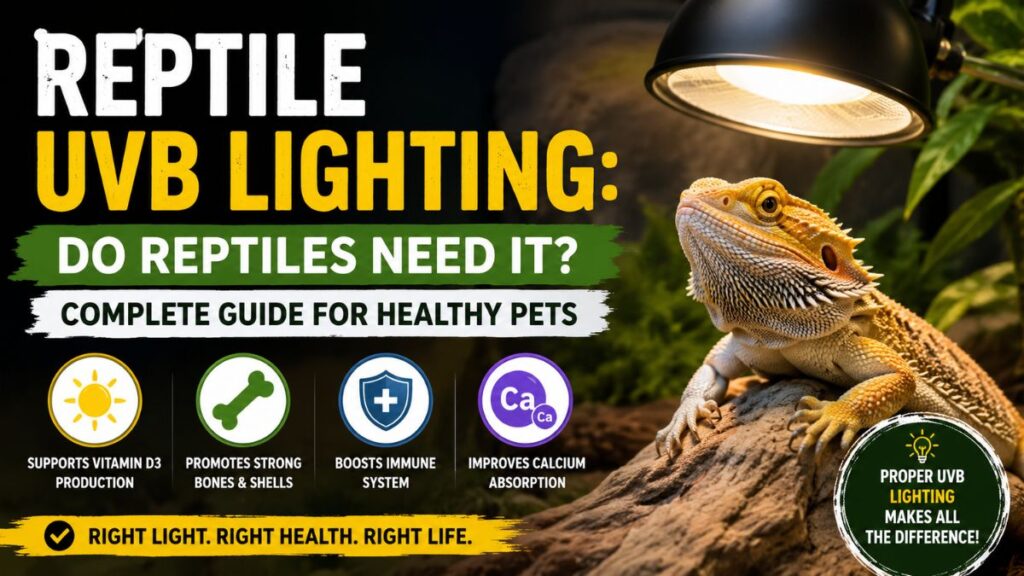
UVB lighting helps reptiles:
- Produce vitamin D3 naturally
- Absorb calcium efficiently
- Develop strong bones and shells
- Support healthy muscle function
- Maintain a strong immune system
A lack of UVB often leads to metabolic bone disease (MBD), one of the most common health problems seen in captive reptiles.
Which Reptiles Need UVB Lighting?
High UVB Requirement Species
Many reptiles require strong UVB exposure daily, including:
- Bearded dragons
- Iguanas
- Uromastyx
- Tortoises
- Most basking lizards
These species spend significant time in direct sunlight in their natural habitats.
Moderate UVB Requirement Species
Some reptiles benefit from moderate UVB levels, such as:
- Corn snakes
- Ball pythons
- Kingsnakes
- Day geckos
While they may survive without high UVB levels, research suggests they often experience improved health and activity with appropriate exposure.
Low UVB Requirement Species
Species like leopard geckos and crested geckos are mostly nocturnal and generally require lower UVB levels. However, many experts still recommend providing gentle UVB lighting as part of a balanced enclosure setup.
Choosing the Right Reptile UVB Lighting
Types of UVB Bulbs
There are several UVB lighting options available:
Fluorescent Tube UVB Bulbs
These are among the most popular choices because they:
- Provide even UVB distribution
- Work well for larger enclosures
- Are energy-efficient
Compact UVB Bulbs
Compact bulbs are suitable for smaller habitats but may not provide adequate coverage in larger enclosures.
Mercury Vapor Bulbs
These bulbs provide:
- UVB light
- Heat
- Visible light
They are often used for larger reptiles that require intense basking conditions.
Selecting the Correct UVB Strength
The ideal UVB level depends on the species. Desert reptiles typically require stronger UVB output than tropical or nocturnal species.
If you’re unsure about the correct setup, you can use the Reptile UVB Lighting Calculator tool:
https://reptilecalc.com/tool/reptile-uvb-lighting-calculator/
This helpful calculator can assist in determining appropriate UVB requirements based on your reptile’s needs.
Common UVB Lighting Mistakes
Placing Bulbs Too Far Away
Even high-quality UVB bulbs become ineffective if placed too far from the basking area. Always follow manufacturer recommendations regarding distance.
Forgetting to Replace Bulbs
Many UVB bulbs continue producing visible light after their UVB output has significantly declined.
As a general rule:
- Replace most fluorescent UVB bulbs every 6–12 months.
- Check manufacturer guidelines for exact replacement schedules.
Using Glass Between the Bulb and Reptile
Glass and acrylic can block a significant portion of UVB rays. Ensure the light reaches your reptile without barriers that reduce UVB transmission.
Signs Your Reptile May Not Be Getting Enough UVB
Physical Symptoms
Watch for signs such as:
- Soft or deformed bones
- Weak limbs
- Difficulty walking
- Shell abnormalities in tortoises
- Tremors or muscle weakness
Behavioral Changes
A reptile lacking proper UVB exposure may also show:
- Reduced appetite
- Low activity levels
- Poor growth
- Increased lethargy
Early intervention can prevent long-term health complications.
FAQs:
Do all reptiles need UVB lighting?
Most reptiles benefit from some level of UVB exposure, although the required intensity varies significantly between species.
Can reptiles get vitamin D3 supplements instead of UVB?
Supplements can help, but UVB lighting allows reptiles to naturally produce vitamin D3 and is generally considered the most effective long-term solution.
How many hours of UVB light should reptiles receive daily?
Most reptiles require approximately 10–12 hours of UVB exposure per day, closely matching natural daylight cycles.
Conclusion:
Proper UVB lighting is one of the most important aspects of reptile care, yet it is often misunderstood or overlooked. By choosing the right UVB bulb, positioning it correctly, and replacing it when needed, you can help your reptile maintain strong bones, healthy growth, and a longer life.