
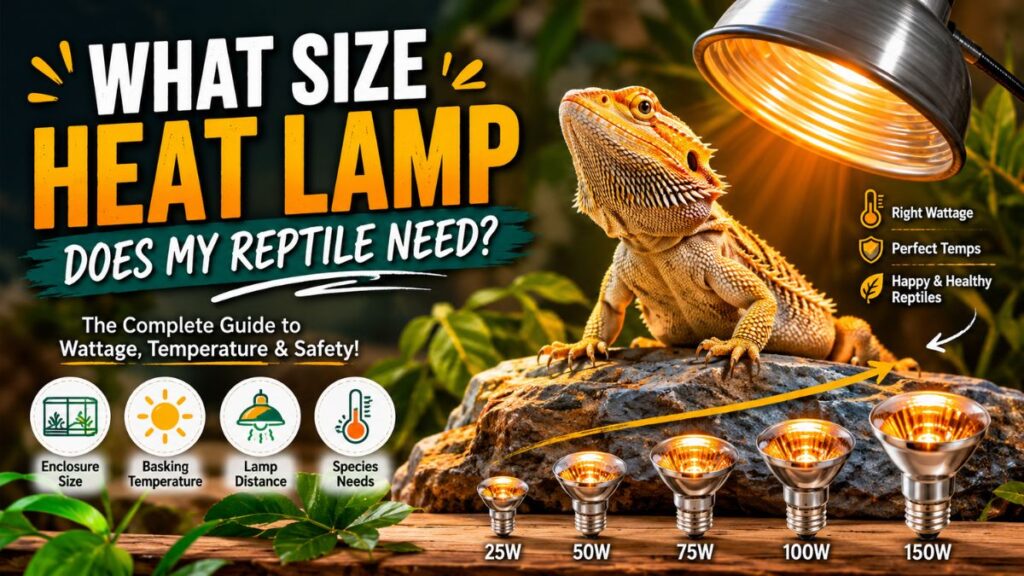
If your reptile could talk, one of the first things it would tell you is how important proper heating is. Unlike mammals, reptiles rely on external heat sources to regulate their body temperature, digest food, stay active, and maintain overall health. Choosing the wrong reptile heat lamp wattage can leave your pet too cold, stressed, or even at risk of serious health issues.
Many reptile owners assume bigger is better when it comes to heat lamps, but that’s not always true. The ideal heat lamp depends on several factors, including enclosure size, reptile species, room temperature, and basking requirements. Understanding these factors can help you create a safe and comfortable habitat your reptile will thrive in.
Understanding Reptile Heating Requirements
Why Heat Lamps Matter
Reptiles are ectothermic animals, meaning they depend on environmental heat to control their body temperature. Without adequate warmth, they may experience:
- Poor digestion
- Reduced appetite
- Weak immune function
- Low activity levels
- Difficulty shedding
A properly selected heat lamp creates a basking area where your reptile can warm itself whenever needed.
Different Reptiles Need Different Temperatures
Not all reptiles have the same heating needs. For example:
- Bearded dragons require higher basking temperatures.
- Leopard geckos need moderate heat.
- Corn snakes prefer lower basking temperatures than many lizards.
- Tropical species often need both warmth and humidity.
This is why calculating the correct heat lamp size is essential rather than relying on generic recommendations.
How to Choose the Right Reptile Heat Lamp Wattage
Consider Enclosure Size
The larger the enclosure, the more powerful the heat source generally needs to be.
Typical guidelines include:
- Small tanks (10–20 gallons): 25–50W
- Medium tanks (20–40 gallons): 50–75W
- Large enclosures (40+ gallons): 75–150W
However, wattage alone doesn’t determine effectiveness. Distance from the basking area also plays a major role.
Account for Room Temperature
If your room stays warm year-round, you may need a lower wattage bulb. In colder homes or during winter, a higher wattage lamp may be necessary to maintain proper basking temperatures.
Always measure temperatures with reliable digital thermometers rather than guessing.
Focus on Basking Temperature
The goal isn’t selecting a specific wattage—it’s achieving the correct basking temperature.
For example:
- Bearded dragons: 95–110°F (35–43°C)
- Leopard geckos: 88–92°F (31–33°C)
- Corn snakes: 85–90°F (29–32°C)
The correct heat lamp wattage for bearded dragon enclosure may be completely different from what works for a snake or gecko.
Factors That Affect Heat Lamp Performance
Lamp Height and Distance
A higher-mounted bulb delivers less heat to the basking area. If the lamp is positioned farther away, you may need a higher wattage bulb.
Always follow manufacturer recommendations and monitor temperatures regularly.
Enclosure Material
Glass tanks lose heat more quickly than PVC or wooden enclosures. This often means glass setups require stronger heating systems.
Owners researching the best heat lamp wattage for reptile tank should always consider enclosure material along with tank size.
Ventilation Levels
Highly ventilated enclosures allow heat to escape faster. While proper airflow is important, excessive ventilation can make maintaining temperatures more challenging.
Common Mistakes Reptile Owners Make
Choosing Wattage Based Only on Tank Size
Tank size is important, but species requirements and room conditions matter just as much.
Not Measuring Temperatures
Even an expensive setup can fail if temperatures aren’t monitored properly. Use:
- Digital thermometers
- Infrared temperature guns
- Thermostats when appropriate
Ignoring Seasonal Changes
Many owners forget that room temperatures fluctuate throughout the year. You may need seasonal adjustments to maintain optimal heating.
If you’re unsure where to start, using a reptile basking temperature calculator or wattage calculator can simplify the process.
Use a Calculator for Accurate Results
Simplify Heating Decisions
Instead of guessing, use a dedicated calculator to estimate heating needs based on enclosure dimensions and environmental conditions.
The reptile enclosure heating requirements calculator available at ReptileCalc can help you determine a suitable starting point for your setup. Try the Reptile Heating Wattage Calculator here:
Remember that calculator results should always be verified with actual temperature readings inside the enclosure.
FAQs:
What wattage heat lamp is best for a reptile?
There is no universal wattage. Most reptile setups use bulbs ranging from 25W to 150W depending on species, enclosure size, and room temperature.
Can a heat lamp be too powerful?
Yes. An excessively powerful lamp can create dangerously high temperatures, causing burns, dehydration, or heat stress.
How do I know if my reptile’s basking area is warm enough?
Use a digital thermometer or infrared temperature gun to measure the basking surface and compare it to your reptile species’ recommended temperature range.
Conclusion:
Choosing the right heat lamp is one of the most important decisions you’ll make for your reptile’s health and comfort. The ideal reptile heat lamp wattage depends on enclosure size, species requirements, room temperature, and basking distance. Instead of relying on guesswork, monitor temperatures carefully and use reliable tools to guide your setup. A few minutes spent calculating and testing can make a huge difference in your reptile’s long-term well-being.