Choosing the right reptile tank size is one of the most important decisions any reptile owner will make. Yet, it’s also one of the most commonly misunderstood aspects of reptile care. Many beginners unknowingly purchase enclosures that are too small, limiting their pet’s ability to move, explore, and display natural behaviors.
A properly sized enclosure isn’t just about comfort—it directly affects your reptile’s health, activity level, stress levels, and overall lifespan. Whether you’re planning to keep a leopard gecko, bearded dragon, corn snake, or ball python, understanding minimum enclosure requirements can help you create a thriving habitat from day one.
In this guide, you’ll discover the recommended tank sizes for popular reptile species and learn how to choose an enclosure that supports long-term well-being.
Why Tank Size Matters for Reptile Health
Physical Health and Exercise
Reptiles need adequate space to move around, thermoregulate, hunt, climb, and explore. A cramped enclosure can contribute to:
- Obesity
- Muscle weakness
- Stress-related behaviors
- Reduced activity levels
Providing sufficient space encourages natural movement and improves overall health.
Mental Stimulation and Natural Behaviors
Many reptiles are more active and intelligent than people realize. Larger enclosures allow them to:
- Explore different areas
- Use hides effectively
- Climb branches and decorations
- Establish temperature gradients
These opportunities help reduce boredom and stress.
Minimum Reptile Tank Size Recommendations
Leopard Gecko Tank Size
Leopard geckos are among the most popular beginner reptiles.
Minimum enclosure sizes:
- Juvenile: 20-gallon long tank
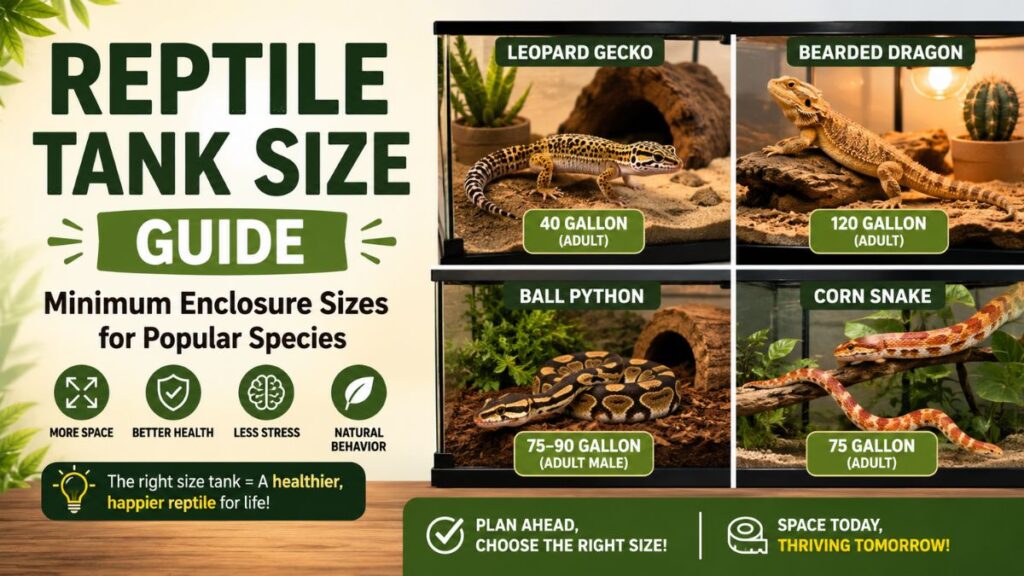
- Adult: 40-gallon breeder tank
Although some older care guides suggest smaller setups, modern reptile husbandry strongly favors a 40-gallon enclosure for adults to provide adequate enrichment and temperature zones.
Bearded Dragon Tank Size
Bearded dragons grow much larger than many new owners expect.
Minimum enclosure sizes:
- Juvenile: 40-gallon tank
- Adult: 120-gallon enclosure (4ft x 2ft x 2ft)
A larger habitat allows proper basking, exercise, and natural exploration behaviors.
Ball Python Tank Size
Ball pythons are popular due to their calm temperament and manageable size.
Minimum enclosure sizes:
- Juvenile: 40-gallon enclosure
- Adult male: 75–90 gallons
- Adult female: 120 gallons or larger
Modern reptile keepers increasingly recommend larger enclosures that allow full stretching and environmental enrichment.
Corn Snake Tank Size
Corn snakes are active and curious reptiles.
Minimum enclosure sizes:
- Juvenile: 20-gallon long tank
- Adult: 75-gallon enclosure or larger
Because corn snakes enjoy climbing, vertical space can be just as important as floor space.
Choosing the Right Reptile Tank Size for Growth
Plan for Adult Size
One of the biggest mistakes beginners make is purchasing an enclosure based only on the reptile’s current size.
Instead, consider:
- Adult length
- Adult weight
- Activity level
- Climbing behavior
- Future upgrades
Buying a larger enclosure initially often saves money in the long run.
Consider Species-Specific Needs
Different reptiles use space differently.
For example:
- Arboreal species require more height.
- Terrestrial species need larger floor space.
- Active hunters benefit from longer enclosures.
- Burrowing species require deeper substrate areas.
Always research the specific requirements of your species before purchasing an enclosure.
Common Tank Size Mistakes to Avoid
Following Outdated Care Sheets
Many older reptile care guides recommend minimum tank sizes that are now considered too small.
Modern husbandry standards focus on providing environments that encourage natural behaviors rather than simply meeting survival requirements.
Ignoring Enrichment Space
Decorations take up room inside the enclosure.
Remember to account for:
- Hides
- Water dishes
- Branches
- Plants
- Basking platforms
The usable living space should remain sufficient even after accessories are added.
How to Calculate the Ideal Enclosure Size
Every reptile is unique, and minimum recommendations are only a starting point. Factors such as activity level, age, and species-specific behavior can influence enclosure requirements.
To make sizing easier, use the Reptile Enclosure Size Calculator:
https://reptilecalc.com/tool/reptile-enclosure-size-calculator/
This tool helps reptile keepers estimate suitable enclosure dimensions based on their pet’s size and needs.
Frequently Asked Questions
What is the minimum tank size for a leopard gecko?
A 40-gallon breeder tank is widely considered the recommended minimum size for an adult leopard gecko.
Can a reptile enclosure be too large?
Generally, no. A properly designed large enclosure with adequate hides, heating, and enrichment is beneficial for most reptiles.
How often should I upgrade my reptile’s tank?
You should upgrade whenever your reptile begins to outgrow its current enclosure or when adult size requirements exceed the existing habitat.
Conclusion:
Providing the correct reptile tank size is one of the best investments you can make in your pet’s health and happiness. While minimum enclosure recommendations offer a useful starting point, larger habitats often provide better opportunities for exercise, enrichment, and natural behaviors.