Choosing the right feeder size for your reptile may seem simple, but it can make a huge difference in your pet’s health, growth, and safety. Many reptile owners unknowingly offer prey that is too large or too small, leading to digestive problems, stress, poor nutrition, or even serious injuries.
Understanding proper reptile prey size is one of the most important aspects of reptile care. Whether you own a snake, gecko, bearded dragon, or monitor lizard, feeding appropriately sized prey helps ensure healthy digestion and supports natural feeding behavior.
If you’ve ever wondered whether your feeder insects or rodents are the correct size, this guide will help you make confident feeding decisions.
Why Feeder Size Matters for Reptiles
Prevents Digestive Problems
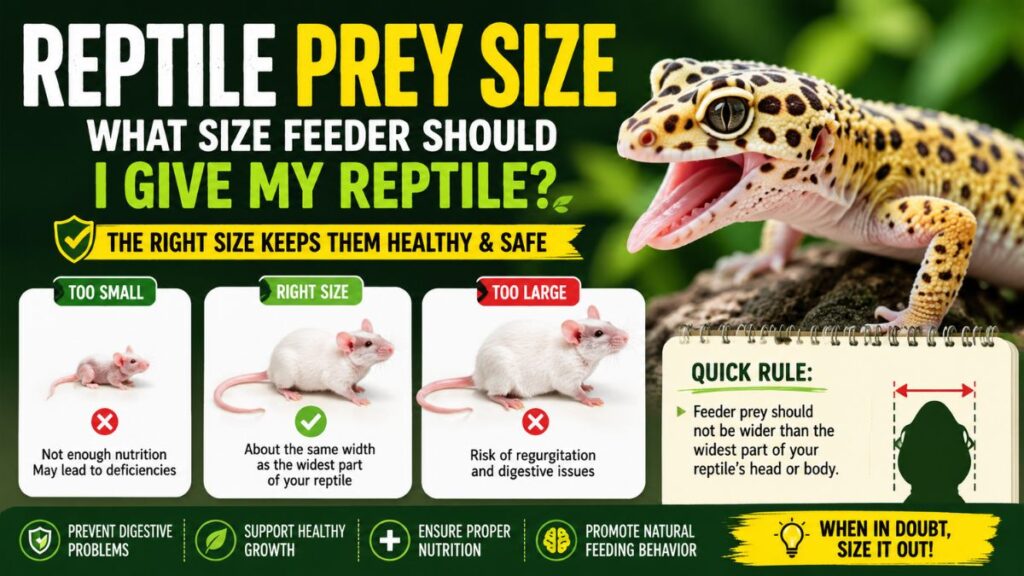
Reptiles swallow their food differently than mammals. Offering prey that’s too large can lead to:
- Regurgitation
- Intestinal blockages
- Difficulty swallowing
- Increased stress during feeding
Correct prey sizing helps your reptile digest meals efficiently and safely.
Ensures Proper Nutrition
Feeding prey that is too small may not provide enough nutrients or calories. Over time, this can result in:
- Poor growth
- Weight loss
- Reduced energy levels
- Nutritional deficiencies
A balanced feeding routine starts with choosing the right-sized prey.
How to Determine the Correct Reptile Prey Size
Use the Width Rule
The most widely accepted guideline is simple:
The feeder should not be wider than the widest part of your reptile’s body or head.
This rule works well for many reptiles, including:
- Ball pythons
- Corn snakes
- Leopard geckos
- Bearded dragons
- Blue tongue skinks
Following this principle significantly reduces feeding risks.
Consider Species Differences
Different reptiles have unique feeding habits.
Snakes
Most snakes can consume relatively large prey compared to their body size. However, oversized prey can still cause regurgitation or injury.
Insect-Eating Lizards
Geckos, anoles, and young dragons generally do best with insects that fit comfortably between their eyes.
Large Omnivorous Lizards
Species such as monitors and tegus may require varied prey sizes depending on age and growth stage.
Reptile Prey Size for Different Life Stages
Hatchlings and Juveniles
Young reptiles have smaller digestive systems and require appropriately sized prey.
Best practices include:
- Feed smaller prey more frequently
- Monitor growth regularly
- Avoid oversized feeders to reduce choking risks
Adult Reptiles
Adults can handle larger meals but still benefit from proper sizing.
Key considerations:
- Maintain healthy body condition
- Adjust prey size according to activity levels
- Avoid overfeeding simply because larger prey is available
Common Mistakes Reptile Owners Make
Feeding Oversized Prey
One of the most common feeding errors is assuming larger prey provides better nutrition.
In reality, oversized prey can:
- Increase digestive stress
- Cause regurgitation
- Lead to feeding reluctance
Ignoring Growth Changes
A feeder size that worked six months ago may no longer be appropriate today.
Regularly reassess:
- Body width
- Weight
- Growth rate
- Feeding response
Using Only Visual Guesswork
Estimating prey size by eye often leads to mistakes. Measurements and feeding calculators provide more reliable guidance.
Using a Reptile Prey Size Calculator
Get Accurate Recommendations
A calculator removes the guesswork from feeding decisions.
The Reptile Prey Size Calculator can help determine appropriate feeder sizes based on your reptile’s measurements and species.
Try it here:
https://reptilecalc.com/tool/reptile-prey-size-calculator/
Benefits of Using a Calculator
- Improves feeding accuracy
- Reduces risk of digestive issues
- Helps new reptile owners learn proper sizing
- Supports healthy growth and weight management
Using a calculator is especially helpful for growing juveniles whose feeding requirements change frequently.
Signs Your Feeder Size Is Appropriate
Positive Feeding Indicators
Your prey size is likely correct if your reptile:
- Swallows food comfortably
- Shows normal digestion
- Maintains a healthy weight
- Remains active and alert
- Feeds consistently
Warning Signs to Watch For
Consider reassessing feeder size if you notice:
- Regurgitation
- Refusal to eat
- Excessive struggling during feeding
- Weight loss
- Prolonged digestion times
These signs may indicate that prey size needs adjustment.
FAQs:
How big should feeder insects be for reptiles?
A common rule is that feeder insects should be no larger than the space between your reptile’s eyes, especially for young lizards and geckos.
Can prey be too small for a reptile?
Yes. Consistently feeding undersized prey may result in inadequate nutrition and slower growth.
How often should I reassess reptile prey size?
Check prey size whenever your reptile experiences noticeable growth, weight changes, or shifts in feeding behavior.
Conclusion:
Choosing the correct reptile prey size is one of the simplest yet most important ways to support your reptile’s long-term health. Properly sized prey promotes safe digestion, reduces feeding-related complications, and ensures your pet receives the nutrition it needs to thrive.