Have you ever wondered why a reptile that seems healthy suddenly develops shedding problems, respiratory issues, or unusual behavior? The answer is often hiding in plain sight: humidity. While temperature gets most of the attention, humidity plays an equally important role in reptile health.
A reliable reptile humidity chart can help reptile owners maintain the correct environment for their pets, preventing common health problems and promoting natural behaviors. Whether you keep a leopard gecko, ball python, bearded dragon, or chameleon, understanding humidity requirements is essential for long-term success.
In this guide, you’ll learn the ideal humidity levels for popular reptile species and how to maintain them effectively.
Why Humidity Matters for Reptiles
Proper Shedding and Skin Health
Reptiles rely on adequate moisture levels to shed their skin successfully. Low humidity can cause retained shed, especially around the eyes, toes, and tail.
Signs of humidity-related shedding issues include:
- Stuck skin after shedding
- Dry, flaky scales
- Eye cap retention
- Cracked skin
Respiratory Health
Humidity that is too high or too low can lead to respiratory problems. Each species has evolved to thrive within a specific humidity range that mimics its natural habitat.
Hydration and Comfort
Many reptiles absorb moisture from their environment through their skin or respiratory system. Proper humidity helps maintain hydration and supports overall well-being.
Reptile Humidity Chart by Species
Ideal Humidity Levels for Common Pet Reptiles
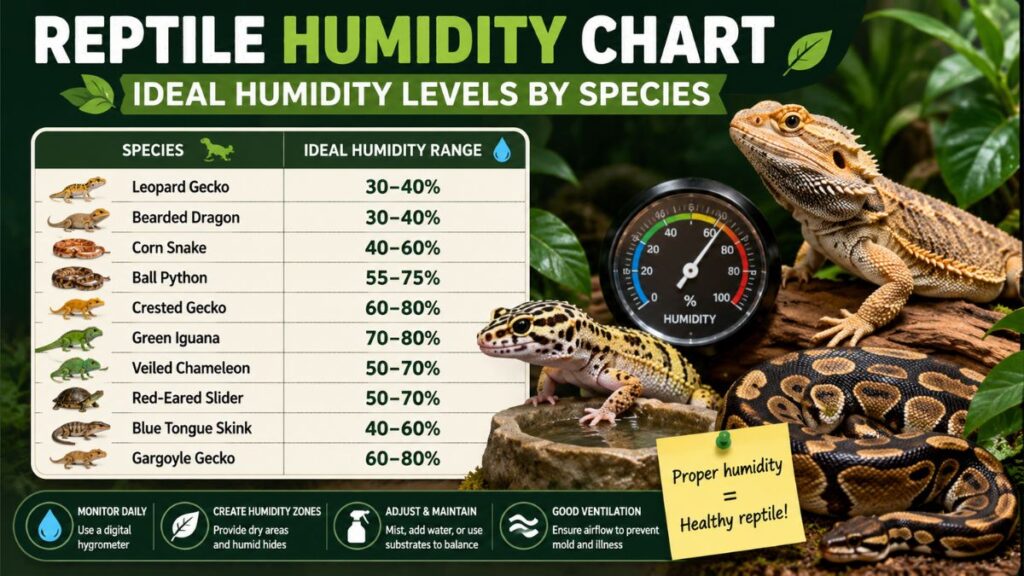
The following reptile humidity chart provides a quick reference for popular species:
| Species | Ideal Humidity Range |
|---|---|
| Leopard Gecko | 30–40% |
| Bearded Dragon | 30–40% |
| Corn Snake | 40–60% |
| Ball Python | 55–75% |
| Crested Gecko | 60–80% |
| Green Iguana | 70–80% |
| Veiled Chameleon | 50–70% |
| Red-Eared Slider | 50–70% |
| Blue Tongue Skink | 40–60% |
| Gargoyle Gecko | 60–80% |
Always research the exact needs of your species, as humidity requirements can vary depending on age, health, and habitat setup.
Reptile Humidity Guide: Species-Specific Needs
Desert Reptiles
Desert species naturally thrive in drier environments.
Examples include:
- Bearded dragons
- Leopard geckos
- Uromastyx lizards
Recommended humidity:
- 30–40%
- Good ventilation is essential
- Avoid excessive misting
Tropical Reptiles
Tropical reptiles require higher humidity levels to replicate rainforest conditions.
Examples include:
- Ball pythons
- Crested geckos
- Green iguanas
Recommended humidity:
- 60–80%
- Regular misting may be necessary
- Use moisture-retaining substrates
Semi-Arid and Temperate Species
Some reptiles fall between desert and tropical requirements.
Examples include:
- Corn snakes
- Blue tongue skinks
Recommended humidity:
- 40–60%
- Occasional misting
- Moderate ventilation
How to Measure Reptile Enclosure Humidity
Use a Reliable Hygrometer
A digital hygrometer provides the most accurate readings.
For best results:
- Place it near the reptile’s primary activity area
- Monitor humidity daily
- Check readings at different times of the day
Create Humidity Zones
Many species benefit from having areas with different moisture levels.
For example:
- Dry side for basking
- Humid hide for shedding
- Cooler humid zone for comfort
This allows reptiles to regulate their own moisture exposure naturally.
How to Increase Humidity in a Reptile Tank
Simple Ways to Raise Humidity
If your enclosure is too dry, try:
- Misting the enclosure regularly
- Adding a larger water bowl
- Using coconut fiber substrate
- Covering part of the screen top
- Installing an automatic misting system
These methods are especially useful for owners searching for how to increase humidity in a reptile tank safely and effectively.
Use a Humid Hide
A humid hide provides a localized area of higher humidity and is particularly helpful during shedding cycles.
Best Humidity Levels for Ball Pythons and Other Popular Species
Ball Pythons
The best humidity levels for ball pythons generally fall between 55% and 75%.
Benefits include:
- Healthy sheds
- Better hydration
- Reduced respiratory stress
Crested Geckos
Maintain 60–80% humidity with regular misting and good airflow.
Bearded Dragons
Keep humidity lower, around 30–40%, to avoid respiratory complications.
Common Humidity Mistakes to Avoid
Over-Misting
Too much moisture can encourage mold, bacteria, and respiratory infections.
Ignoring Ventilation
High humidity without airflow often creates unhealthy conditions.
Using Inaccurate Gauges
Cheap analog gauges frequently provide inaccurate readings. Digital hygrometers are usually the better choice.
Make Humidity Management Easier
Use a Humidity Calculator
Monitoring humidity becomes much easier when you use specialized tools. The Reptile Humidity and Misting Calculator can help determine ideal misting schedules and humidity adjustments for your enclosure:
https://reptilecalc.com/tool/reptile-humidity-and-misting-schedule-calculator/
This tool can save time while helping maintain consistent environmental conditions for your reptile.
FAQs:
What is the ideal humidity for most pet reptiles?
Most pet reptiles require humidity levels between 30% and 80%, depending on their natural habitat and species.
Can low humidity make a reptile sick?
Yes. Low humidity can cause dehydration, shedding problems, and respiratory issues in many species.
How often should I check humidity levels?
Check humidity at least once daily using a digital hygrometer for the most accurate monitoring.
Conclusion:
Humidity is one of the most overlooked aspects of reptile care, yet it directly affects shedding, hydration, respiratory health, and overall quality of life. Using a dependable reptile humidity chart, monitoring levels regularly, and making species-specific adjustments can dramatically improve your reptile’s health and comfort.