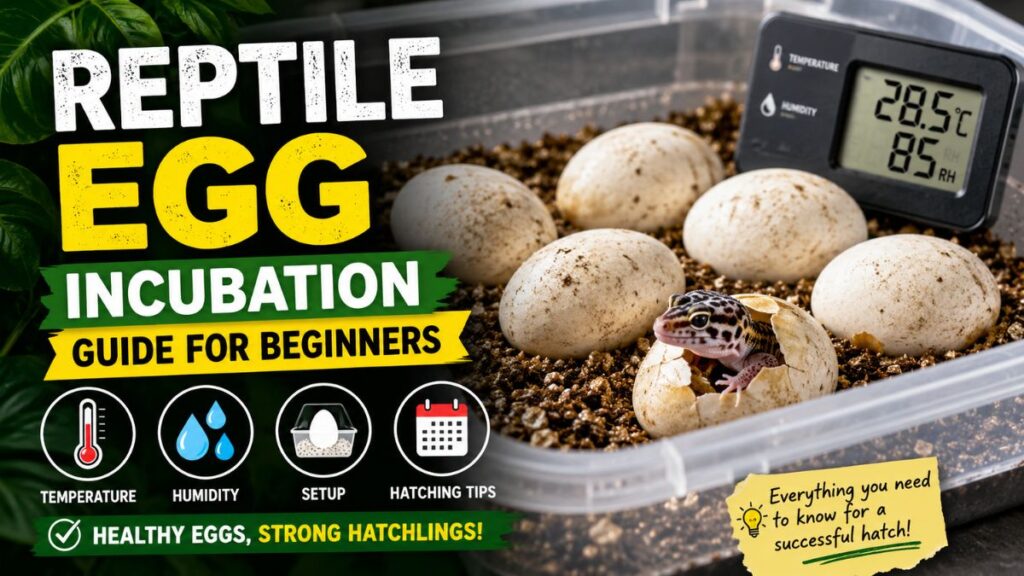
Have you ever wondered what it takes to successfully hatch healthy baby reptiles? Watching tiny hatchlings emerge from their eggs is one of the most exciting experiences for reptile keepers. However, successful reptile egg incubation requires patience, proper preparation, and attention to detail. A small mistake in temperature or humidity can affect the development of the embryos and reduce hatch rates.
The good news is that beginners can achieve excellent results with the right knowledge. This guide will walk you through the essentials of incubating reptile eggs, helping you avoid common mistakes and improve your chances of a successful hatch.
Understanding Reptile Egg Incubation
Why Incubation Matters
Incubation is the process of providing the correct environmental conditions for reptile eggs to develop and hatch. Unlike birds, most reptile parents do not care for their eggs after laying them. This means the responsibility falls entirely on the keeper.
Proper incubation helps:
- Maintain healthy embryo development
- Improve hatch rates
- Reduce the risk of egg loss
- Produce stronger hatchlings
Different Reptiles, Different Requirements
Not all reptile species require the same incubation conditions. Factors such as temperature, humidity, and incubation duration vary between species.
Examples include:
- Leopard geckos: 35–90 days
- Ball pythons: 50–60 days
- Corn snakes: 55–65 days
- Bearded dragons: 55–80 days
Always research the specific needs of your species before setting up an incubator.
Setting Up a Reptile Egg Incubation Environment
Choosing the Right Incubator
A reliable incubator is the foundation of successful hatching. Commercial reptile incubators are ideal because they maintain stable temperatures and humidity levels.
Look for:
- Accurate thermostat controls
- Consistent heat distribution
- Easy temperature monitoring
- Good ventilation
Selecting an Incubation Medium
The incubation medium helps maintain moisture around the eggs.
Popular choices include:
- Vermiculite
- Perlite
- HatchRite
- Moist incubation substrates
The medium should remain damp but never soaked, as excessive moisture can cause mold growth.
Reptile Egg Incubation Temperature and Humidity
Maintaining Proper Temperature
Temperature is one of the most critical factors during incubation. Even slight fluctuations can impact embryo development.
General guidelines:
- Most gecko eggs: 78–88°F (26–31°C)
- Many snake eggs: 80–89°F (27–32°C)
- Bearded dragon eggs: 82–86°F (28–30°C)
Use a high-quality digital thermometer and check temperatures regularly.
Managing Humidity Levels
Humidity prevents eggs from drying out while allowing healthy gas exchange.
Signs humidity is too low:
- Eggs become dented or collapsed
- Slower embryo development
Signs humidity is too high:
- Mold formation
- Excess condensation
- Poor ventilation issues
A hygrometer can help you monitor conditions accurately.
Handling Eggs Safely
Mark Egg Orientation
One of the most important beginner tips is to avoid rotating eggs after they are laid.
Before moving eggs:
- Mark the top with a pencil.
- Carefully transfer them to the incubation container.
- Keep them in the same position.
Rotating eggs can damage developing embryos.
Inspect Eggs Regularly
Check eggs every few days for signs of healthy development.
Healthy eggs typically appear:
- Firm
- White or slightly off-white
- Consistent in shape
Remove any eggs that show significant mold or obvious signs of decay to protect the remaining clutch.
Common Reptile Egg Incubation Mistakes
Temperature Fluctuations
Frequent temperature swings are among the most common causes of failed hatches.
Avoid:
- Placing incubators near windows
- Direct sunlight exposure
- Drafty rooms
Excessive Egg Handling
Constantly moving or checking eggs can stress developing embryos.
Instead:
- Monitor conditions digitally
- Limit physical handling
- Open containers only when necessary
Poor Moisture Management
Many beginners either overwater or underwater the incubation medium.
Aim for stable moisture levels rather than frequent adjustments.
Monitoring Progress Until Hatching
Candling Reptile Eggs
Candling involves shining a small light through the egg to observe development.
You may see:
- Blood vessels
- Embryo growth
- Fertility indicators
Candling should be performed gently and only occasionally.
Preparing for Hatchlings
As hatch time approaches:
- Avoid unnecessary disturbances
- Prepare hatchling enclosures
- Ensure food and heating equipment are ready
Once hatchlings emerge, allow them time to fully leave the egg before handling.
For even more accurate planning, use the Reptile Egg Incubation Calculator tool: https://reptilecalc.com/tool/reptile-egg-incubation-calculator/ to estimate hatch dates and manage incubation schedules more effectively.
FAQs:
How long does reptile egg incubation take?
Incubation times vary by species but generally range from 35 to 90 days.
Can reptile eggs survive without an incubator?
Some species may hatch naturally under ideal conditions, but an incubator provides far better control and significantly improves success rates.
What should I do if reptile eggs become dented?
Dented eggs often indicate low humidity. Check moisture levels carefully and make gradual adjustments rather than drastic changes.
Conclusion:
Successful reptile breeding starts with understanding the basics of incubation. By maintaining proper temperature, humidity, and egg handling practices, even beginners can enjoy excellent hatch rates and healthy hatchlings.