Have you ever noticed your reptile looking unusually tired, wrinkled, or struggling with shedding? These subtle changes could be warning signs of a serious issue that many reptile owners overlook—reptile dehydration.
Unlike dogs or cats, reptiles often hide signs of illness until a problem becomes severe. Even mild dehydration can affect digestion, shedding, organ function, and overall health. The good news is that if you recognize the symptoms early, you can usually correct the problem before it becomes dangerous.
In this guide, you’ll learn how to identify dehydration in reptiles, understand its causes, and take practical steps to restore proper hydration safely.
Understanding Reptile Dehydration
Why Hydration Matters
Water plays a critical role in a reptile’s body. Proper hydration helps with:
- Healthy shedding
- Digestion and nutrient absorption
- Kidney function
- Temperature regulation
- Overall energy levels
When a reptile doesn’t get enough water or loses too much moisture, dehydration can develop quickly.
Common Causes of Dehydration
Some of the most common reasons reptiles become dehydrated include:
- Low humidity levels
- Inadequate access to fresh water
- Excessive heat
- Illness or parasites
- Stress from relocation or improper husbandry
- Poor diet lacking moisture-rich foods
Understanding these causes is the first step toward prevention.
Signs of Dehydration in Reptiles
Physical Symptoms to Watch For
Recognizing dehydration early can make a huge difference.
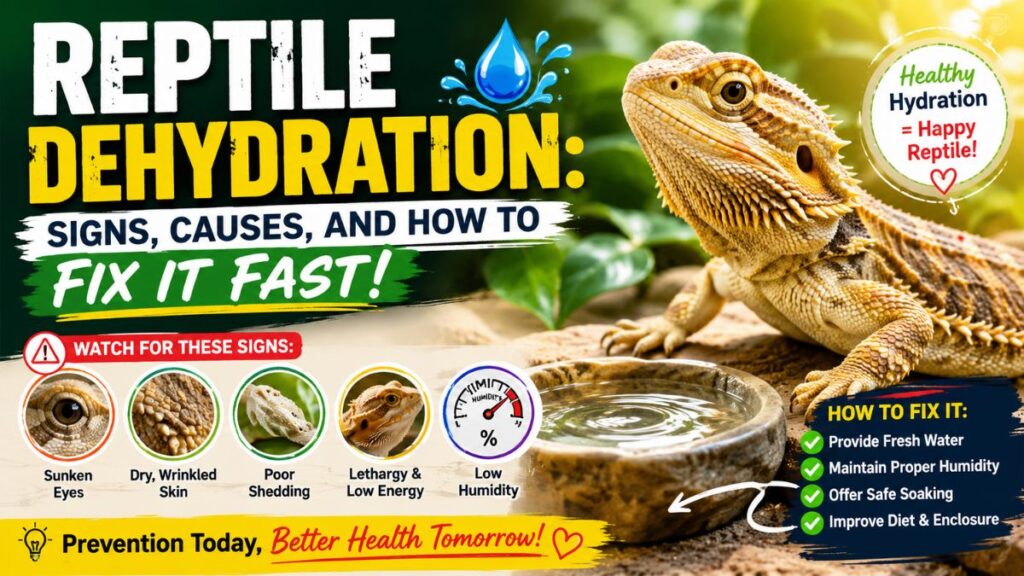
Common physical signs include:
- Sunken or dull-looking eyes
- Wrinkled or loose skin
- Dry scales
- Sticky or thick saliva
- Reduced skin elasticity
If you notice several of these symptoms together, your reptile may need immediate attention.
Shedding Problems
One of the most visible indicators of reptile dehydration is poor shedding.
Dehydrated reptiles often experience:
- Retained shed on toes or tail tips
- Patchy shedding
- Difficulty completing a shed cycle
Healthy hydration helps the skin separate properly during shedding.
Behavioral Changes
Reptiles may also show behavioral signs such as:
- Lethargy
- Reduced appetite
- Spending excessive time near water
- Less activity than usual
These changes are often subtle, which is why regular observation is important.
How to Check Hydration Levels Safely
Simple At-Home Observations
While a veterinarian provides the most accurate assessment, you can monitor hydration by observing:
- Eye appearance
- Skin condition
- Shedding quality
- Drinking behavior
- Activity levels
Keep a record of changes so you can spot trends early.
When Veterinary Help Is Needed
Seek professional help if your reptile shows:
- Severe lethargy
- Refusal to eat for an extended period
- Significant weight loss
- Persistent dehydration symptoms despite corrective measures
Prompt treatment can prevent serious complications.
How to Fix Dehydration in Reptiles
Provide Fresh Water Daily
Always ensure clean, fresh water is available.
Tips include:
- Clean water dishes regularly
- Use appropriately sized bowls
- Place water where your reptile can easily access it
Some species prefer moving water, making fountains useful in certain setups.
Increase Humidity Correctly
Proper humidity is one of the best solutions for how to hydrate a dehydrated reptile safely.
Methods include:
- Regular enclosure misting
- Larger water bowls
- Moist hides
- Humidity-retaining substrates
Always research the specific humidity requirements of your species.
Offer Soaking Opportunities
For many reptiles, supervised soaking can help restore hydration.
Benefits include:
- Improved skin hydration
- Easier shedding
- Increased water absorption
Use shallow, lukewarm water and never leave your reptile unattended.
Adjust Diet for Better Hydration
Many reptiles benefit from moisture-rich foods.
Examples include:
- Leafy greens for herbivorous species
- Hydrated feeder insects
- Fresh vegetables with high water content
A proper dehydrated reptile treatment plan often includes dietary improvements.
Preventing Future Hydration Problems
Create a Species-Specific Environment
Different reptiles have different needs.
For example:
- Tropical species generally require higher humidity.
- Desert reptiles still need access to water despite living in dry habitats.
Researching your species’ natural environment is essential.
Monitor Environmental Conditions
Use reliable equipment to track:
- Temperature
- Humidity
- Basking zones
Consistent monitoring helps prevent issues before they start.
Establish a Routine Health Check
A quick weekly inspection can help identify symptoms of dehydration in reptiles before they become severe.
Look for:
- Eye clarity
- Skin condition
- Normal appetite
- Healthy shedding patterns
Small observations often reveal big health concerns.
Using Tools to Monitor Hydration
Make Hydration Management Easier
If you’re unsure how often your reptile should soak or whether environmental conditions are adequate, consider using a hydration calculator.
The Reptile Hydration and Soaking Calculator can help you estimate appropriate hydration support based on your reptile’s needs: https://reptilecalc.com/tool/reptile-hydration-soaking-calculator/
This practical tool can be a valuable addition to your regular care routine.
FAQs:
How do I know if my reptile is dehydrated?
Common signs include sunken eyes, wrinkled skin, shedding problems, lethargy, and reduced appetite.
Can soaking fix dehydration in reptiles?
Soaking can help improve hydration, especially when combined with proper humidity, fresh water access, and correct husbandry practices.
What is the most common cause of reptile dehydration?
Low humidity and inadequate water availability are among the most common causes, though illness and improper enclosure conditions can also contribute.
Conclusion:
Dehydration is one of the most preventable health problems in reptiles, yet it often goes unnoticed until symptoms become serious. By learning to recognize early warning signs, maintaining proper humidity, providing clean water, and monitoring your reptile’s behavior, you can protect your pet from unnecessary stress and illness.