You’ve set up a gorgeous enclosure. The heat is dialed in, the hides look great, and the bedding is down. Then your leopard gecko ignores the digging spot, or your ball python’s tank starts smelling musty after a week. Sound familiar?
The hidden culprit is often something simple that rarely gets discussed: reptile substrate depth. Too little, and your pet can’t burrow or hold humidity. Too much, and you invite mold, uneven heat, and messy cleanups.
In this guide, you’ll learn how deep substrate should be for popular species, how to spot a problem early, and how to work out exactly how much to buy.
Why Reptile Substrate Depth Matters More Than You Think
Substrate is more than flooring. It’s where your reptile walks, sleeps, digs, and sometimes accidentally snacks. Depth changes how well it does every one of those jobs.
It Supports Natural Behavior
In the wild, many reptiles tunnel underground to escape heat, hide from predators, or lay eggs. A thin layer of bedding can’t offer that sense of security. A pet that can tuck itself into a burrow often looks calmer, eats more confidently, and explores more.
It Controls Humidity and Temperature
Deeper layers hold moisture longer and soften temperature swings. That’s a big win for humidity-loving species like ball pythons and crested geckos. For desert species, though, a shallow, dry layer is usually the better call.
It Affects Hygiene and Health
Substrate that’s thick and constantly damp can grow mold and bacteria. Substrate that’s too thin gets soiled quickly and can’t absorb much. The goal is a depth that supports natural behavior without creating new problems.
How Deep Should Reptile Substrate Be? The Quick Answer
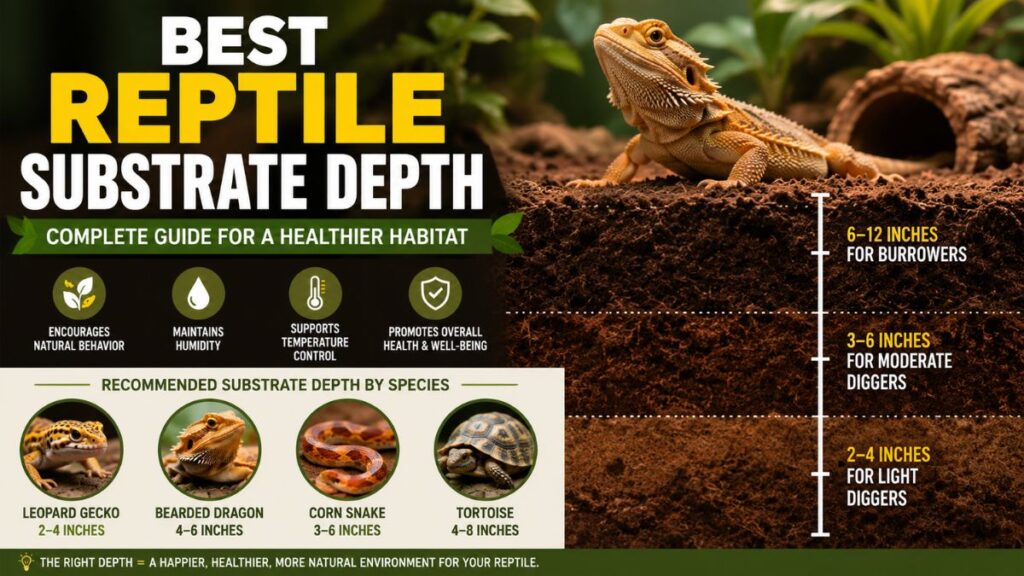
Here’s the short version: most pet reptiles do well with about 1 to 4 inches (2.5–10 cm) of substrate. The sweet spot depends on species, age, and how you’ve set up the enclosure.
A Handy Starting Point
Use these ranges as a baseline:
- Dry-climate lizards and geckos: about 1–2 inches
- Most pythons and colubrid snakes: about 2–4 inches
- Humidity-loving tropical species: about 2–4 inches
- Dedicated diggers and burrowers: 4–6 inches or more
Treat Guidelines as a Starting Line, Not a Rule
Care sheets are helpful, but every animal is different. Babies and juveniles often do best on a solid surface like paper towel or tile until they’re bigger and eating reliably. If your reptile is young, ill, or prone to swallowing bedding, check in with an exotic vet before choosing a loose substrate.
Depth Guide by Popular Species
Let’s get specific. Here’s what experienced keepers commonly recommend for popular pets.
Bearded Dragon Substrate Depth
Bearded dragons are active, curious, and quick to nibble anything on the floor. Many keepers skip loose bedding entirely and use tile or non-adhesive shelf liner instead.
If you prefer a loose, natural look, bearded dragon substrate depth for a healthy adult is usually about 1–2 inches of a compacted soil-and-sand mix. Avoid loose substrate for hatchlings and juveniles because of the impaction risk. With dragons, safe material choice matters more than going deep.
Leopard Geckos and Other Desert Dwellers
Leopard geckos typically do well with 1–2 inches of a dry, compactable mix, or with tile. Add a separate humid hide filled with damp moss for shedding.
One exception is the spiny-tailed uromastyx. These lizards love to dig, and many keepers give them 6 inches or more of packed digging mix.
Best Substrate Depth for Ball Pythons and Corn Snakes
The best substrate depth for ball pythons is generally 2–4 inches of cypress mulch, coconut husk, or a similar blend. That layer helps hold the 50–60% baseline humidity ball pythons need, and it lets them burrow.
Corn snakes are less demanding. About 2–3 inches of aspen or a similar dry bedding works well. Skip cedar and pine, since their aromatic oils can irritate reptiles’ respiratory systems.
Burrowers, Skinks, and Tropical Species
When it comes to substrate depth for burrowing reptiles, think deeper. Blue-tongued skinks, hognose snakes, and box turtles often benefit from 4–6 inches of a soil-based mix. Slightly damp material below the surface helps tunnels hold their shape.
Crested geckos live higher up, so they don’t need as much. About 2–3 inches of coconut fiber with leaf litter keeps humidity steady without turning the floor soggy.
Signs Your Substrate Depth Is Off
Your reptile will usually tell you something’s wrong. You just have to know what to look for.
Red Flags That It’s Too Shallow
- Constant scratching or digging at the glass or enclosure floor
- Humidity that drops fast, even after misting
- A pet that never uses its burrow or hides in odd spots
- Waste that soaks through and makes a mess quickly
Red Flags That It’s Too Deep
- A musty smell, visible mold, or soggy, clumped patches
- Waste that’s hard to find and remove
- A reptile that stays glued to the top of a hide and avoids the floor
- Fungus gnats or other pests moving in
When to Call the Vet
Straining to defecate, a swollen belly, regurgitation, or lethargy after you notice your pet eating substrate can signal an impaction. Don’t wait it out. Call an exotic vet promptly.
Adjusting Depth for Heat, Humidity, and Cleaning
Depth doesn’t work alone. It interacts with your heating, your humidity goals, and how much time you want to spend cleaning.
Watch Your Heat Source
Thick substrate acts like insulation. If you use an under-tank heater, a deep layer can trap heat at the bottom, making the glass hot while the surface stays cool. Overhead heating is usually safer and more natural. Whatever you use, plug it into a thermostat and check the surface temperature with a temp gun.
Keep Humidity Balanced
For humid species, aim for a slightly moist lower layer with a drier top. Use the squeeze test: a handful should clump gently, not drip. If water pools at the bottom, the setup is too wet.
Plan Your Cleaning Routine
Spot clean waste as soon as you spot it. Replace loose substrate fully every one to three months, depending on the species and how wet the setup runs. Deeper beds take longer to refresh, so factor that into your routine.
A Quick Note on Bioactive Setups
Bioactive enclosures, which use live plants and cleanup crews like isopods, usually need 3–4 inches of soil mix plus a drainage layer. The deeper bed gives the microfauna room to work, and it can last far longer between full changes.
How to Calculate How Much Substrate You Need
Buying too little means a thin, uneven floor. Buying too much wastes money. A little math fixes both.
The Simple Formula
Multiply length × width × depth (all in inches), then divide by 1,728 to get cubic feet.
A Real-World Example
Say your enclosure is 36 inches long and 18 inches wide, and you want 2 inches of substrate:
- 36 × 18 × 2 = 1,296 cubic inches
- 1,296 ÷ 1,728 = 0.75 cubic feet (about 21 liters)
That’s roughly three 8-quart bags. Add about 10% extra, since loose substrate settles and compacts.
Skip the Math
Prefer to skip the calculator app on your phone? Try the Reptile Substrate Depth Calculator. Enter your enclosure size and target depth, and you’ll know exactly how much to buy.
FAQs
Is deeper substrate always better for burrowing?
No. Deeper only helps if your species actually burrows and the material holds its shape. Too much depth in a dry or poorly ventilated tank can lead to mold, heat issues, and hard-to-clean waste.
Do baby reptiles need the same depth as adults?
Not always. Hatchlings and juveniles are more likely to swallow loose material, so many keepers start them on paper towel or tile and switch to loose substrate once the animal is bigger and feeding well.
How often should I replace reptile substrate?
Spot clean as needed, then do a full change every one to three months for most loose substrates. Change it sooner if it smells, stays wet, or shows mold.
Can I use different depths in one enclosure?
Yes, and it’s often a smart idea. Create a slope with a deeper digging zone on the cool side and a shallower layer near the basking area. Your reptile can then choose what suits its mood.
Conclusion
Getting your reptile’s substrate depth right isn’t complicated, but it does make a real difference. The right layer supports natural behavior, steadies humidity, and keeps the enclosure cleaner and healthier.
Action Plan
- Check your species’ recommended depth range
- Measure your current substrate with a ruler
- Adjust for your heating setup and humidity needs
- Use the Reptile Substrate Depth Calculator before your next restock