Have you ever wondered if your corn snake is eating the right prey size or being fed often enough? Feeding mistakes are one of the most common reasons young corn snakes grow too slowly, while overfeeding can lead to obesity and health problems. That’s why following a reliable corn snake feeding chart is so important.
Whether you’ve just brought home a hatchling or you’re caring for a fully grown adult, understanding how feeding needs change with age can make a huge difference in your snake’s health, growth, and lifespan. In this guide, you’ll learn exactly what to feed, how often to feed, and how to avoid common feeding mistakes.
Why Proper Feeding Matters
Healthy Growth and Development
Corn snakes grow rapidly during their first year of life. Providing appropriately sized prey helps support:
- Strong muscle development
- Healthy shedding cycles
- Proper bone growth
- A healthy immune system
Preventing Health Problems
Incorrect feeding schedules can lead to:
- Obesity
- Regurgitation
- Nutritional deficiencies
- Stunted growth
A structured feeding plan helps ensure your snake receives the right amount of nutrition at every stage of life.
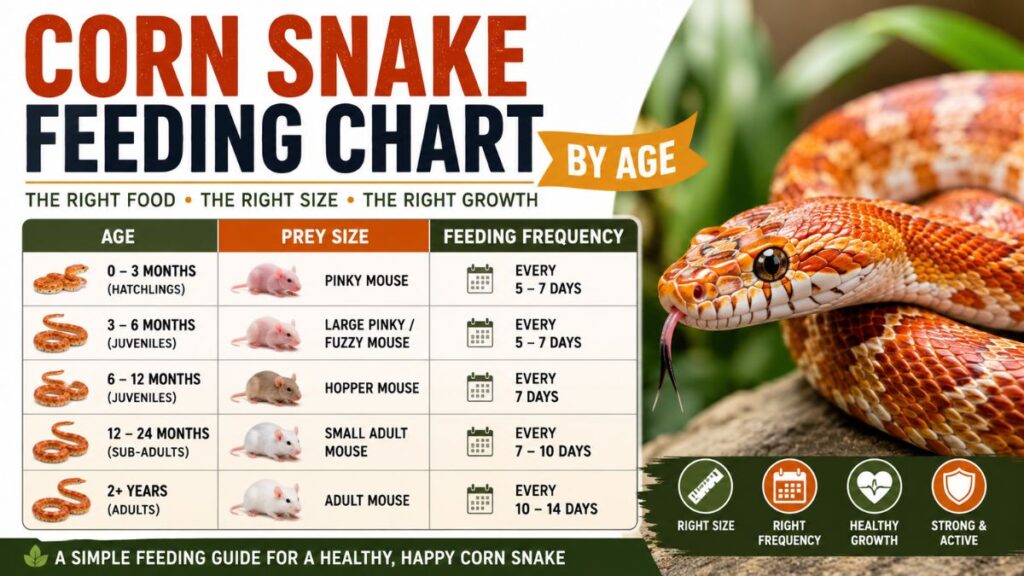
Corn Snake Feeding Chart by Age
Hatchlings (0–3 Months)
Newly hatched corn snakes require frequent meals to support their fast growth.
| Age | Prey Size | Feeding Frequency |
|---|---|---|
| 0–3 months | Pinky mouse | Every 5–7 days |
Feeding Tips for Hatchlings
- Offer one appropriately sized pinky mouse.
- Prey should not be wider than 1 to 1.5 times the snake’s widest body section.
- Monitor feeding closely to ensure successful swallowing.
Corn Snake Feeding Chart for Juveniles
Juveniles (3–12 Months)
As your corn snake grows, its prey size should gradually increase.
| Age | Prey Size | Feeding Frequency |
|---|---|---|
| 3–6 months | Large pinky or fuzzy mouse | Every 5–7 days |
| 6–12 months | Hopper mouse | Every 7 days |
Signs Your Juvenile Is Ready for Larger Prey
- The prey leaves little visible bulge after feeding.
- Your snake remains hungry shortly after meals.
- Consistent growth and healthy body condition.
Feeding Adult Corn Snakes
Sub-Adults (1–2 Years)
Growth begins to slow, but nutritional needs remain significant.
| Age | Prey Size | Feeding Frequency |
|---|---|---|
| 12–24 months | Small adult mouse | Every 7–10 days |
What to Watch For
- Maintain a lean, muscular body shape.
- Avoid increasing prey size too quickly.
- Track weight monthly if possible.
Adults (2+ Years)
Fully grown corn snakes require less frequent feeding than younger snakes.
| Age | Prey Size | Feeding Frequency |
|---|---|---|
| 2+ years | Adult mouse | Every 10–14 days |
Large adult corn snakes may occasionally eat jumbo mice, but regular oversized meals are generally unnecessary.
How to Choose the Correct Prey Size
The Width Rule
A simple rule used by experienced reptile keepers is:
Feed prey that is approximately 1 to 1.5 times the width of your snake’s widest body section.
This helps ensure:
- Easy digestion
- Reduced risk of regurgitation
- Optimal growth
Frozen-Thawed vs. Live Prey
Most reptile experts recommend frozen-thawed prey because:
- It is safer for the snake.
- It eliminates the risk of rodent bites.
- It is more convenient to store.
Always thaw prey completely and warm it before offering it to your corn snake.
Common Feeding Mistakes to Avoid
Feeding Prey That Is Too Large
Oversized prey can cause:
- Digestive stress
- Regurgitation
- Feeding refusal
When in doubt, choose slightly smaller prey.
Overfeeding Adult Snakes
Many owners continue feeding adults as frequently as juveniles.
This can result in:
- Excessive weight gain
- Fat deposits around the body
- Reduced activity levels
Handling After Feeding
Avoid handling your corn snake for at least 24–48 hours after a meal.
Handling too soon can increase stress and may trigger regurgitation.
Monitoring Your Corn Snake’s Growth
Keep Feeding Records
Tracking feeding history can help you identify problems early.
Record:
- Feeding dates
- Prey size
- Shedding cycles
- Weight changes
Use a Feeding Calculator
If you’re unsure about the ideal prey size or feeding schedule, try the Corn Snake Feeding Calculator:
https://reptilecalc.com/tool/corn-snake-feeding-calculator/
This helpful tool can simplify feeding decisions and help keep your snake on the right growth track.
Signs Your Corn Snake Is Being Fed Correctly
Healthy Indicators
Look for these positive signs:
- Consistent growth
- Regular shedding
- Strong feeding response
- Firm muscle tone
- Healthy body condition
A properly fed corn snake should appear active, alert, and neither excessively thin nor overweight.
FAQs:
How often should a baby corn snake eat?
Most hatchling corn snakes should eat a pinky mouse every 5–7 days during their first few months of life.
Can I feed my corn snake two mice at once?
It is generally better to offer one appropriately sized prey item. Multiple prey items may be used for larger snakes when recommended by experienced keepers.
What should I do if my corn snake refuses food?
Check enclosure temperatures, stress levels, shedding status, and prey size. Temporary feeding refusals are common and often resolve once conditions improve.
Conclusion:
Following a reliable corn snake feeding chart is one of the easiest ways to ensure your pet remains healthy throughout its life. As your snake grows, its feeding schedule and prey size will change, making regular adjustments essential. By choosing the correct prey size, maintaining a consistent schedule, and monitoring body condition, you’ll set your corn snake up for years of healthy growth and thriving health.