
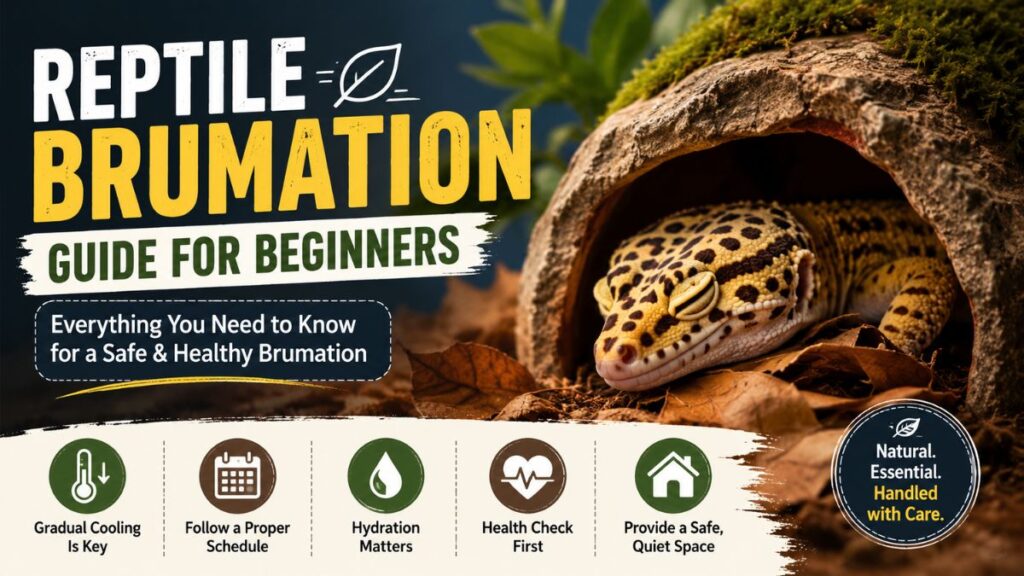
Have you ever noticed your reptile becoming less active, eating less, or spending more time hiding during cooler months? For many new keepers, this behavior can be alarming. However, it may simply be reptile brumation, a natural seasonal process that many reptiles experience. Understanding brumation is essential because proper management can help keep your pet healthy, reduce stress, and even support successful breeding in some species.
If you’re a beginner, learning how reptile brumation works will help you confidently care for your pet during this important phase and avoid common mistakes that could impact its health.
What Is Reptile Brumation?
Understanding the Natural Process
Reptile brumation is often compared to hibernation in mammals, but the two are not exactly the same. During brumation, reptiles become less active as temperatures and daylight hours decrease.
Unlike mammals that enter deep sleep, reptiles may occasionally wake up, drink water, and move around before returning to a resting state.
Why Reptiles Brumate
Brumation occurs because reptiles are cold-blooded animals that rely on external temperatures to regulate their body functions.
Common reasons include:
- Seasonal temperature changes
- Reduced daylight hours
- Natural biological cycles
- Preparation for breeding season
Signs Your Reptile Is Entering Brumation
Behavioral Changes to Watch For
Recognizing the early signs of brumation helps prevent unnecessary worry.
Common signs include:
- Reduced appetite
- Increased hiding behavior
- Less frequent movement
- Longer sleeping periods
- Lower interest in basking
Species That Commonly Brumate
Not all reptiles experience brumation. Species that commonly do include:
- Bearded dragons
- Leopard geckos
- Corn snakes
- Kingsnakes
- Some tortoise species
Always research your reptile’s specific needs before assuming it is brumating.
Reptile Brumation Guide for Beginners: Preparing Your Pet
Schedule a Health Check
Before allowing brumation, ensure your reptile is healthy.
A veterinary examination can identify:
- Parasites
- Respiratory infections
- Weight issues
- Underlying illnesses
Sick reptiles should never be encouraged to brumate.
Gradually Adjust Environmental Conditions
Brumation should never happen suddenly.
Over several weeks:
- Reduce temperatures gradually
- Shorten daily lighting periods
- Monitor your reptile’s behavior closely
Abrupt environmental changes can create unnecessary stress.
Empty the Digestive System
Food remaining in the digestive tract can cause serious health problems during brumation.
Before cooling:
- Gradually reduce feeding.
- Allow proper digestion.
- Continue providing warmth temporarily.
- Ensure normal bowel movements occur.
Following a proper how to prepare a reptile for brumation process significantly reduces health risks.
Caring for a Reptile During Brumation
Maintain Appropriate Conditions
Each species requires different temperature ranges during brumation.
Important factors include:
- Stable temperatures
- Adequate ventilation
- Clean enclosure
- Proper humidity levels
Monitoring conditions regularly helps prevent complications.
Provide Access to Fresh Water
Even inactive reptiles can become dehydrated.
Always provide:
- Clean drinking water
- Easy access to water dishes
- Periodic hydration checks
Proper reptile brumation care tips often focus heavily on preventing dehydration.
Minimize Disturbances
Avoid excessive handling during brumation.
Your reptile needs:
- Quiet surroundings
- Minimal enclosure disruptions
- Consistent environmental conditions
Frequent disturbances can interrupt the natural process and increase stress.
Common Brumation Mistakes Beginners Make
Assuming Every Reptile Is Brumating
A lack of appetite is not always brumation.
Potential causes may include:
- Illness
- Incorrect temperatures
- Parasites
- Stress
When in doubt, consult a reptile veterinarian.
Cooling Too Quickly
One of the biggest mistakes is rushing the cooling process.
Gradual adjustments are essential for safe safe reptile brumation practices.
Ignoring Weight Loss
Weigh your reptile before and during brumation.
While minor weight fluctuations are normal, significant weight loss may indicate a problem requiring attention.
Waking Your Reptile After Brumation
Gradually Increase Temperatures
Just as cooling should be gradual, warming should occur slowly.
Increase:
- Enclosure temperatures
- Daily lighting duration
- Access to basking areas
Reintroduce Feeding Carefully
Once your reptile becomes active:
- Offer water first
- Wait for normal activity levels
- Introduce small meals
- Monitor digestion
Understanding the reptile brumation temperature guide for your species can help ensure a smooth transition back to normal activity.
Helpful Tool for Planning Brumation
Use a Cooling Schedule Calculator
Creating a proper cooling schedule can be confusing for beginners. To simplify the process, use the Reptile Brumation Cooling Schedule Calculator:
https://reptilecalc.com/tool/reptile-brumation-cooling-schedule-calculator/
This tool can help you plan gradual temperature adjustments and avoid common cooling mistakes.
FAQs:
1. How long does reptile brumation last?
The duration varies by species but typically ranges from several weeks to a few months.
2. Should I feed my reptile during brumation?
Most reptiles stop eating during brumation. Always follow species-specific recommendations and ensure the digestive tract is empty before cooling.
3. Is brumation necessary for pet reptiles?
Not always. Some captive reptiles remain active year-round, while others benefit from a natural brumation cycle.
Conclusion:
Reptile brumation can seem intimidating at first, but understanding the process makes it much easier to manage. By preparing properly, monitoring your reptile’s health, maintaining suitable conditions, and following safe cooling practices, you can support your pet through a successful brumation period.