Have you ever wondered why some reptiles thrive for years while others struggle despite receiving proper food and care? The answer often comes down to one critical factor: temperature control. A reliable reptile thermostat is one of the most important tools in any reptile enclosure because it helps maintain the precise temperatures reptiles need to stay healthy, active, and stress-free.
Without proper temperature regulation, reptiles can experience digestion issues, weakened immune systems, and even life-threatening health problems. Whether you keep a bearded dragon, ball python, leopard gecko, or another reptile species, setting up your thermostat correctly can make a huge difference. This guide will walk you through everything you need to know to create a safe and efficient heating system.
Why a Reptile Thermostat Is Essential
Prevents Dangerous Temperature Fluctuations
Heating devices such as heat mats, ceramic heat emitters, and basking lamps can easily overheat without regulation. A thermostat automatically adjusts power output to keep temperatures within a safe range.
Supports Natural Reptile Behavior
Proper temperatures allow reptiles to:
- Digest food efficiently
- Maintain healthy metabolism
- Stay active and alert
- Support immune system function
- Reduce stress levels
Protects Equipment and Enclosures
A thermostat helps prevent overheating, reducing the risk of damaged heating equipment and enclosure materials.
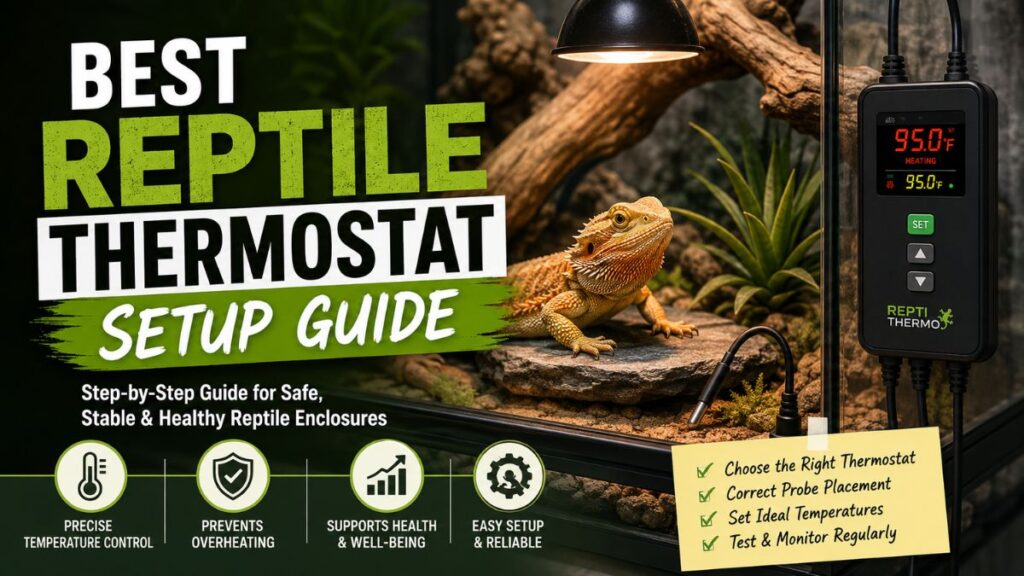
Best Reptile Thermostat Setup Guide for Beginners
Choose the Right Thermostat Type
Not all thermostats work the same way. The best option depends on your heating equipment.
On/Off Thermostats
- Ideal for heat mats
- Budget-friendly
- Simple operation
Pulse Proportional Thermostats
- Suitable for heat mats and some heating devices
- Maintains more stable temperatures
- Reduces temperature swings
Dimming Thermostats
- Best for basking lamps and ceramic heaters
- Provides precise temperature control
- Mimics natural heating conditions
Match the Thermostat to Your Heat Source
Always verify compatibility between the thermostat and heating device.
Common combinations include:
- Heat mat → On/Off thermostat
- Ceramic heat emitter → Dimming thermostat
- Halogen basking bulb → Dimming thermostat
- Radiant heat panel → Pulse or dimming thermostat
Before purchasing, use the Reptile Thermostat Compatibility Calculator to check your setup:
https://reptilecalc.com/tool/reptile-thermostat-compatibility-calculator/
Proper Thermostat Probe Placement
Position the Probe Correctly
Probe placement is one of the most common mistakes reptile keepers make.
For basking areas:
- Place the probe directly on the basking surface.
- Secure it firmly so it cannot move.
For heat mats:
- Place the probe between the heat mat and enclosure bottom or directly above the heated area according to manufacturer instructions.
Avoid Common Probe Errors
Do not:
- Leave the probe hanging in the air
- Place it far from the heat source
- Allow reptiles to move or bury the probe
- Position it near water dishes
Incorrect placement can lead to inaccurate temperature readings and unsafe heating.
Setting the Correct Temperature Range
Research Species Requirements
Every reptile species has unique heating needs.
Examples:
- Bearded dragons: 95–110°F basking zone
- Ball pythons: 88–92°F warm side
- Leopard geckos: 88–92°F warm hide
Always consult reputable care guides specific to your species.
Create a Thermal Gradient
Reptiles regulate body temperature by moving between warm and cool areas.
A proper enclosure should include:
- Warm basking zone
- Moderate middle area
- Cooler retreat zone
This allows reptiles to thermoregulate naturally.
Monitoring and Testing Your Setup
Use Additional Thermometers
Never rely solely on thermostat readings.
Install:
- Digital thermometers
- Infrared temperature gun
- Hygrometer for humidity monitoring
Multiple readings help ensure accuracy.
Test Before Introducing Your Reptile
Run the enclosure for at least 24–48 hours before adding your reptile.
During testing:
- Check daytime temperatures
- Verify nighttime temperatures
- Monitor heating cycles
- Adjust thermostat settings if needed
This step helps identify problems before they affect your pet.
Common Reptile Thermostat Mistakes
Using No Thermostat at All
Many beginners connect heat sources directly to power outlets. This can quickly lead to overheating and serious health risks.
Choosing the Wrong Thermostat
Using an On/Off thermostat with a basking lamp can create unnatural temperature fluctuations and shorten bulb lifespan.
Ignoring Seasonal Changes
Room temperatures often change throughout the year.
Regularly:
- Check enclosure temperatures
- Adjust settings as needed
- Monitor seasonal temperature shifts
Skipping Regular Maintenance
Inspect your setup monthly.
Look for:
- Damaged probes
- Loose wires
- Faulty heating devices
- Inconsistent temperature readings
Routine checks improve safety and reliability.
FAQs:
What temperature should a reptile thermostat be set to?
The ideal temperature depends on the species. Always follow species-specific care recommendations for basking and ambient temperatures.
Can I use one thermostat for multiple heat sources?
Some advanced thermostats support multiple zones, but most are designed for a single heating device. Check manufacturer specifications.
How often should I check my thermostat?
A quick daily check is recommended, with a more thorough inspection at least once per month.
Conclusion:
A properly configured thermostat is one of the smartest investments you can make for your reptile’s health and safety. From selecting the right thermostat type to positioning the probe correctly and monitoring temperatures regularly, each step plays a vital role in creating a stable environment.