If you’ve ever wondered whether you’re feeding your bearded dragon too much, too little, or the wrong foods altogether, you’re not alone. Many new reptile owners struggle to understand how a dragon’s nutritional needs change throughout its life. The truth is that a baby bearded dragon requires a completely different diet than an adult.
Following a proper bearded dragon feeding chart can make a huge difference in your pet’s growth, energy levels, and overall health. From rapid growth during the first few months to maintaining a healthy weight in adulthood, knowing what to feed at each stage helps prevent common health issues and ensures your dragon thrives.
Why Age Matters in a Bearded Dragon’s Diet
Growth and Nutritional Needs Change Over Time
Bearded dragons grow incredibly fast during their first year. Because of this, their protein and vegetable requirements shift significantly as they age.
Young dragons need more insects to support growth, while adults require a higher percentage of leafy greens and vegetables to maintain long-term health.
Benefits of Following a Feeding Schedule
A structured feeding plan helps:
- Support healthy bone development
- Prevent obesity
- Improve digestion
- Reduce nutritional deficiencies
- Encourage natural feeding behaviors
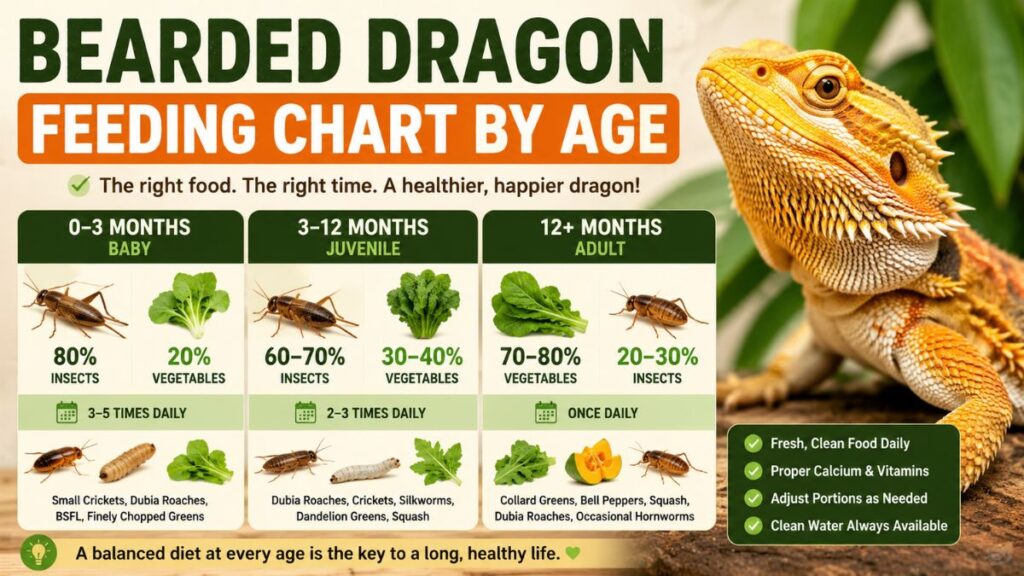
Bearded Dragon Feeding Chart by Age
Baby Bearded Dragons (0–3 Months)
During this stage, growth is extremely rapid, and protein is the priority.
Diet Ratio:
- 80% insects
- 20% vegetables
Feeding Frequency:
- 3–5 feeding sessions daily
Best Foods:
- Small crickets
- Dubia roaches
- Black soldier fly larvae
- Finely chopped collard greens
- Mustard greens
Always provide insects that are smaller than the space between your dragon’s eyes.
Juvenile Bearded Dragons (3–12 Months)
Growth remains strong, but vegetables should gradually become a larger part of the diet.
Diet Ratio:
- 60–70% insects
- 30–40% vegetables
Feeding Frequency:
- 2–3 times daily
Recommended Foods:
- Dubia roaches
- Crickets
- Silkworms
- Dandelion greens
- Turnip greens
- Squash
This is an ideal time to encourage healthy vegetable-eating habits.
Adult Bearded Dragons (12+ Months)
Adult dragons no longer need large amounts of protein.
Diet Ratio:
- 70–80% vegetables
- 20–30% insects
Feeding Frequency:
- One feeding session daily
Healthy Food Choices:
- Collard greens
- Endive
- Bell peppers
- Squash
- Dubia roaches
- Occasional hornworms
A vegetable-rich diet helps prevent obesity and supports long-term wellness.
Creating a Balanced Feeding Routine
Choosing the Right Insects
Not all feeder insects offer the same nutritional value.
Good options include:
- Dubia roaches
- Crickets
- Black soldier fly larvae
- Silkworms
- Hornworms (occasionally)
Avoid relying heavily on mealworms for young dragons because their tough exoskeletons can be difficult to digest.
Offering Safe Vegetables Daily
Vegetables should be fresh, washed, and finely chopped.
Excellent choices include:
- Collard greens
- Mustard greens
- Turnip greens
- Dandelion greens
- Butternut squash
- Bell peppers
Avoid iceberg lettuce because it provides very little nutrition.
Common Feeding Mistakes to Avoid
Overfeeding Insects
One of the most common mistakes is continuing a baby feeding routine into adulthood.
Too many insects can lead to:
- Weight gain
- Fatty liver disease
- Reduced vegetable intake
Ignoring Calcium Supplementation
Bearded dragons need calcium to maintain strong bones.
A good rule of thumb:
- Dust insects with calcium powder several times per week.
- Use a reptile-safe multivitamin according to package directions.
Feeding Unsafe Foods
Never feed:
- Avocado
- Rhubarb
- Fireflies
- Wild-caught insects exposed to pesticides
These foods can be toxic and dangerous.
Using Tools to Perfect Your Dragon’s Diet
Calculate Food Ratios Accurately
Many owners struggle to determine the correct balance between insects and vegetables.
To make feeding easier, use the Bearded Dragon Diet Ratio Calculator:
https://reptilecalc.com/tool/bearded-dragon-diet-ratio-calculator/
This helpful tool allows you to quickly determine the ideal food proportions based on your dragon’s age and life stage.
Signs Your Bearded Dragon Is Eating Properly
Healthy Indicators
A well-fed bearded dragon typically shows:
- Steady growth
- Bright, alert eyes
- Strong appetite
- Healthy shedding
- Active behavior
When to Reevaluate the Diet
Consider adjusting the feeding plan if you notice:
- Sudden weight loss
- Lethargy
- Poor appetite
- Difficulty shedding
If symptoms persist, consult a qualified reptile veterinarian.
FAQs:
How many insects should a baby bearded dragon eat daily?
Baby bearded dragons can eat dozens of appropriately sized insects each day across multiple feeding sessions because of their rapid growth needs.
Can adult bearded dragons eat insects every day?
Yes, but insects should make up only about 20–30% of an adult dragon’s overall diet.
What is the best vegetable for bearded dragons?
Collard greens are among the best options because they are rich in calcium and other essential nutrients.
Conclusion:
A proper bearded dragon feeding chart is one of the most valuable tools for keeping your reptile healthy throughout its life. By adjusting food ratios as your dragon grows, providing nutritious insects and vegetables, and avoiding common feeding mistakes, you can support healthy development and a longer, happier life.