Have you ever wondered why some reptiles develop weak bones, poor growth, or mobility problems despite receiving regular food? The answer often comes down to one overlooked detail: reptile calcium dusting. While feeding your reptile the right insects and vegetables is important, providing the correct calcium supplementation schedule can make the difference between a thriving pet and serious health complications.
Many reptile owners assume that more calcium is always better. In reality, both too little and too much supplementation can cause problems. Understanding the proper calcium dusting routine helps support healthy bones, muscle function, egg production, and overall well-being. Let’s explore how to create the ideal calcium dusting schedule for your reptile.
Why Calcium Is Essential for Reptiles
The Role of Calcium in Reptile Health
Calcium is one of the most important minerals in a reptile’s body. It supports:
- Bone growth and maintenance
- Muscle contractions
- Nerve function
- Egg development in breeding females
- Proper metabolism
Without adequate calcium, reptiles can develop serious health conditions that may become difficult to reverse.
The Risk of Metabolic Bone Disease
One of the most common consequences of poor calcium supplementation is Metabolic Bone Disease (MBD). Symptoms may include:
- Soft or deformed bones
- Tremors or twitching
- Difficulty walking
- Weak jaw structure
- Reduced appetite
Following a proper supplementation routine greatly reduces these risks.
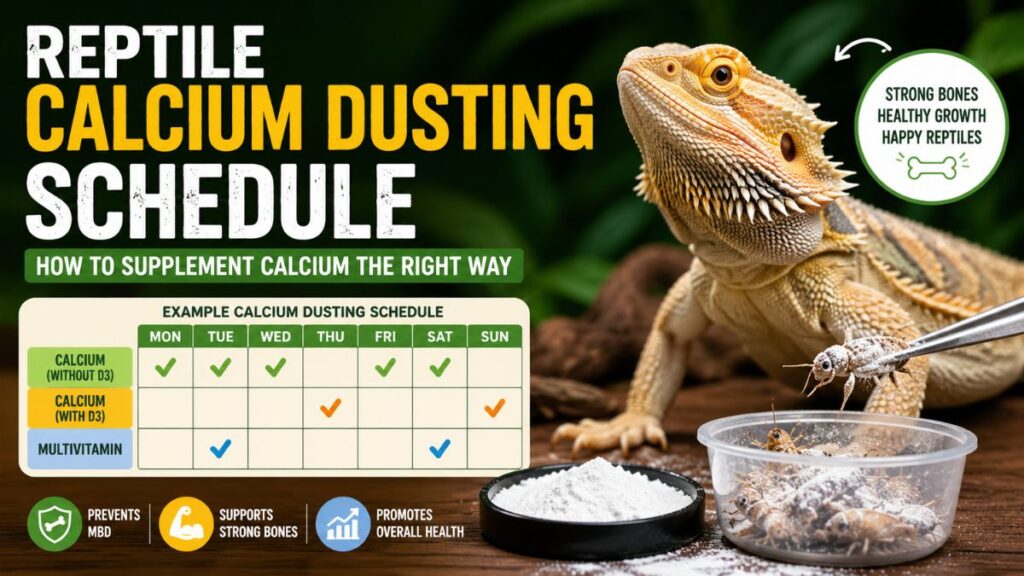
Understanding the Reptile Calcium Dusting Schedule
How Often Should You Dust Feeders?
The ideal schedule depends on your reptile’s species, age, diet, and UVB exposure.
General guidelines include:
Juvenile reptiles
- Calcium dusting: 4–6 feedings per week
- Multivitamin: 1–2 times weekly
Adult insect-eating reptiles
- Calcium dusting: 2–4 feedings per week
- Multivitamin: Once weekly
Breeding females
- May require increased calcium under veterinary guidance
These recommendations serve as a starting point. Species-specific needs should always be considered.
Calcium With or Without Vitamin D3
There are typically two calcium supplements available:
- Calcium without D3
- Calcium with Vitamin D3
If your reptile receives high-quality UVB lighting, calcium without D3 is usually used more frequently. For reptiles with limited UVB exposure, occasional use of calcium with D3 may be recommended.
Always follow manufacturer instructions and veterinary advice to avoid over-supplementation.
Reptile Calcium Dusting for Different Species
Bearded Dragons
Young bearded dragons grow rapidly and require frequent calcium supplementation.
Typical schedule:
- Juveniles: 5–6 times weekly
- Adults: 3–4 times weekly
Leopard Geckos
Leopard geckos commonly benefit from:
- Calcium dusting 2–3 times weekly
- A calcium dish available in the enclosure
Chameleons
Chameleons often require a carefully balanced approach:
- Plain calcium at most feedings
- D3 and multivitamin supplements on a rotating schedule
Tortoises and Herbivorous Reptiles
Herbivorous species obtain calcium from leafy greens but may still benefit from periodic supplementation depending on diet quality.
Best Practices for Calcium Supplementation
Proper Dusting Technique
A light coating is all that’s needed.
To dust feeder insects:
- Place insects in a small container or bag.
- Add a pinch of calcium powder.
- Gently shake until insects are lightly coated.
- Feed immediately.
Avoid creating thick white coatings, which may discourage feeding.
Pair Calcium with UVB Lighting
Even the best calcium supplement cannot replace proper UVB exposure.
For optimal calcium absorption:
- Use species-appropriate UVB bulbs
- Replace bulbs according to manufacturer recommendations
- Monitor basking temperatures
- Provide adequate enclosure lighting
The combination of UVB and calcium supplementation is essential for healthy development.
Common Calcium Dusting Mistakes
Over-Supplementing
Too much calcium can create mineral imbalances and may contribute to health issues.
Avoid:
- Dusting every feeding unnecessarily
- Using D3 supplements excessively
- Combining multiple calcium products without guidance
Ignoring Species Requirements
Different reptiles have different nutritional needs.
Factors that influence supplementation include:
- Age
- Growth rate
- Reproductive status
- Diet composition
- UVB quality
Research your specific species before establishing a routine.
Skipping Schedule Tracking
Many owners forget when supplements were last provided.
A simple calendar or tracking tool can help maintain consistency and prevent mistakes.
Use a Calculator to Simplify Your Schedule
Get Personalized Recommendations
Determining the right calcium schedule can feel overwhelming, especially for new reptile owners.
To simplify the process, try the Reptile Calcium Dusting Schedule Calculator:
https://reptilecalc.com/tool/reptile-calcium-dusting-schedule-calculator/
This tool helps reptile keepers create a more organized supplementation routine based on their pet’s needs and feeding schedule.
FAQs:
How often should I use calcium powder for my reptile?
It depends on the species and age. Juveniles generally need calcium more frequently than adults due to rapid growth.
Can reptiles get too much calcium?
Yes. Excessive supplementation can create nutritional imbalances. Always follow species-specific recommendations.
Is UVB lighting necessary if I use calcium supplements?
Yes. Most reptiles require proper UVB exposure to efficiently absorb and utilize calcium.
Conclusion:
A proper reptile calcium dusting routine is one of the most important steps you can take to support your pet’s long-term health. Strong bones, healthy growth, improved mobility, and better overall wellness all depend on balanced calcium supplementation.