
Have you ever wondered why a reptile that seems healthy suddenly becomes inactive, stops eating, or behaves unusually? The answer might not be its diet or enclosure size—it could be its lighting.
A proper reptile lighting schedule is one of the most important aspects of reptile care. In the wild, reptiles rely on natural daylight cycles to regulate their sleep, metabolism, digestion, and overall health. When captive reptiles don’t receive the correct amount of light each day, it can lead to stress, health problems, and abnormal behavior.
Whether you’re caring for a bearded dragon, leopard gecko, corn snake, or tortoise, understanding how long reptile lights should stay on can help your pet thrive. Let’s explore the ideal lighting duration and how to create the perfect daily routine.
Why Reptile Lighting Matters
Light Controls Natural Biological Rhythms
Reptiles use daylight to regulate their internal body clocks. Consistent lighting helps maintain:
- Healthy sleep patterns
- Proper digestion
- Normal feeding behavior
- Hormone production
- Seasonal breeding cycles
Without a reliable light cycle, reptiles can become stressed and confused.
UVB Exposure Supports Health
For many reptile species, UVB lighting is essential because it helps them produce vitamin D3, which allows proper calcium absorption.
Insufficient UVB exposure may contribute to:
- Metabolic bone disease
- Weak bones
- Poor growth
- Reduced activity levels
How Long Should Reptile Lights Stay On?
General Reptile Lighting Schedule Recommendations
Most reptiles benefit from a lighting schedule that closely mimics natural daylight.
A common guideline is:
- Summer months: 12–14 hours of light daily
- Winter months: 10–12 hours of light daily
For many pet reptiles, maintaining a consistent 12-hour day and 12-hour night cycle works extremely well.
Using automatic timers can help ensure lights turn on and off at the same time every day.
Species-Specific Considerations
Different reptiles have different lighting requirements.
Desert Reptiles
Examples include:
- Bearded dragons
- Uromastyx
- Desert tortoises
These species typically benefit from:
- 12–14 hours of light
- Strong UVB exposure
- Bright basking areas
Tropical Reptiles
Examples include:
- Green iguanas
- Day geckos
- Anoles
These reptiles generally require:
- 11–13 hours of light
- Moderate to strong UVB
- Seasonal adjustments when appropriate
Nocturnal Reptiles
Examples include:
- Leopard geckos
- Crested geckos
- African fat-tailed geckos
Even though they are active at night, they still need a clear day-night cycle.
Typically:
- 10–12 hours of daylight
- No bright lights at night
Creating the Ideal Reptile Lighting Schedule
Use Timers for Consistency
Consistency is more important than perfection.
A simple programmable timer can:
- Reduce stress on your reptile
- Maintain predictable routines
- Eliminate human error
- Simplify enclosure management
Most experienced keepers recommend automated timers for all lighting systems.
Adjust for Seasonal Changes
Many reptiles naturally experience changing daylight hours throughout the year.
Some keepers gradually adjust lighting durations to mimic natural seasons.
If you’d like a simple way to calculate seasonal daylight changes, try the Reptile Lighting Seasonal Schedule Calculator:
https://reptilecalc.com/tool/reptile-lighting-seasonal-schedule-calculator/
This tool can help create a more natural and species-appropriate lighting routine.
Common Reptile Light Cycle Mistakes
Leaving Lights On 24 Hours a Day
One of the biggest mistakes new keepers make is keeping lights on continuously.
Reptiles need darkness for:
- Rest
- Hormonal regulation
- Natural behavior patterns
Continuous lighting can cause stress and sleep disruption.
Using Colored Night Lights
Many products claim reptiles cannot see red or blue night lights.
However, research and keeper experience suggest many reptiles can still detect these lights.
Instead:
- Allow complete darkness at night
- Use ceramic heat emitters if nighttime warmth is required
Ignoring UVB Bulb Replacement
Even if a UVB bulb still produces visible light, its UVB output may decline over time.
Always follow manufacturer recommendations for replacement schedules.
Signs Your Reptile’s Lighting Schedule Needs Adjustment
Behavioral Warning Signs
Watch for:
- Reduced appetite
- Excessive hiding
- Lethargy
- Unusual aggression
- Irregular sleep patterns
These can sometimes indicate an improper reptile light cycle.
Physical Health Indicators
Potential warning signs include:
- Poor growth
- Weak bones
- Difficulty shedding
- Weight loss
- Reduced activity
If symptoms persist, consult a qualified reptile veterinarian.
Best Practices for Healthy Lighting
Follow Natural Daylight Patterns
The best reptile lighting setup usually mimics nature.
Remember these simple guidelines:
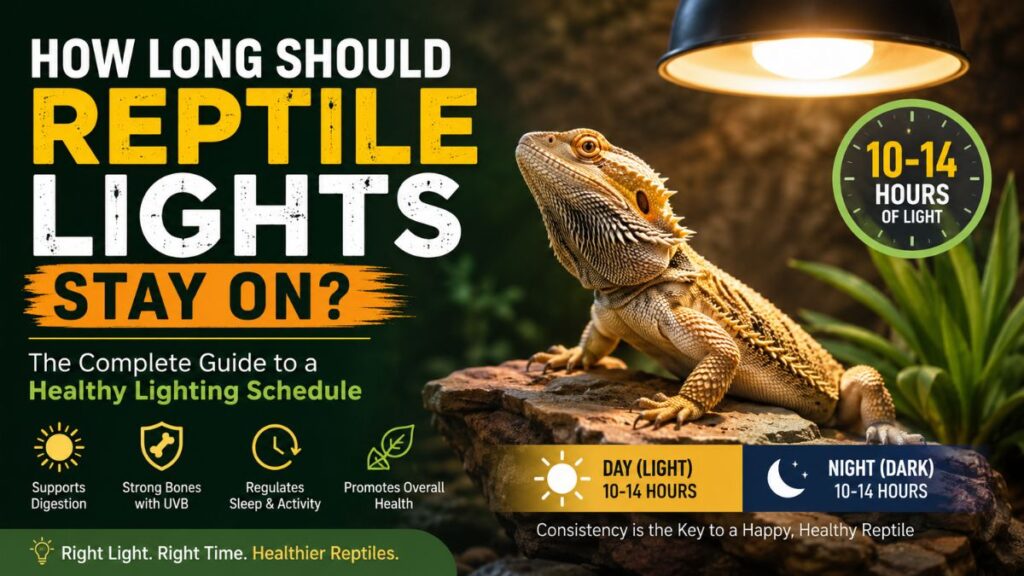
- Provide 10–14 hours of light depending on species
- Maintain a consistent schedule
- Offer complete darkness at night
- Replace UVB bulbs regularly
- Use timers whenever possible
A well-planned reptile photoperiod guide can significantly improve your pet’s quality of life.
FAQs:
Can I leave my reptile’s UVB light on all day?
Yes, during the daytime period. However, UVB lights should be turned off at night to maintain a natural day-night cycle.
Do reptiles need complete darkness at night?
Yes. Most reptiles benefit from complete darkness, which supports healthy sleep and natural biological functions.
How many hours of light do bearded dragons need?
Most bearded dragons thrive with approximately 12–14 hours of light daily, depending on the season and husbandry goals.
Conclusion:
A proper reptile lighting schedule is one of the easiest yet most impactful ways to improve your reptile’s health and well-being. By providing the right amount of light, maintaining consistency, and mimicking natural daylight cycles, you can support healthy growth, better feeding behavior, and reduced stress.