Choosing the right substrate for your reptile is important—but have you ever wondered if the depth of that substrate matters just as much as the type? Many reptile owners focus on heating, lighting, and diet while overlooking one critical factor: reptile substrate depth.
The truth is that substrate depth can directly affect your pet’s comfort, natural behavior, stress levels, and even overall health. Whether you own a bearded dragon, leopard gecko, corn snake, or tortoise, providing the correct amount of substrate helps create a more natural and enriching environment.
Let’s explore how deep your reptile’s substrate should be and why it makes such a big difference.
Why Substrate Depth Matters for Reptiles
Supports Natural Behaviors
In the wild, many reptiles spend a significant amount of time digging, burrowing, hiding, or nesting. A shallow layer of substrate may prevent them from displaying these natural behaviors.
Benefits include:
- Reduced stress
- Increased activity
- Better mental stimulation
- More natural enclosure enrichment
Helps Regulate Temperature and Humidity
A proper substrate layer can help stabilize environmental conditions inside the enclosure.
Deeper substrate can:
- Retain humidity longer
- Create cooler underground zones
- Support microclimates within the habitat
- Reduce sudden temperature fluctuations
This is particularly useful for tropical and burrowing reptile species.
Recommended Reptile Substrate Depth by Species
Small Ground-Dwelling Lizards
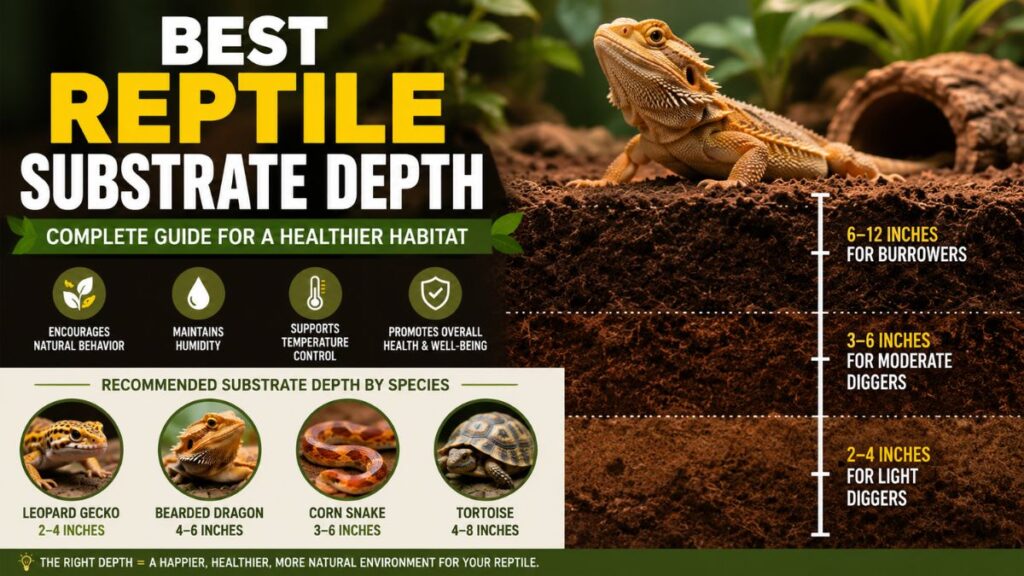
Species such as leopard geckos generally require only a moderate substrate layer.
Recommended depth:
- 2–4 inches (5–10 cm)
This depth allows light digging while keeping enclosure maintenance simple.
Bearded Dragons
Although bearded dragons are not extreme burrowers, they often dig when searching for cooler areas or preparing nesting sites.
Recommended depth:
- 4–6 inches (10–15 cm)
Females may benefit from deeper substrate during egg-laying periods.
Corn Snakes and Similar Species
Many snakes enjoy burrowing beneath loose substrate for security and thermoregulation.
Recommended depth:
- 3–6 inches (8–15 cm)
Providing enough depth encourages natural hiding behaviors.
Tortoises
Tortoises often dig shallow scrapes and may burrow partially into the substrate.
Recommended depth:
- 4–8 inches (10–20 cm)
Larger tortoise species may require even deeper substrate layers.
Reptile Substrate Depth Guide for Burrowing Species
Species That Need Deep Substrate
Certain reptiles rely heavily on burrowing for survival and comfort.
Examples include:
- Kenyan sand boas
- Sandfish skinks
- Blue-tongued skinks
- Uromastyx
- Certain monitor lizards
For these species, substrate depth is not optional—it is essential.
Ideal Depth Range
A general rule is:
- Provide substrate at least equal to the reptile’s body height.
- For dedicated burrowers, 6–12 inches (15–30 cm) or more may be necessary.
Always research the specific requirements of your species before setting up the enclosure.
How to Determine the Right Substrate Depth
Consider Your Reptile’s Natural Habitat
Ask yourself:
- Does the species naturally burrow?
- Does it come from deserts, forests, or grasslands?
- Does it require higher humidity levels?
The closer the enclosure mimics nature, the better your reptile is likely to thrive.
Observe Your Pet’s Behavior
Your reptile can provide valuable clues.
Signs more substrate may be needed:
- Constant scratching at enclosure corners
- Frequent attempts to dig
- Difficulty finding hiding spots
- Increased stress-related behaviors
Monitoring these behaviors can help fine-tune enclosure conditions.
Common Mistakes Reptile Owners Make
Using Too Little Substrate
Many beginners add only a thin decorative layer. Unfortunately, this often limits natural behaviors and reduces environmental enrichment.
Ignoring Species Differences
There is no universal substrate depth that works for every reptile. A leopard gecko’s needs differ greatly from those of a sand boa or tortoise.
Prioritizing Appearance Over Function
A beautiful enclosure is great, but functionality should always come first. The best reptile habitats balance aesthetics with species-specific requirements.
Use a Reptile Substrate Calculator for Accuracy
If you’re unsure how much substrate your enclosure requires, using a calculator can save time and prevent guesswork.
You can quickly estimate the ideal amount with the Reptile Substrate Depth Calculator:
https://reptilecalc.com/tool/reptile-substrate-depth-calculator/
This tool helps reptile owners create safer and more natural habitats based on enclosure dimensions and substrate depth requirements.
FAQs:
How deep should substrate be for most reptiles?
Most reptiles do well with 2–6 inches of substrate, but burrowing species may require 6–12 inches or more.
Can substrate be too deep?
Yes. Excessively deep substrate in small enclosures can reduce usable space and complicate cleaning. Always match depth to species requirements.
Do desert reptiles need deep substrate?
Some do. Species such as sand boas and uromastyx often benefit from deeper substrate that allows natural burrowing behavior.
Conclusion:
The right reptile substrate depth can significantly improve your pet’s quality of life. From encouraging natural digging and burrowing behaviors to helping regulate humidity and temperature, substrate depth plays a bigger role than many reptile owners realize.