
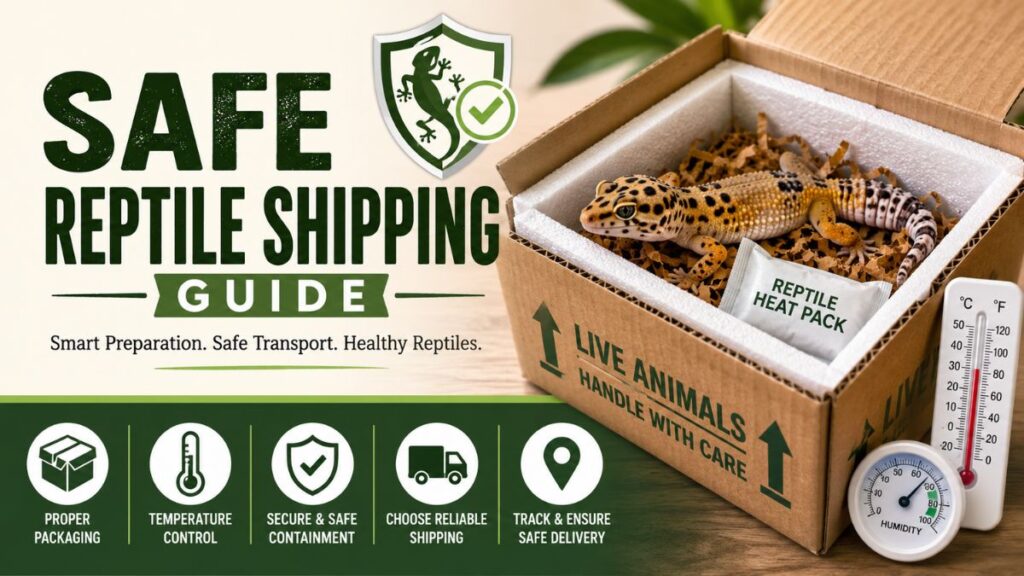
Shipping a reptile can feel nerve-wracking. Whether you’re sending a beloved pet to its new home or transporting a newly purchased reptile, one mistake can put the animal’s health at risk. That’s why understanding proper reptile shipping practices is essential for every keeper.
Many reptiles travel safely every day, but successful transport depends on careful planning, proper packaging, and attention to temperature conditions. This guide will walk you through everything you need to know to ensure your reptile arrives healthy, secure, and stress-free.
Understanding Safe Reptile Shipping
Why Proper Shipping Matters
Reptiles are sensitive animals that rely on stable environmental conditions. Unlike dogs or cats, they cannot regulate their body temperature effectively.
Poor shipping practices can lead to:
- Excessive stress
- Dehydration
- Temperature shock
- Injury during transit
- Serious health complications
Following proven reptile transport methods greatly reduces these risks.
Know the Legal Requirements
Before shipping any reptile, verify:
- Local and national shipping regulations
- Species-specific restrictions
- Carrier policies regarding live animals
- Import or export requirements if applicable
Always use carriers authorized to transport live reptiles.
Safe Reptile Shipping Guide: Essential Preparation Steps
Assess Your Reptile’s Health
Never ship a sick, injured, or recently treated reptile.
Before transport:
- Check for signs of illness
- Ensure normal feeding behavior
- Confirm proper hydration
- Avoid shipping during recovery periods
Healthy reptiles handle transportation much better than stressed or weakened animals.
Avoid Feeding Right Before Shipping
Many experienced keepers recommend withholding food before shipment.
Benefits include:
- Reduced risk of regurgitation
- Cleaner transport containers
- Lower stress during travel
Fasting periods vary by species and age, so research your reptile’s specific needs.
Monitor Weather Conditions
One of the most important aspects of shipping reptiles in cold weather or extreme heat is monitoring temperatures at both the origin and destination.
Avoid shipping when:
- Temperatures are excessively hot
- Freezing conditions are expected
- Severe weather delays are likely
Weather-related delays are among the biggest risks in reptile transportation.
Choosing the Best Reptile Shipping Supplies
Select the Right Shipping Box
The box should be:
- Durable
- Insulated
- Escape-proof
- Sized appropriately for the reptile
Insulated shipping containers help maintain stable temperatures throughout transit.
Use Secure Reptile Bags or Containers
For many species, breathable reptile bags are commonly used.
The container should:
- Prevent escape
- Limit excessive movement
- Provide adequate airflow
- Keep the reptile comfortable
Always double-check closures before sealing the package.
Add Cushioning Material
Use packing materials to reduce movement and absorb impacts.
Common options include:
- Crumpled paper
- Packing paper
- Soft insulation materials
The goal is to keep the reptile secure without creating excessive pressure.
Managing Temperature During Transit
Using Heat Packs Safely
When temperatures drop, heat packs can help maintain safe conditions.
Important tips:
- Use reptile-safe heat packs
- Never place heat packs directly against the animal
- Test pack performance beforehand
- Follow manufacturer instructions carefully
Improper heat pack use can cause overheating.
Preventing Overheating
Hot weather can be even more dangerous than cold conditions.
To protect your reptile:
- Ship during cooler parts of the week
- Avoid heat waves
- Use insulated packaging
- Monitor destination forecasts closely
Proper temperature management is critical for live reptile shipping safety.
Shipping Day Best Practices
Time the Shipment Correctly
Whenever possible:
- Ship early in the week
- Avoid weekends and holidays
- Choose overnight delivery services
This reduces the chance of delays and extended transit times.
Label the Package Clearly
Packages should include:
- Live animal markings (where legally required)
- Upright orientation indicators
- Emergency contact information
Clear labeling helps handlers treat the shipment appropriately.
Track the Shipment
Real-time tracking allows you to:
- Monitor progress
- Identify delays quickly
- Coordinate timely pickup
This is one of the most effective ways to ensure safe reptile transport tips are successfully implemented.
Tools That Help Improve Shipping Safety
Use a Reptile Shipping Calculator
Temperature conditions can change rapidly and significantly affect reptile safety.
Before shipping, use the Reptile Shipping Transport Safety Calculator to evaluate conditions and reduce risks:
https://reptilecalc.com/tool/reptile-shipping-transport-safety-calculator/
This helpful tool can assist keepers in making smarter transportation decisions based on environmental factors.
Common Reptile Shipping Mistakes to Avoid
Skipping Temperature Checks
Never assume weather conditions are safe.
Always verify temperatures for:
- Pickup location
- Transit hubs
- Destination city
Using Oversized Containers
Too much space can increase movement and stress during transport.
Ignoring Carrier Rules
Each carrier may have different requirements for best way to ship reptiles safely. Failure to comply can result in shipment delays or refusal.
FAQs:
Is overnight shipping best for reptiles?
Yes. Overnight shipping minimizes transit time and reduces stress, temperature fluctuations, and potential delays.
Can reptiles be shipped during winter?
Yes, but extra precautions are necessary. Proper insulation, approved heat packs, and weather monitoring are essential when shipping reptiles in cold weather.
What is the safest temperature range for reptile shipping?
The ideal range varies by species. Always research your reptile’s requirements and evaluate conditions before shipping.
Conclusion:
Safe reptile shipping isn’t just about getting an animal from one location to another—it’s about protecting its health, comfort, and well-being throughout the journey. By using proper packaging, monitoring temperatures, following carrier regulations, and planning ahead, you can dramatically reduce shipping risks.