Moving a reptile from one place to another might seem simple, but a small mistake during travel can quickly turn into a stressful and even dangerous situation. Whether you’re taking your pet to a veterinarian, bringing home a new reptile, or relocating across the country, proper reptile transport is essential for your animal’s safety and well-being.
Reptiles are highly sensitive to temperature changes, vibrations, and unfamiliar environments. Without the right preparation, they can become stressed, dehydrated, or injured. The good news? With a few simple precautions, you can ensure a safe and comfortable journey for your scaly companion.
Why Safe Reptile Transportation Matters
Understanding Reptile Stress During Travel
Unlike dogs and cats, reptiles often hide signs of stress. A reptile may appear calm while experiencing significant discomfort.
Common stress factors include:
- Temperature fluctuations
- Excessive handling
- Loud noises and vibrations
- Lack of security inside the travel container
- Long travel times without proper preparation
Reducing these stressors helps keep your reptile healthy throughout the trip.
Risks of Improper Transport
Unsafe transportation can lead to:
- Overheating or chilling
- Physical injuries
- Escape incidents
- Dehydration
- Weakened immune function
Proper planning significantly reduces these risks.
Choosing the Right Travel Container
Use Secure and Escape-Proof Containers
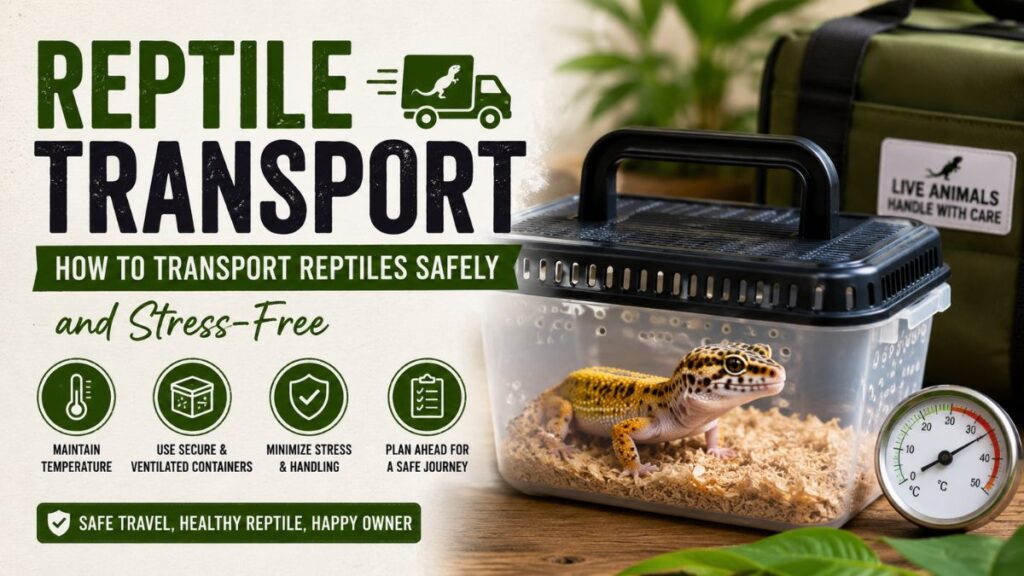
The travel container should prevent escapes while keeping your reptile comfortable.
Good options include:
- Ventilated plastic transport tubs
- Reptile travel cups
- Secure cloth snake bags
- Small transport boxes with air holes
The container should be large enough for comfort but not so large that the reptile slides around during travel.
Selecting the Correct Container Size
One of the most common mistakes is using a container that is either too large or too small.
To find the ideal size, use the Reptile Transport Cup Box Size Calculator:
https://reptilecalc.com/tool/reptile-transport-cup-box-size-calculator/
This tool helps determine appropriate cup and box dimensions based on your reptile’s size, making transportation safer and more efficient.
How to Prepare for Reptile Transport
Avoid Feeding Immediately Before Travel
Most reptiles should not be fed right before transportation.
Depending on the species:
- Snakes may need several days after feeding before travel.
- Lizards often benefit from a short fasting period.
- Turtles should travel with an empty digestive system whenever possible.
This reduces the risk of regurgitation and digestive stress.
Check Health Before Traveling
Never transport a reptile that appears seriously ill unless traveling directly to a veterinarian.
Watch for:
- Labored breathing
- Severe lethargy
- Open wounds
- Signs of dehydration
Healthy reptiles generally tolerate travel much better.
Maintaining Proper Temperature During Travel
Safe Temperature Control for Reptiles During Travel
Temperature management is one of the most critical aspects of reptile transportation.
Depending on weather conditions, you may need:
- Insulated shipping boxes
- Heat packs
- Cold packs
- Vehicle climate control
Always place heat or cold packs outside the animal’s direct contact area to prevent burns or overheating.
Monitor Environmental Conditions
If traveling for several hours, consider using:
- Portable thermometers
- Temperature monitoring devices
- Insulated transport containers
Stable temperatures help minimize stress and health risks.
Best Practices for Transporting Pet Reptiles
Minimize Handling
Once your reptile is safely secured, avoid unnecessary handling.
Frequent handling can:
- Increase stress
- Cause defensive behavior
- Raise the risk of escape
Allow your pet to remain undisturbed during the journey.
Keep the Environment Dark and Calm
Most reptiles feel safer in darker environments.
You can:
- Cover transport containers with a light towel
- Reduce exposure to bright sunlight
- Keep noise levels low
A dark, quiet environment often encourages reptiles to remain calm.
Secure Containers During Vehicle Travel
A loose container can shift suddenly during braking or turns.
To prevent movement:
- Place the container on a flat surface
- Use seat belts when possible
- Avoid stacking heavy objects on top
Stability greatly improves safety during travel.
Long Distance Reptile Transportation Tips
Plan Rest Stops Carefully
For longer trips:
- Check temperatures periodically
- Ensure ventilation remains adequate
- Avoid opening containers unnecessarily
Most reptiles prefer being left alone unless inspection is necessary.
Prepare Emergency Supplies
Carry:
- Paper towels
- Extra transport containers
- Water spray bottle (for appropriate species)
- Backup heat packs
- Contact information for reptile veterinarians
Being prepared can prevent small problems from becoming emergencies.
Common Reptile Transport Mistakes to Avoid
Overcrowding Containers
Never place multiple reptiles together unless they are known to safely cohabitate and transport requirements allow it.
Ignoring Weather Conditions
Extreme heat and cold are responsible for many transport-related issues.
Always check weather forecasts before departure.
Using Inadequate Ventilation
Containers need airflow, but excessive ventilation can make temperature control difficult.
Balance both carefully.
FAQs:
How long can reptiles stay in a transport container?
Most healthy reptiles can remain in a properly prepared transport container for several hours. Longer trips require careful temperature monitoring.
Should I give my reptile water during travel?
For short trips, water is usually unnecessary. Longer journeys may require hydration depending on the species.
Can reptiles travel in a car safely?
Yes. With proper temperature control, secure containers, and minimal handling, car travel is generally very safe for reptiles.
Conclusion:
Safe reptile transportation isn’t complicated, but it does require preparation. By choosing the right container, maintaining proper temperatures, minimizing stress, and planning ahead, you can make travel significantly safer for your reptile.