You’ve set up the tank, switched on the heat lamp, and the thermometer reads a comfortable 85°F. So why is your bearded dragon hiding all day, or your ball python turning down dinner?
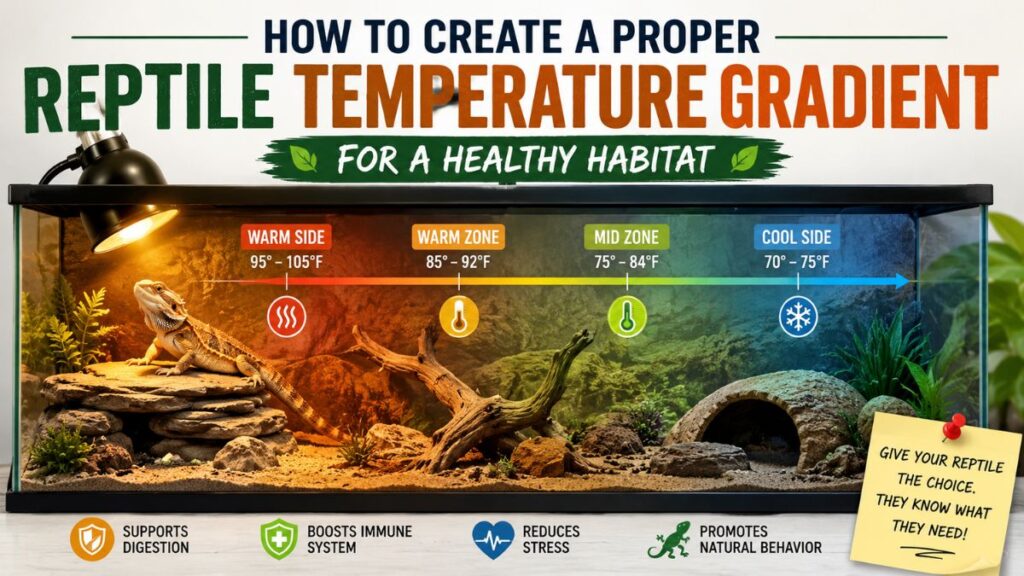
Often the problem isn’t the average temperature. It’s that the enclosure has only one temperature. A proper reptile temperature gradient gives your pet a hot zone, a cool zone, and a comfortable stretch in between, so it can choose what its body needs at any hour.
In this guide, you’ll learn how to build that gradient step by step, which numbers to aim for, how to measure them accurately, and the small mistakes that quietly cause stress. It’s simple, practical, and you can finish the setup in a weekend.
Why Your Reptile Needs More Than One Temperature
Cold-Blooded Doesn’t Mean Cold-Tolerant
Reptiles are ectotherms. They can’t make their own body heat the way we do, so they borrow it from their surroundings.
In the wild, a lizard warms up on a sun-baked rock, then slips into the shade before it overheats. A snake may bask in the morning and retreat underground after a meal. Your enclosure needs to offer the same choices.
With the right warm and cool options, your pet can:
- Digest food properly
- Fight off infections
- Shed cleanly
- Stay active and alert
What Happens When the Heat Is Wrong
A habitat that’s too cold slows digestion, which can lead to regurgitation and a weaker immune system. One that’s too hot, or hot everywhere, causes dehydration, stress, and even burns.
The tricky part? Reptiles hide discomfort well. Problems often show up weeks later, so getting the setup right from day one is far easier than fixing the damage afterward.
How to Build a Reptile Temperature Gradient Step by Step
Start With the Right Enclosure Size
A gradient needs distance. In a very small tank, the warm end heats the whole space and the “cool” side never really cools down.
For most terrestrial species, floor length matters more than height. Choose the largest enclosure that suits your animal’s adult size.
Put the Heat at One End
Mount your heat source over one end, never the middle. Picture the enclosure as a map: a hot end, a cool end, and a pleasant middle.
Place a flat rock, slate tile, or sturdy branch directly beneath the heat so your pet has a proper basking surface to climb onto.
Choose the Right Heat Source
Different animals need different heating. Here’s a quick way to think about it:
- Basking bulbs: Ideal for daytime baskers like bearded dragons. A solid reptile heat lamp setup uses a ceramic dome fixture rated for the bulb’s wattage, mounted securely and out of your pet’s reach.
- Ceramic heat emitters: They produce heat without light, which makes them great for night-time warmth.
- Under-tank heat mats: Useful for belly heat in snakes and geckos, but they must be connected to a thermostat.
- Hot rocks: Skip them. They heat unevenly and are a common cause of burns.
Create a True Cool Zone
The cool side of the reptile enclosure is just as important as the basking area. Keep heating equipment away from it, and let it settle at a gentler temperature.
Here’s a tip many beginners miss: put a hide on both ends, one warm and one cool. That way your pet never has to choose between feeling safe and feeling comfortable.
Target Temperatures for Popular Pet Reptiles
The numbers below are common care-sheet ranges, not strict rules. Always confirm the needs of your exact species and, when in doubt, ask an exotic-pet vet. If you want a quicker way to plan your setup, the Reptile Temperature Gradient Calculator can help you map out the zones.
Reptile Basking Spot Temperature by Species
The ideal reptile basking spot temperature is measured on the surface your pet sits on, not the air above it:
- Bearded dragon: 100–110°F (38–43°C)
- Leopard gecko: 88–92°F (31–33°C) on the warm surface
- Ball python: 88–92°F (31–33°C) at the warm spot
- Corn snake: 82–88°F (28–31°C)
- Crested gecko: no true basking spot needed
Cool-Side Targets
A cooler area lets your pet drop its body temperature whenever it needs to:
- Bearded dragon: 75–85°F (24–29°C)
- Leopard gecko: 73–77°F (23–25°C)
- Ball python: 76–80°F (24–27°C)
- Corn snake: 72–78°F (22–26°C)
- Crested gecko: 72–78°F (22–26°C), and they can struggle above 80°F (27°C)
Most species also tolerate a gentle night-time drop. Check your species’ care sheet first, since some, like ball pythons, shouldn’t get much cooler than the mid-70s°F.
Measuring and Monitoring Your Setup Like a Pro
How to Measure Reptile Tank Temperature Correctly
Those stick-on dial thermometers are famously unreliable, and they only read the air at a single spot. A better approach:
- Use an infrared temperature gun to check surfaces like the basking spot, substrate, and hides.
- Add a digital probe thermometer at your pet’s level on both the warm and cool sides.
- Check several points: the warm end, the middle, the cool end, and inside each hide.
- Re-check at different times of day, because room temperature changes.
Knowing how to measure reptile tank temperature accurately is the difference between guessing and knowing.
Use a Thermostat, Every Time
Bulbs and mats can overheat or malfunction. A thermostat reads the temperature and trims the power when it climbs past your set point, which makes it the cheapest insurance you can buy.
Check that the thermostat type matches your heater: dimming thermostats suit basking bulbs, while mats usually need an on/off or pulse-proportional model.
Plan for Night and Seasons
Room temperatures shift with the seasons. A setup that works perfectly in July may leave your pet chilly in January, so re-test after every big weather change. In winter, a ceramic heat emitter can add warmth without light at night.
Common Mistakes That Quietly Cause Problems
Even experienced keepers slip up here. Watch out for:
- Trusting a single thermometer
- Heating the whole tank evenly
- Measuring air temperature only, when surface temperature is what a basking reptile actually feels
- Skipping the thermostat
- Forgetting humidity, since heat lamps dry out the air and tropical species need extra moisture
- Setting everything up once and never checking again
Let Your Reptile Tell You If It’s Working
Your pet’s behavior is the best feedback you’ll get.
Signs the Habitat Is Too Hot
- Spending all day on the cool side
- Avoiding the basking spot completely
- Restless pacing or pressing against the glass
- Open-mouth panting for long stretches (a short gape can be normal for bearded dragons)
Signs It’s Too Cold
- Sluggishness and a poor appetite
- Regurgitating meals
- Staying under the heat source all day
- Darker-than-usual coloring in some lizards
When the setup is right, you’ll notice your reptile moving between zones throughout the day, warming up, cooling off, exploring. If something still seems off, check in with an exotic vet.
FAQs
What is a reptile temperature gradient?
It’s a range of temperatures within one enclosure, from a warm basking area to a cooler retreat, so your reptile can regulate its own body temperature.
How big should the difference be between the warm and cool sides?
For many species, a difference of roughly 10–20°F (5–11°C) works well. Desert species like bearded dragons often need a wider spread. Always check your species’ care sheet.
Do reptiles need heat at night?
That depends on the species and your room. Many tolerate a slight drop, while others need steady warmth. A ceramic heat emitter on a thermostat is a safe, light-free option.
Can I use just a heat mat?
A heat mat can work for some snakes and geckos in a warm room, but it rarely creates a full gradient on its own. Pair it with a thermostat and consider adding ambient heat.
Final Thoughts: Small Setup Changes, Big Health Gains
A healthy habitat isn’t about finding one perfect number. It’s about giving your reptile the freedom to choose. Put the heat at one end, build a real cool zone, measure surfaces accurately, and let a thermostat keep everything safe.