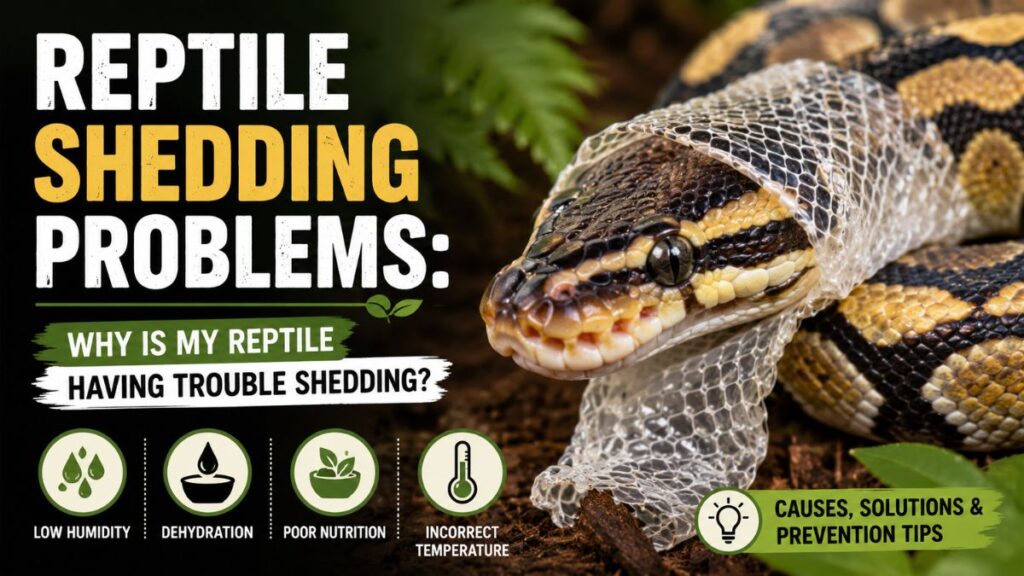
You spot it during your evening check: a ragged strip of old skin clinging to your snake’s head, or tiny flakes stuck around your gecko’s toes. Shedding is supposed to happen quietly in the background, so when it doesn’t, it’s natural to worry. Reptile shedding problems are one of the most common concerns keepers face, and the encouraging part is that most cases come down to a few fixable causes. In this guide, you’ll learn what normal shedding looks like, why your reptile might be struggling, how to help safely at home, and which overlooked spot most keepers forget to check.
What Normal Shedding Looks Like
Before you can spot a problem, it helps to know what a healthy shed looks like. Reptiles shed because they outgrow their skin. Babies and juveniles shed often, sometimes every few weeks, while adults shed less frequently.
The Shedding Cycle in Plain English
Shedding follows a pattern. A new layer of skin forms underneath, a thin lubricating fluid separates it from the old layer, and then the old skin loosens and comes off. Snakes usually shed in one long piece, a bit like peeling off a sock. Lizards such as leopard geckos and bearded dragons tend to shed in patches, and many geckos eat the skin as it comes off. A full cycle typically takes one to two weeks.
Signs Your Reptile Is About to Shed
Look for these early clues:
- Dull, faded colors or a slightly milky look
- Cloudy, bluish eyes in snakes (often called “going into blue”)
- Reduced appetite
- More hiding, or a shorter temper than usual
- Rubbing against rocks, wood, or decor
Cloudy eyes in a snake are normal during this stage and usually clear up a few days before the skin comes off.
Reptile Shedding Problems: Common Signs to Watch For
Vets call a difficult shed dysecdysis. It can look minor, but ignoring it can lead to real trouble. Here’s what to look for after every shed.
Patchy or Torn Skin
A snake that sheds in many small pieces instead of one smooth sheet is often telling you something about its environment. Lizards naturally shed in patches, but old skin that’s still hanging on days later is a red flag.
Stuck Shed on Reptile Toes and Tail Tips
This is the one keepers miss most often. Old skin can dry into a tight band around a toe or tail tip, restricting blood flow. Left alone, it can cause tissue damage and even the loss of a toe. After every shed, gently check each toe and the tail tip, especially on geckos and other small lizards.
Retained Eye Caps
Snakes and some geckos have a clear scale over each eye called a spectacle, or eye cap. If it doesn’t come off with the rest of the skin, the eye may look dull, wrinkled, or cloudy after the shed. Don’t pick at it with tweezers, as you could scratch the eye.
Why Is My Reptile Not Shedding Properly?
Shedding trouble rarely has a single cause. More often, a few small husbandry issues stack up. Here are the usual suspects.
Humidity That’s Too Low
This is the number one culprit. Dry air makes old skin cling tight instead of loosening. Picture a ball python keeper who checks humidity at breakfast and sees a comfortable 55%. By evening, with the heat on, it has quietly dropped to 35%. That nightly dip is enough to leave old skin dry and stubborn. A reliable hygrometer, placed where your reptile actually spends its time, shows what’s really happening.
Dehydration
Reptiles that don’t drink enough have a harder time shedding. Make sure fresh water is always available, clean the bowl often, and notice whether your animal actually drinks. Some species, like many chameleons, prefer droplets over a bowl, so mist or use a drip system if that suits your species.
Temperatures That Are Off
Reptiles rely on heat to regulate their bodies. If the basking spot or warm side is too cool, metabolism slows and skin renewal can lag behind. Confirm temperatures with a digital thermometer rather than a stick-on gauge.
Poor Nutrition
Skin is a living organ and needs good fuel. A diet lacking in variety, or missing key vitamins and minerals, can contribute to weak, uneven sheds. Feed species-appropriate prey, gut-load feeder insects, and follow a supplement routine that fits your animal.
Parasites, Mites, and Skin Infections
Mites irritate the skin and can interrupt normal shedding. Scale rot and other infections can also leave rough, damaged skin that doesn’t release old layers cleanly. If you notice tiny moving dots, unusual scabs, blisters, or discolored scales, don’t guess. A vet can diagnose and treat these.
Enclosure Setup and Stress
Rough surfaces help reptiles rub off old skin, so include branches, rocks, and textured hides that suit the species. Stress from frequent handling, a cramped tank, or poor temperatures can also throw off the cycle, so give your animal some peace during a shed.
How to Help a Reptile Shed at Home
If you catch the problem early, simple steps usually solve it. Work gently, and remember that patience beats force every time.
Raise Humidity Safely
Increase humidity gradually and stay inside the range recommended for your species. You can mist the enclosure, use a moisture-holding substrate, or place a water bowl where it boosts evaporation. Avoid creating a constantly soggy, stagnant enclosure, because that invites bacteria and scale rot.
Try a Lukewarm Soak
A short soak softens stubborn skin. Use shallow, lukewarm water, comfortably warm to your wrist but never hot, and keep it shallow enough that your reptile can hold its head up easily. Stay with your pet for 15 to 20 minutes, then let it move around so loosened skin can slip off naturally. Never leave a reptile unattended in water.
Add a Humid Hide
A humid hide is a small, lidded container with an entrance hole, filled with damp sphagnum moss or paper towel. It gives your reptile a private, moist spot to retreat to during a shed without raising humidity across the whole enclosure. Check it daily and replace the moss if it smells or grows mold.
What Not to Do
- Don’t peel off dry skin by force. You can tear the healthy skin underneath.
- Don’t use oils, sprays, or home remedies unless a vet advises it.
- Don’t pull on stuck eye caps or toe bands with tweezers.
- Don’t keep soaking again and again if nothing improves.
If stubborn skin remains after one or two gentle soaks, it’s time to get professional advice.
Ideal Humidity for Reptile Shedding
Humidity needs vary a lot between species, so one number never fits everyone. As a rough guide, keepers often aim for:
- Leopard geckos: around 30–40% in the enclosure, with a humid hide at higher levels
- Bearded dragons: roughly 30–40%
- Ball pythons: around 50–60%, nudged a little higher during a shed
- Crested geckos: roughly 60–80%, with a drier period between mistings
Treat these as starting points and always check a species-specific care sheet. If you’d like to take the guesswork out, try the Reptile Shedding Humidity Calculator to get a clearer humidity target for your reptile before the next shed begins.
When to Call a Reptile Vet
Home care works well for mild cases, but some situations need a professional:
- Retained eye caps that don’t come off after a gentle soak or two
- Stuck shed tightening around toes or the tail tip
- Repeated bad sheds, even though humidity and temperatures look right
- Swelling, redness, blisters, discharge, or a bad smell
- Refusing food, weight loss, or unusual lethargy alongside the shed trouble
A vet who treats reptiles can safely remove stuck skin and check for underlying causes such as parasites or infection.
Easy Habits for Smoother Sheds
- Check humidity and temperature daily with reliable gauges
- Keep clean water available at all times
- Provide rough surfaces and a humid hide
- Log shed dates so you can spot patterns early
- Inspect toes, tail tip, and eyes after every shed
A few minutes of observation after each shed can save your reptile weeks of discomfort.
FAQs
Can I peel the stuck skin off my reptile?
It’s best not to. Dry skin that’s pulled off can tear living skin beneath. Soften it with humidity or a short lukewarm soak and let it release on its own. If it won’t budge, ask a vet.
How long does a reptile take to shed?
Most reptiles finish within one to two weeks from the first dull look, though snakes often shed the skin itself within a day or two once it starts coming off. If shedding drags on well past that, or the skin stays patchy, review humidity and hydration.
Why does my snake keep shedding in pieces?
Low humidity, dehydration, or a lack of rough surfaces are the most common reasons. Mites or illness can also play a role. Fix the basics first, and see a vet if it keeps happening.
Should I feed my reptile while it’s shedding?
Many reptiles eat less before and during a shed, and that’s normal. Offering food is usually fine, but don’t worry if your reptile refuses a meal. Keep it hydrated and give it quiet time.
Conclusion: Small Changes, Big Relief
Reptile shedding problems can feel stressful, but they’re rarely a mystery once you know where to look. Humidity, hydration, temperature, and a few rough surfaces solve most cases, and a quick check of toes and eyes catches the rest before they become serious.