It’s 9 p.m., and the lights just went out. The fridge hum stops, the fan goes quiet, and then you look at the glass enclosure in the corner. The basking lamp is dark, and the room is already cooling. How long is your pet okay like this?
If you’ve asked yourself that, you’re not alone. A reptile power outage is stressful because your pet can’t make its own body heat. Everything depends on the equipment that just stopped working. The good news is that a little planning and a few cheap supplies get most healthy reptiles through a blackout without trouble.
In this guide, you’ll learn what happens inside your pet’s body when the heat disappears, what to do in the first 15 minutes, and which backup heat sources are safe. You’ll also learn which ones can hurt your pet.
What Happens to Your Pet During a Reptile Power Outage?
Why Reptiles Can’t Warm Themselves
Reptiles are ectotherms, which means they borrow heat from their surroundings. A mammal shivers and burns energy to stay warm. A reptile just slows down.
Digestion, immunity, and movement all depend on the right temperature range. When your heat lamp, ceramic emitter, or under-tank heater goes dark, the enclosure drifts toward room temperature, and your pet’s body drifts with it.
How Long Can a Reptile Survive Without Heat?
The honest answer is that it depends. These factors matter most:
- Species: Desert and tropical species usually need more warmth than temperate ones.
- Size and age: Small animals lose heat much faster than large ones.
- Room temperature: A blackout in July is a very different problem from one in January.
- Enclosure type: Glass loses heat quickly, while wood and PVC hold it longer.
- Health: A sick or underweight reptile has little room for error.
As a rough guide, a healthy adult in an insulated enclosure can often handle several hours of cooler temperatures. Trouble tends to build when the enclosure stays well below its normal range for a day or more. For many species, that range starts to become risky below roughly 65°F (18°C). Treat this as a general guide, not a promise, and always check your species’ care sheet.
Which Reptiles Are Most at Risk
Some animals need extra attention the moment the power drops:
- Hatchlings and juveniles
- Reptiles that are sick, underweight, or recovering from surgery
- Animals that ate within the last day or two
- Gravid females and eggs in an incubator
- Tropical species that are normally kept warm all year
Your First 15 Minutes: What to Do When the Lights Go Out
Check the Temperature First
Don’t guess. Grab a battery-powered thermometer and read both the warm side and the cool side. Write down the time and the numbers. This gives you a baseline, so you can tell whether the temperature is falling slowly or quickly.
Trap the Heat You Already Have
The enclosure is holding warmth right now, so your job is to keep it there:
- Keep the enclosure closed. Every time you open it, heat escapes.
- Drape blankets or towels over the top and sides.
- Leave a small gap for airflow, because reptiles still need fresh air.
- Block drafts from windows and doors.
- Move the enclosure to an interior room if you can do it without stressing your pet.
Skip Meals Until Things Stabilize
A reptile that’s too cold can’t digest properly, and food sitting in the gut can rot or come back up. If the outage looks long, don’t feed until temperatures are back to normal. A healthy adult can safely skip a meal or two.
Safe Ways to Keep a Reptile Warm During a Power Outage
Emergency Heat Sources for Reptiles That Actually Work
If you need to keep a reptile warm during a power outage, these options are low-risk when used correctly:
- Hot water bottles: Fill a bottle with hot (not boiling) tap water and wrap it in a towel. Place it against the outside of the enclosure or in a spot your pet can’t be burned by. Refill it every hour or two.
- Air-activated hand warmers: These work well when kept outside the enclosure, wrapped in cloth, and held against the glass or wall. They can get surprisingly hot, so never let your pet touch them.
- Battery-powered options: A power bank paired with a USB-powered heating pad rated for pets can help in a pinch. Keep it on the outside, or follow the manufacturer’s instructions closely.
- Body warmth for a short trip: If you have to move your pet, a secured, ventilated container tucked against your body or inside a warm bag works for short periods.
Any one of these is a temporary bridge, not a permanent fix. Check temperatures often and adjust.
Heat Sources You Should Never Use
When people panic, they get creative, and that’s when pets get hurt. Never use:
- Candles or open flames near or inside the enclosure
- Gas stoves, charcoal grills, or propane heaters indoors, which are a serious carbon monoxide risk
- Heat rocks, which cause burns
- Direct contact between your pet and a hot pack or bottle
- A generator running inside the house or garage
Generators must always run outdoors, well away from windows and doors.
Protect Humidity Too
Heat gets the attention, but humidity matters just as much for species like crested geckos, chameleons, and many snakes. Keeping the enclosure closed helps hold moisture in. If you need to mist, use room-temperature or lightly warmed water, and skip it if the enclosure is already cold and damp. Cold plus wet is a bad combination for respiratory health.
Quick Tips by Reptile Type
Bearded Dragons and Leopard Geckos
Desert species usually handle a brief cooldown better than a long one, but they depend heavily on a basking spot. Insulate the enclosure well, and use a wrapped hot water bottle near the warm side. Skip feeding until normal heat is back.
Snakes
Ball pythons and corn snakes often get sluggish rather than showing obvious distress. Make sure they have a snug, insulated hide and keep the enclosure closed. A tight, covered setup holds heat well. Never let a snake coil around a hot pack.
Chameleons and Crested Geckos
These species prefer moderate temperatures, and many tolerate cooler nights, but they still need steady humidity and airflow. Don’t over-insulate to the point that ventilation is blocked.
Turtles and Aquatic Species
Water holds heat longer than air, which helps. Cover the tank to reduce heat loss, and avoid adding very hot water suddenly. If the filter is down for many hours, a battery-powered air pump can help keep oxygen levels up.
Build a Blackout Kit Before the Next Storm
What to Keep in the Kit
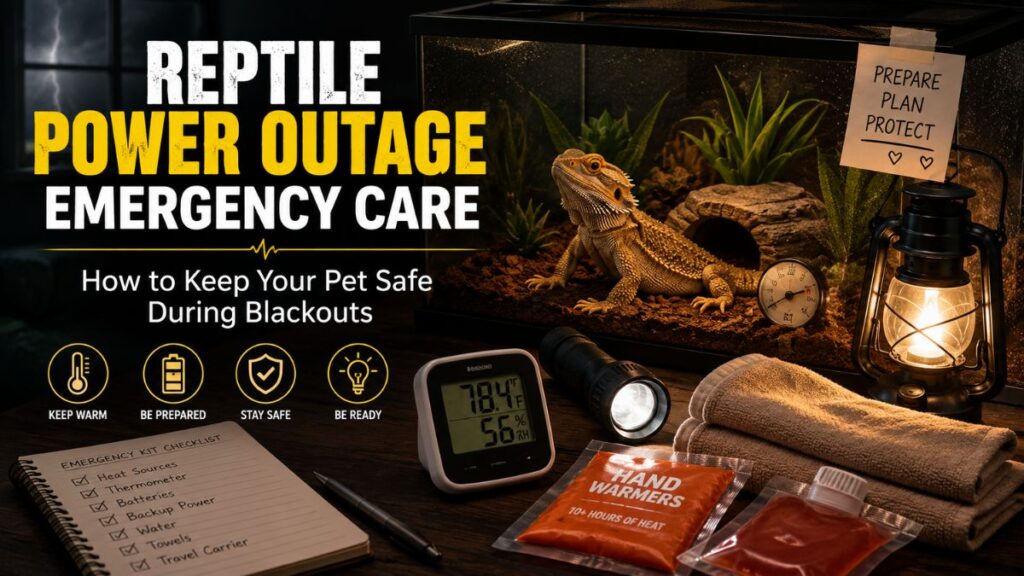
A reptile blackout emergency kit doesn’t need to be fancy. Keep it in one box or bag so you can grab it in the dark:
- A battery-powered digital thermometer (and spare batteries)
- A flashlight or headlamp
- Hand warmers and a few thick towels or blankets
- A hot water bottle
- A fully charged power bank
- A secure, ventilated carrier
- Your exotic vet’s phone number, written down
Check the kit every few months, because dead batteries are the most common failure.
Know Your Numbers Ahead of Time
One of the most stressful parts of a blackout is not knowing how much time you have. You can take some of the guesswork out by running your setup through the Reptile Power Outage Survival Time Calculator. It helps you estimate how long your reptile’s enclosure may stay in a safe range, so you can decide early whether to insulate, add backup heat, or move your pet. Do it now, while things are calm, and save the result with your kit.
Have a Backup Plan for Long Outages
If your area is prone to long blackouts, think ahead:
- Ask a friend or family member with power if you can bring your pet over in an emergency.
- Keep a charged power bank or small battery backup suited to low-wattage reptile heating.
- Know how to transport your pet safely, with a warm, ventilated container, and never leave it in a parked car.
After the Power Comes Back
Warm Things Up Gradually
When the lights return, resist the urge to crank everything to maximum. Let the enclosure return to its normal range steadily. Rapid swings in temperature add stress on top of the cold your pet just went through. Offer fresh water, but wait before offering food until your reptile is basking or moving normally again.
Warning Signs to Watch For
Keep an eye on your pet for several days. Contact a vet if you notice:
- Unusual lethargy or weakness
- Refusing food for much longer than normal
- Regurgitation
- Wheezing, bubbles at the nose or mouth, or open-mouth breathing
- Tremors or loss of coordination
When to Call an Exotic Vet
Cold stress can lead to respiratory infections and digestive problems, and they sometimes take days to show. If your pet had a long, cold stretch, is young, or already had health issues, a quick call to an exotic vet is a smart move. It’s better to ask early than to wait.
Frequently Asked Questions
How long can reptiles go without a heat lamp?
It varies by species, age, and room temperature. Many healthy adults handle a few hours in an insulated enclosure, but long periods well below their normal range become risky. Check your species’ needs and monitor with a thermometer.
Is it safe to use hand warmers for a reptile?
Yes, if used carefully. Wrap them in cloth, keep them on the outside of the enclosure, and make sure your pet can’t touch them directly. They can get hot enough to burn.
Should I feed my reptile during a blackout?
No. Cold reptiles digest poorly, and food can sit in the gut. Wait until temperatures return to normal.
Can I use a car heater to warm my reptile?
Only for short, supervised transport in a secure, ventilated container. Never leave a reptile alone in a parked car, because temperatures can swing dangerously in either direction.
Conclusion
A blackout feels scary in the moment, but you’re far better prepared than you think. Keep the enclosure closed, insulate it, use safe backup heat, skip the meals, and keep checking temperatures.
The real difference-maker is preparing before the next storm. Pack your blackout kit this weekend, and run your setup through the Reptile Power Outage Survival Time Calculator so you know how much time you have. A few minutes of preparation now can protect your reptile when it matters most.