
You pick up your bearded dragon, and something feels different. Heavier? Lighter? Honestly, you can’t tell. Reptiles don’t announce when they’re struggling, and by the time a problem is obvious, it has often been building for weeks.
That’s why this Reptile Healthy Weight Guide exists. Whether you keep a leopard gecko, a ball python, or a blue-tongue skink, you’ll find realistic weight ranges, simple ways to check body condition at home, and clear signs it’s time to call a vet. No jargon, just steps you can use this week.
Why Weight Matters More Than Most Keepers Realize
Most of us judge our pets by appetite and activity. With reptiles, both can mislead you. An animal can look alert and still be slowly losing mass, or eat eagerly and quietly gain too much.
What the Scale Tells You That Your Eyes Can’t
Reptiles are experts at hiding illness. In the wild, looking weak invites predators, so they act “fine” until they can’t anymore. A scale doesn’t care about instinct. A simple weight log shows trends long before symptoms appear:
- A slow drop over several weeks can point to parasites, stress, wrong temperatures, or mouth and gut problems.
- A sudden jump may mean overfeeding, developing eggs, or fluid retention.
- A flat line in a young, growing reptile often signals a husbandry issue like low heat or poor diet.
The Cost of Being Too Thin or Too Heavy
Underweight reptiles often have weaker immune systems, trouble shedding, and little energy reserve for illness or breeding. Overweight reptiles face fatty liver disease, difficulty moving, and shorter lifespans. Neither problem is dramatic at first, which is why it’s so easy to miss.
Your Reptile Healthy Weight Guide: Quick Reference Ranges
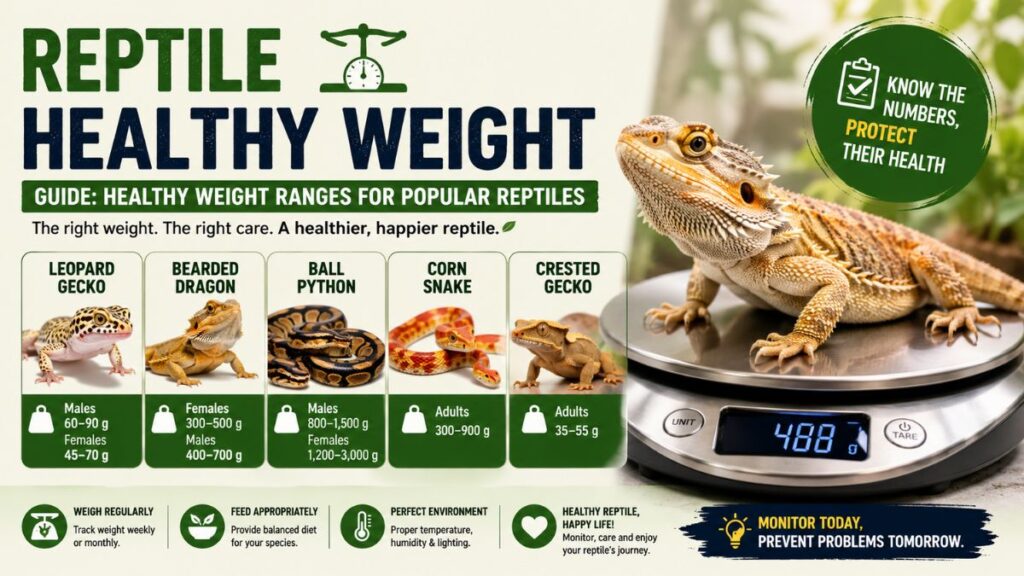
Here are typical healthy adult ranges for popular pet reptiles. Use them as a starting point, not a verdict.
Read This Before Comparing Numbers
Weight depends on species, sex, age, morph, and bloodline. A giant-morph leopard gecko will outweigh a standard one and still be perfectly healthy. Females carrying eggs weigh more than usual. Always combine the number with a look at your animal’s body shape (more on that below).
Lizards
- Bearded dragon: Wondering how much a bearded dragon should weigh? Most healthy adults land between roughly 380 and 600 grams (about 13–21 oz). Males are often a bit heavier.
- Leopard gecko: A healthy weight for a leopard gecko is typically 45–80 grams (about 1.6–2.8 oz). Males usually run heavier than females, and giant morphs can go higher.
- Crested gecko: Adults generally weigh 35–55 grams. Some large individuals reach the low 60s.
- Blue-tongue skink: Depending on the species, adults often fall between 450 and 900 grams. Check which type you own, since sizes vary a lot.
- Veiled chameleon: Adults are usually 90–170 grams, with males larger than females.
Snakes
- Ball python: Adult females commonly weigh 1.5–3 kilograms (about 3.3–6.6 lb). Males are smaller, around 1–2 kilograms (2.2–4.4 lb).
- Corn snake: Most adults weigh 500–900 grams, with some slightly above or below depending on length and build.
A ball python weight chart in plain English: Hatchlings start around 50–90 grams. Growth should be steady rather than rushed, and females typically reach full size at about three to four years. If your snake’s growth has stalled for months, or it’s gaining weight much faster than its length, take note.
Tortoises and Turtles
Tortoises and turtles are trickier. Their shells add weight that tells you little about body fat, and ranges vary enormously between species. For these animals, vets usually compare weight to shell length for that species, and they track the trend over time. If you keep a tortoise, ask your reptile vet for a species-specific target instead of relying on a general number.
How to Weigh Your Reptile at Home
You don’t need fancy equipment. You just need consistency.
What You’ll Need
- A digital kitchen scale that measures in 1-gram increments (0.1 g for very small geckos is even better)
- A lightweight container or bowl, which you’ll “tare” to zero
- A notebook or phone note for your log
For large snakes, a luggage scale or a pillowcase on a bathroom scale works. Just subtract the weight of the bag.
Build a Simple Routine
- Weigh at the same time of day, ideally before feeding.
- Use the same scale every time, since different scales read slightly differently.
- Weigh hatchlings and juveniles weekly and adults every two to four weeks.
- Write down the date and the number, plus notes such as “just shed” or “ate yesterday.”
Handle your animal calmly and briefly. A stressed reptile can wriggle off the scale, and you want the process to stay low-pressure for both of you.
Want a faster way to see where your pet stands? Our Reptile Healthy Weight Calculator lets you compare your reptile’s numbers against a healthy range in seconds.
How to Tell if a Reptile Is Overweight or Underweight
The scale is only half the picture. Knowing how to tell if a reptile is overweight comes down to what you see and feel, not just a number.
Signs of an Underweight Reptile
- Visible bones: hips, ribs, or a sharp, triangular spine in snakes
- A thin tail: in fat-tailed species like leopard geckos, a skinny tail is a red flag
- Sunken eyes or loose skin that stays tented when gently pinched, which can also signal dehydration
- Low energy or refusing food for longer than normal for the species
- Poor sheds with retained skin patches
Signs of an Overweight Reptile
- Fat pads on the head (bearded dragons), across the shoulders, or near the armpits
- A very wide tail base or tail that looks swollen
- Rolls or bulges along a snake’s body, especially a “bread loaf” shape instead of a gently rounded one
- Sluggishness and reluctance to climb or explore
- Belly dragging on the ground in lizards that normally carry themselves higher
A healthy body generally looks gently rounded and firm. You shouldn’t see sharp bones, but you shouldn’t see overflowing fat either.
Why Your Reptile’s Weight Changes (And When That’s Normal)
Before you panic over a two-gram swing, know that weight naturally fluctuates. Look at the bigger trend.
Normal Reasons for Ups and Downs
- A recent meal: food in the gut adds temporary weight
- Hydration: a drink or a soak can nudge the number up
- Shedding: weight often dips right before and after
- Breeding season: females gain while developing eggs, and some males lose weight when they stop eating to focus on mating
- Seasonal slowdowns: many species eat less in cooler months or during brumation
When to Be Concerned
Call a reptile-savvy vet if you notice any of these:
- Weight loss of about 10% or more over a few weeks without an obvious cause
- Rapid weight gain with no change in feeding
- A juvenile that isn’t growing
- Weight changes paired with diarrhea, swelling, discharge, or lethargy
When in doubt, bring your weight log to the appointment. Vets love data, and it will save a lot of guesswork.
Simple Ways to Get Back on Track
Many weight problems come down to husbandry. Small, steady fixes usually work better than dramatic changes.
If Your Reptile Is Underweight
- Check temperatures first. Reptiles can’t digest properly when their basking spot or warm side is too cool.
- Review the diet. Make sure you’re offering the right foods in the right amounts for your species and age.
- Look for stress like a noisy room, too much handling, or a bare, exposed enclosure.
- Get a fecal test. Parasites are one of the most common hidden causes of weight loss.
If Your Reptile Is Overweight
- Adjust portions and frequency gradually instead of cutting food suddenly.
- Swap fatty feeders for lighter options. For example, rely less on waxworms and superworms if you’ve been feeding them often.
- Encourage movement with climbing branches, hides placed farther apart, and enrichment.
- Reweigh every couple of weeks to confirm the trend is heading the right way.
Slow and steady wins here. Sudden crash diets can stress a reptile as much as overfeeding does.
FAQs
How often should I weigh my reptile?
Weigh hatchlings and juveniles weekly, since they grow fast and small problems show up quickly. Adults are fine with a check every two to four weeks. Whatever schedule you choose, stay consistent.
Is a “fat” reptile healthy?
Not usually. A little extra padding can be normal, but visible fat rolls, a swollen tail base, or sluggish movement point to overfeeding. Extra weight raises the risk of liver problems and shortens lifespan.
Can I use one weight chart for every reptile?
No. A 600-gram bearded dragon is healthy, while a 600-gram leopard gecko would be a serious problem. Always compare your animal to its own species, sex, and age, and use body shape as a second check.
My reptile stopped eating and is losing weight. What should I do?
First check heat, lighting, and hydration, since low temperatures are a very common cause. Then consider seasonal slowdowns, shedding, or breeding behavior. If the weight loss continues beyond a few weeks or comes with other symptoms, see an exotic vet.
Conclusion: Start Tracking Today
A scale and a notebook may be the cheapest health tools you’ll ever own. Once you know your reptile’s normal weight, you’ll spot trouble sooner, avoid costly problems, and feel much more confident about your care.