
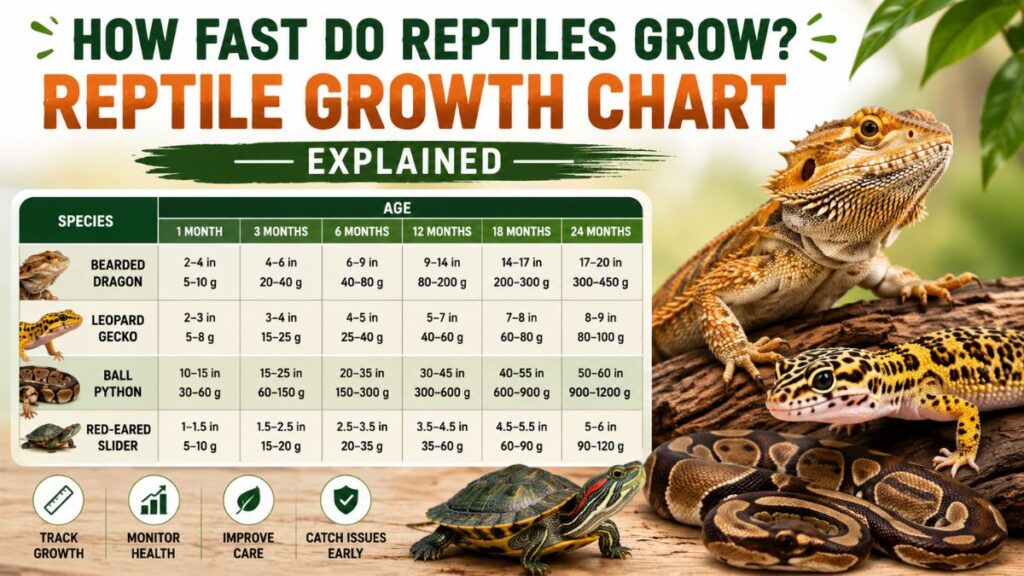
Have you ever looked at your reptile and wondered, “Is it growing normally?” Whether you own a baby gecko, a young bearded dragon, or a hatchling snake, tracking growth is one of the best ways to monitor overall health. This is where a reptile growth chart becomes incredibly valuable.
Many reptile owners worry when their pet seems smaller or larger than expected. However, growth rates can vary depending on species, diet, temperature, genetics, and husbandry practices. Understanding growth charts helps you identify healthy development and spot potential problems before they become serious.
In this guide, you’ll learn how reptile growth works, how to read growth charts, and what factors influence your reptile’s size over time.
Understanding Reptile Growth Basics
Why Reptiles Grow at Different Rates
Unlike mammals, reptiles have highly variable growth rates. Some species grow rapidly during their first year, while others mature slowly over several years.
Factors affecting growth include:
- Species and genetics
- Feeding frequency
- Diet quality
- Enclosure temperature
- UVB exposure
- Overall health
For example, a bearded dragon may reach near-adult size within 12–18 months, while many tortoise species continue growing for years.
Growth Is Not Always Linear
A common misconception is that reptiles grow steadily every month. In reality, growth often occurs in spurts.
You may notice:
- Rapid growth during juvenile stages
- Slower growth after sexual maturity
- Seasonal growth fluctuations
- Temporary plateaus after shedding or brumation
These variations are usually normal when husbandry conditions remain consistent.
Reptile Growth Chart: What It Tells You
Understanding Measurements
A reptile growth chart records changes in:
- Body length
- Weight
- Age
- Growth rate over time
Tracking these measurements monthly provides a clearer picture than relying on visual observations alone.
Why Growth Charts Matter
Growth charts help reptile keepers:
- Detect nutritional deficiencies
- Monitor feeding effectiveness
- Identify potential health issues
- Compare development against species averages
- Maintain breeding records
A chart showing steady progress is often a strong indicator that your reptile is thriving.
How Different Reptiles Grow
Lizards
Popular lizards such as bearded dragons and leopard geckos experience their fastest growth during the first year.
Typical growth characteristics:
- Rapid juvenile development
- Increased appetite during growth phases
- Slower growth after maturity
Proper heating and nutrition play major roles in achieving healthy adult size.
Snakes
Most snakes grow quickly during their early years and then gradually slow down.
Key influences include:
- Feeding schedule
- Prey size
- Species genetics
- Environmental conditions
Large constrictors generally continue growing longer than smaller species.
Tortoises and Turtles
Tortoises are known for slow, steady growth.
Their growth rate depends on:
- Diet quality
- Calcium intake
- UVB exposure
- Species-specific genetics
Because they mature slowly, long-term tracking is especially important.
Factors That Influence Growth Rates
Nutrition and Feeding
One of the biggest influences on growth is proper nutrition.
A balanced diet should provide:
- Adequate protein
- Essential vitamins
- Proper calcium-to-phosphorus ratios
- Species-appropriate food sources
Underfeeding can stunt growth, while overfeeding may cause obesity and health complications.
Temperature and Environment
Reptiles rely on external heat sources to regulate metabolism.
If enclosure temperatures are too low:
- Digestion slows down
- Appetite decreases
- Growth may become delayed
Maintaining proper temperature gradients supports healthy development.
Genetics
Even under perfect conditions, genetics influence final size and growth speed.
Some individuals naturally grow:
- Larger than average
- Smaller than average
- Faster than siblings
- Slower despite good health
This is why growth charts should be used as guidelines rather than strict rules.
How to Track Reptile Growth Effectively
Measure Consistently
For accurate records:
- Weigh reptiles at the same time of day
- Use a digital scale
- Measure length consistently
- Record data monthly
Consistency creates reliable trends.
Use Growth Calculation Tools
Manual calculations can be time-consuming. A helpful option is the Reptile Growth Rate Calculator, which allows you to monitor changes and estimate growth trends over time.
Try it here: https://reptilecalc.com/tool/reptile-growth-rate-calculator/
Using a calculator alongside your reptile growth chart provides a more complete understanding of your pet’s development.
Signs Your Reptile May Not Be Growing Normally
Potential Warning Signs
Consult a qualified reptile veterinarian if you notice:
- Sudden weight loss
- Prolonged growth stagnation
- Poor appetite
- Frequent illness
- Visible bone abnormalities
Early intervention often prevents more serious health problems.
When Slow Growth Is Normal
Not every slow-growing reptile is unhealthy.
Growth may naturally slow because of:
- Seasonal changes
- Brumation
- Reaching adulthood
- Species-specific growth patterns
Always evaluate growth alongside overall health and behavior.
FAQs:
How often should I update a reptile growth chart?
Monthly measurements are usually sufficient for most reptiles and provide accurate long-term tracking.
Can a reptile outgrow the average growth chart?
Yes. Genetics can cause healthy reptiles to grow larger or smaller than published averages.
What is the best way to measure reptile growth?
Track both weight and length consistently using a digital scale and measuring tape for the most accurate results.
Conclusion:
Monitoring your reptile’s growth isn’t just about numbers—it’s about ensuring your pet remains healthy throughout every life stage. A well-maintained reptile growth chart can reveal valuable insights into nutrition, husbandry, and overall well-being. By tracking measurements regularly and using tools like the Reptile Growth Rate Calculator, you can confidently support your reptile’s healthy development and catch potential issues early.