You’ve picked out the tank, the heat lamp, and the perfect hide. The setup budget looks sorted. Then a quieter question pops up while you’re reading care guides late at night: what will this animal eat, and what will that cost every month for the next ten years?
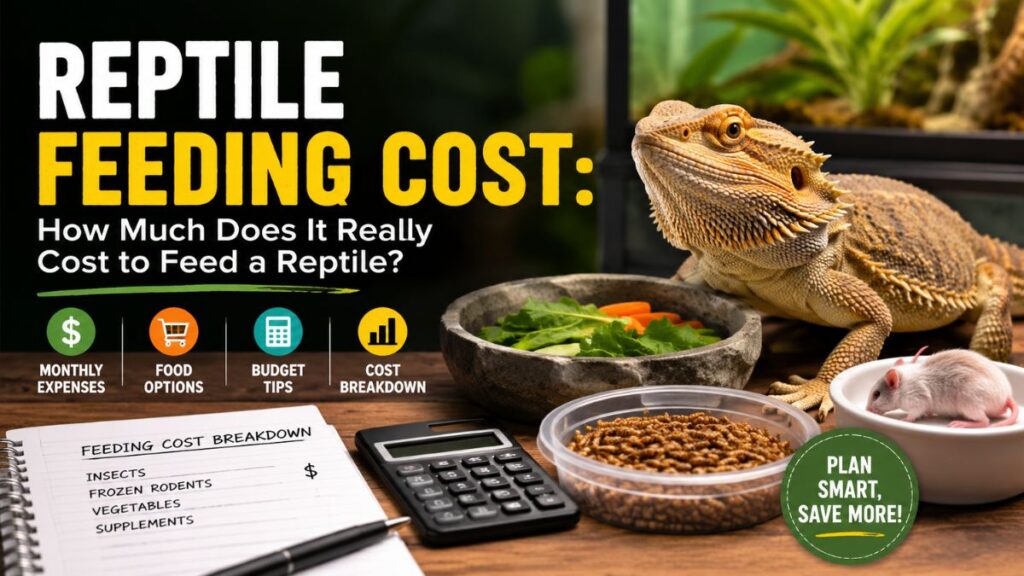
Reptile feeding cost is the expense first-time keepers underestimate most. A corn snake can eat for less than the price of a coffee each week, while a growing monitor can quietly eat through $100 or more a month. This guide gives you realistic numbers by species, the hidden costs most care sheets skip, and practical ways to save without putting your pet’s health at risk.
What Is the Real Reptile Feeding Cost Per Month?
The honest answer is anywhere from $5 to $150 or more, depending on the animal. That’s a wide gap, so let’s narrow it down. The figures below are rough US estimates for healthy adults, and your local prices will vary.
Typical Monthly Ranges by Species
- Corn snake: $5–$12 (a frozen-thawed mouse or small rat every one to two weeks)
- Ball python: $8–$20 (a rat roughly every one to two weeks)
- Leopard gecko: $10–$20 (insects plus supplements)
- Crested gecko: $8–$15 (powdered complete diet and the occasional insect)
- Bearded dragon: $30–$60 (insects for juveniles, fresh greens for adults)
- Green iguana: $30–$60 (large volumes of fresh vegetables)
- Chameleon: $25–$45 (a steady supply of gut-loaded insects)
- Large monitors, tegus, and big constrictors: $60–$150+
Notice the pattern? Snakes are usually the budget-friendly choice because they eat rarely. Lizards that eat every day cost more, because small purchases add up fast.
How Much Does It Cost to Feed a Bearded Dragon Per Month?
Bearded dragons are the most popular pet lizard, and they show how food costs shift over time. A baby eats insects several times a day, which can push spending toward $50 or $60. As the dragon matures, its diet tilts toward salads, and the bill often settles around $30–$40. Add calcium and a multivitamin and you’re still in a manageable range. The change comes from age, not from buying fancier food.
What Really Drives Your Reptile’s Food Bill
Two keepers with the same species can spend very different amounts. Here’s why.
Diet Type Matters Most
- Insectivores (leopard geckos, chameleons): small meals, but very frequent
- Carnivores (snakes, monitors): bigger meals, far less often
- Herbivores (iguanas, tortoises): produce costs that swing with the seasons
- Omnivores (bearded dragons, blue-tongue skinks): a mix of both bills
Before you bring any animal home, find out which group it belongs to. It tells you more about your budget than almost any other detail.
Size and Life Stage
Hatchlings eat small and often. Adults eat larger portions, and snakes eat less often. A snake that moves from mice to rats pays more per meal, and a fast-growing lizard may eat more than a fully grown one. The baby stage can look cheap, but it rarely stays that way.
Where You Buy
Where you shop changes the math. A single frozen rat might cost $4–$6 at a local shop, and often less when you order in bulk from a breeder or online supplier. Insects work the same way. A small tub of crickets from a chain store costs far more per insect than a larger online order. Convenience has a price, and you pay it every month.
The Hidden Costs Nobody Mentions
Food is only part of the story. These extras rarely appear on care sheets, but they show up on your card statement.
Supplements
Calcium, vitamin D3, and a multivitamin are essential for most insect-eating and plant-eating reptiles. One tub usually lasts for months, so expect roughly $10–$25 per product. Skipping them is a false saving. Metabolic bone disease is painful for your pet and far more expensive to treat than any supplement.
Feeder Care and Storage
Live insects need their own food and a container, and some species need gentle warmth. Gut-loading, which means feeding insects nutritious food before your reptile eats them, adds a small cost but improves nutrition a lot. Frozen feeders need freezer space, and a dedicated, sealed bin keeps things hygienic.
Waste and Spoilage
Greens wilt. Crickets die. A picky reptile turns its nose up at dinner. Adding a 10% buffer to your food budget is a sensible habit that keeps surprise costs from stinging.
Frozen vs. Live: What Costs More?
This is one of the most common questions snake owners ask, and the answer is clearer than you might expect.
Frozen Rodents vs Live Feeder Cost
For snakes, frozen-thawed prey is usually the better deal. When you compare frozen rodents vs live feeder cost, frozen tends to win on price, especially in bulk. It also keeps for months in the freezer. It’s safer too, because a live rodent can bite and seriously injure your snake. Bulk orders often come with shipping fees and minimums, so plan your purchases or split an order with another keeper.
Insects: Buy or Breed?
Breeding dubia roaches or mealworms at home can cut costs a lot after the first few months. A starter colony costs a modest amount, and it needs a small bin, steady warmth, and some patience. It isn’t for everyone, especially if you dislike insects living in the spare room. But if your reptile eats insects daily, breeding can pay for itself quickly.
Whether you buy or breed, your feeder insects cost per month depends on how many your animal eats and how much goes to waste. Track it for four weeks and you’ll know your real number.
The Cheapest Way to Feed a Pet Reptile Without Cutting Corners
Smart Habits That Save Money
The cheapest way to feed a pet reptile isn’t buying low-quality food. It’s buying smarter:
- Buy in bulk: frozen prey, dried insects, and supplements cost less per unit in larger quantities
- Grow some of your own: safe leafy greens and a small roach colony can trim the bill
- Shop seasonally: buy produce when it’s cheap and in season
- Compare suppliers: prices vary a lot, even within one city
- Avoid overfeeding: extra food wastes money and can lead to obesity
- Keep a feeding log: it exposes waste quickly
If you grow greens, only use plants confirmed safe for your species, and keep them free of pesticides.
Where You Should Never Cut Corners
Some savings cost more later. Don’t skip supplements. Don’t feed wild-caught insects, which can carry pesticides and parasites. And don’t swap in cheaper food that doesn’t suit your species. A single vet visit costs more than months of savings on food. If your reptile stops eating or loses weight, call an exotic vet instead of experimenting with its diet.
How to Calculate Your Own Monthly Number
A Simple Formula
Here’s a quick way to estimate your budget:
(Meals per month × cost per meal) + supplements + 10% buffer = monthly feeding budget
Here’s an example for an adult leopard gecko eating about 15 times a month:
- 15 feedings × about $0.60 of insects = $9
- Supplement share = about $2
- 10% buffer = about $1.10
- Total: roughly $12 per month
Swap in your own prices and meal counts, and you have a real figure to plan around.
Skip the Math
If you’d rather not juggle numbers, the Reptile Feeding Cost Calculator helps you turn your own feeding routine into a clear monthly figure. It’s also a smart way to compare species before you commit, or to spot where your current spending is leaking.
FAQs
What is the average reptile feeding cost per month?
Most pet reptiles cost between $10 and $60 a month to feed. Snakes and small geckos sit at the low end. Larger lizards that eat insects and fresh produce daily cost more, and big monitors or large constrictors can exceed $100.
Which reptile is cheapest to feed?
Corn snakes and ball pythons are usually among the cheapest, since they eat only once every week or two. Leopard geckos and crested geckos are also easy on the budget.
Is it cheaper to breed feeder insects?
Often, yes, once the startup phase is over, especially with dubia roaches and mealworms. You’ll need space, warmth, and a little time. If your pet eats insects daily, breeding can pay off. For a snake or any animal that eats rarely, buying is simpler.
Does feeding cost rise as my reptile grows?
It depends on the species. Snakes cost more as prey size increases, while young lizards can be the most expensive because they eat so often. Review your budget every few months as your pet grows.
Final Thoughts: Know Your Number Before You Need It
Reptiles are fascinating animals, and most of them are surprisingly affordable to feed once you understand the pattern. The surprises come from not planning. Now you know the typical ranges, the hidden costs, and the habits that keep your spending in check.