If your reptile looks healthy, eats well, and behaves normally, you might assume everything is fine. However, many health problems start silently. Internal parasites and digestive issues can develop without obvious symptoms, making regular health monitoring essential. This is where a reptile fecal test becomes one of the most valuable tools for responsible reptile owners.
Whether you keep a snake, lizard, tortoise, or gecko, fecal testing can help identify hidden problems before they become serious. Understanding when and how to perform these tests can improve your reptile’s quality of life and potentially save you from costly veterinary treatments later.
Why Fecal Testing Matters for Reptiles
Hidden Health Problems Are Common
Many reptiles naturally carry low levels of parasites without showing signs of illness. However, stress, poor husbandry, or weakened immunity can allow these parasites to multiply rapidly.
Common issues detected through fecal testing include:
- Intestinal worms
- Protozoan parasites
- Bacterial imbalances
- Digestive abnormalities
Early detection allows veterinarians to provide treatment before your reptile’s condition worsens.
Prevention Is Better Than Treatment
Routine fecal testing is often less expensive and less stressful than treating an advanced illness. It also helps ensure that new reptiles do not introduce parasites into an existing collection.
Understanding the Reptile Fecal Test Process
How the Test Works
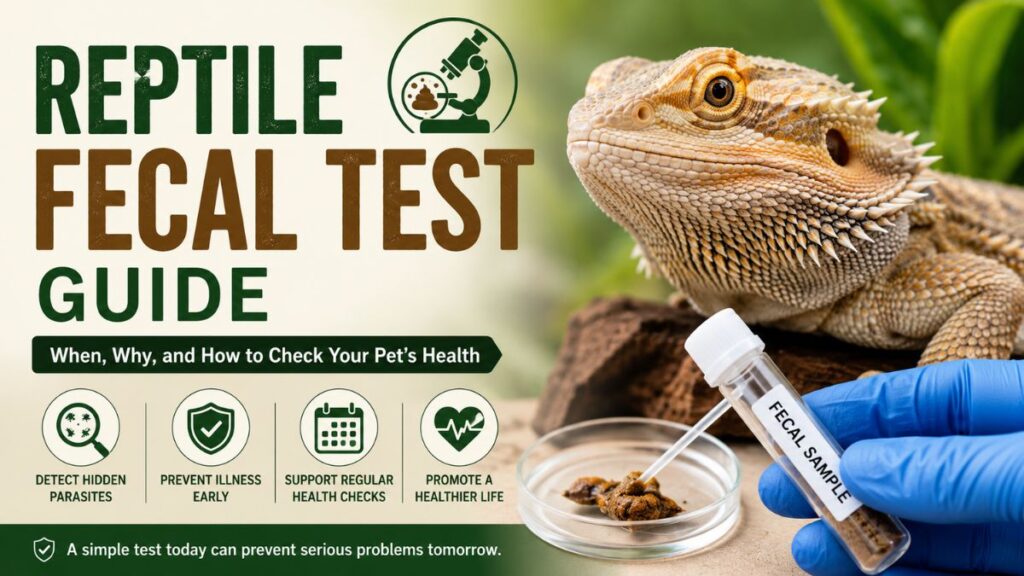
A reptile fecal test involves collecting a fresh stool sample and submitting it to a veterinarian or diagnostic laboratory. The sample is examined under a microscope to identify parasite eggs, larvae, or other abnormalities.
The process is painless and non-invasive, making it one of the safest health screenings available.
What Veterinarians Look For
During testing, professionals may check for:
- Roundworms
- Pinworms
- Coccidia
- Flagellates
- Other gastrointestinal parasites
The findings help determine whether treatment is necessary.
When Should You Test Your Reptile?
New Reptiles
Every newly acquired reptile should undergo a fecal examination soon after arrival.
This helps prevent:
- Parasite transmission
- Disease outbreaks
- Contamination of shared equipment
Routine Wellness Checks
Many reptile veterinarians recommend testing at least once or twice per year, depending on the species and husbandry conditions.
Signs Your Reptile Needs a Parasite Test
Watch for symptoms such as:
- Weight loss
- Poor appetite
- Diarrhea
- Abnormal stools
- Lethargy
- Failure to thrive
These may indicate the need for a reptile parasite testing procedure.
How to Collect a Fecal Sample Properly
Use a Fresh Sample
Fresh samples provide the most accurate results. Ideally, collect the stool within 24 hours of submission.
Follow Safe Collection Practices
For the best results:
- Wear disposable gloves
- Use a clean container
- Avoid contamination with substrate
- Label the sample with the date and species
Storage Tips
If immediate delivery is not possible:
- Refrigerate the sample
- Do not freeze it
- Submit it as soon as possible
Proper handling improves the accuracy of a how often should reptiles get fecal exams schedule.
Common Parasites Found in Reptiles
Internal Worms
Worm infestations are frequently detected in captive reptiles. Heavy infestations can cause nutrient deficiencies and weight loss.
Protozoan Infections
Microscopic organisms such as coccidia can affect digestion and overall health.
Opportunistic Parasites
Some parasites remain harmless in small numbers but become problematic when reptiles experience stress or poor environmental conditions.
Routine fecal testing for pet reptiles helps detect these issues before symptoms become severe.
Creating a Regular Testing Schedule
Factors That Influence Testing Frequency
Testing needs vary based on:
- Species
- Age
- Collection size
- Breeding status
- Exposure to new animals
Use a Reliable Schedule Tool
Keeping track of testing dates can be challenging, especially for owners with multiple reptiles. To simplify the process, use the Reptile Fecal Testing Schedule Calculator:
https://reptilecalc.com/tool/reptile-fecal-testing-schedule-calculator/
This helpful tool can assist with planning routine screenings and maintaining consistent health records.
Benefits of Routine Reptile Health Screening
Better Long-Term Health
Regular monitoring allows owners to identify problems early and maintain optimal husbandry practices.
Reduced Veterinary Costs
Preventive care often reduces the need for expensive emergency treatments.
Greater Peace of Mind
Knowing your reptile is parasite-free helps you feel confident about its overall well-being.
FAQs:
How often should reptiles get fecal exams?
Most reptiles benefit from testing once or twice per year, though veterinarians may recommend more frequent exams for certain species or situations.
Can a reptile have parasites without symptoms?
Yes. Many reptiles carry parasites without showing visible signs, which is why routine testing is important.
Is fecal testing stressful for reptiles?
No. The procedure only requires a stool sample and does not involve handling beyond normal collection practices.
Conclusion:
A reptile may appear healthy while harboring hidden parasites that slowly impact its well-being. Regular fecal testing provides a simple, effective way to detect problems early, improve husbandry decisions, and support long-term health. By making the reptile fecal test part of your routine care plan, you can help your pet live a healthier, happier life.