You bring your new bearded dragon home, set up the tank, and wait for the magic to happen. Instead, he presses himself into a corner, ignores the greens, and stares at you like you’re the problem. If that sounds familiar, take a breath. Nothing is necessarily wrong.
Reptile acclimation is the period when a new animal learns that its surroundings are safe. It takes longer than most first-time keepers expect, and rushing it is one of the most common beginner mistakes. In this guide, you’ll learn what’s happening during those first weeks, how long each stage usually lasts, and what you can do to help your reptile settle in faster.
What Reptile Acclimation Really Looks Like
What’s happening in your reptile’s head
Reptiles don’t bond with new homes the way a dog or cat might. Everything is unfamiliar: the smells, the temperatures, the light, the vibrations, and the giant creature peering through the glass.
Many reptiles respond with caution. Their stress response can suppress appetite, trigger hiding, and make normal behavior disappear for a while. This is often just a cautious animal gathering information about its new territory.
So if your gecko vanishes into its hide for three days, that’s usually acclimation, not rejection.
Acclimation vs. quarantine: not the same thing
Beginners often mix these up, but they do different jobs:
- Acclimation is about your reptile’s comfort and adjustment.
- Quarantine is about protecting your other animals from parasites or illness.
Both can happen at the same time. If you already own reptiles, keep the newcomer in a separate room with its own equipment and supplies. A common recommendation for a reptile quarantine setup for beginners is 60 to 90 days, though some keepers go longer for species prone to parasites.
How Long Does It Take a New Reptile to Adjust?
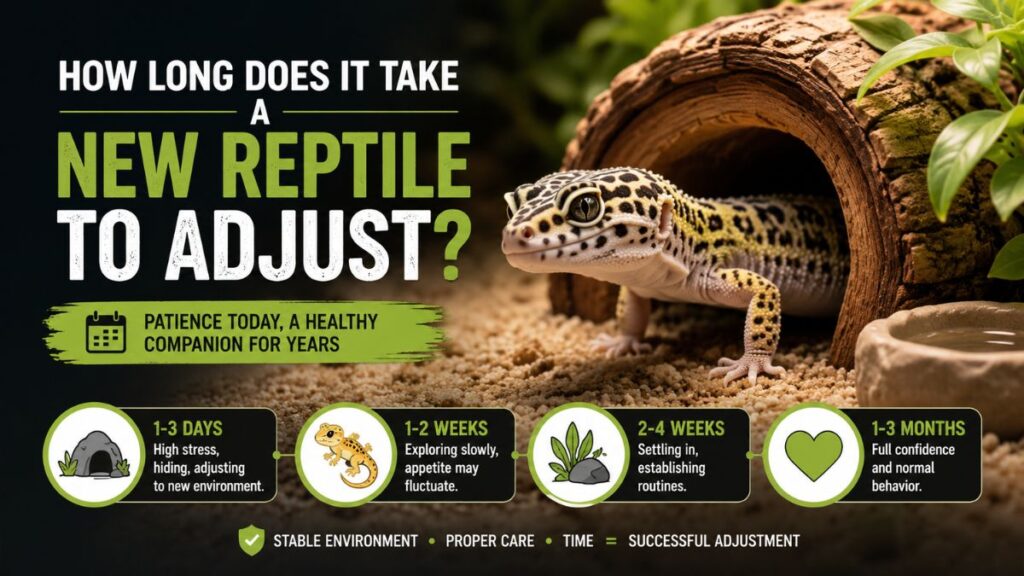
Here’s the honest answer: most reptiles need about two to four weeks to feel settled, but full confidence can take two to three months.
That’s a wide range because “adjusted” means different things. Eating, basking, and exploring are separate milestones, and they don’t arrive together.
The general timeline
- Days 1 to 3: Hiding, freezing, or darting around. Appetite is often low or absent. This is normal.
- Week 1: Your reptile starts basking, drinking, and exploring at night or when the room is quiet.
- Weeks 2 to 4: Regular feeding usually returns. Behavior becomes more predictable.
- Months 2 to 3: Your reptile shows its real personality, handling gets easier, and routines feel natural.
Think of it as a gradual warm-up rather than a switch flipping.
Typical timelines by species
Every animal is an individual, but these ranges are common among keepers:
- Bearded dragons: Often settle within a few days to two weeks.
- Leopard geckos: Usually eat again within one to two weeks, though some take longer.
- Ball pythons: Often take two to four weeks to feed reliably. Some stubborn ones skip several meals first.
- Corn snakes: Frequently feed within the first one to two weeks.
- Crested geckos: Typically adjust within one to three weeks.
- Chameleons: Often need several weeks, since they’re easily stressed by visibility and handling.
- Wild-caught animals: May take significantly longer and carry higher health risks.
Want a more personalized estimate? The Reptile Acclimation Timeline Calculator factors in species and setup details to help you see what a realistic adjustment window looks like for your animal.
Why Some Reptiles Take Longer Than Others
Source and age
Captive-bred reptiles from a careful breeder usually adjust faster than animals from crowded pet stores or wild collection. Babies can be more skittish, but they also tend to adapt quickly with a good setup. Older, previously neglected animals may need more patience and may have health issues underneath the stress.
Enclosure setup
A poorly set up enclosure can stretch acclimation from weeks into months. The biggest culprits:
- Temperatures that are too hot or too cold
- Not enough hiding spots
- Bright, exposed enclosures with no cover
- Wrong humidity for the species
- Substrate that doesn’t suit the animal
When a reptile can’t thermoregulate or feel hidden, it stays stressed. Fix the environment first, and behavior often follows.
Travel stress and previous conditions
Shipping, a long drive home, or multiple owners in a short period can all increase stress. If your reptile has had a rough start, expect a slower adjustment. That isn’t a failure on your part.
Signs Your New Reptile Is Settling In (or Struggling)
Good signs to look for
Positive progress often looks quiet and subtle:
- Basking on a regular schedule
- Drinking water or licking droplets
- Exploring the enclosure when you aren’t hovering
- Eating without being coaxed
- Normal droppings
- Relaxed body posture and smooth movement
When you see two or three of these in a row, that’s real progress.
Red flags: signs of stress in a new reptile
Some stress is expected, but certain signs deserve attention:
- Constant glass surfing or frantic pacing after the first few days
- Refusing food well beyond the typical window for the species
- Rapid weight loss or visible sunken eyes
- Wheezing, bubbles around the nose or mouth, or open-mouth breathing while not basking
- Lethargy combined with poor hydration
- Stuck shed or repeated unsuccessful sheds
If you notice any of these, don’t wait it out. Check your temperatures and humidity first, then book a visit with a reptile-savvy vet. Early help makes a big difference.
A Simple Plan for the First Few Weeks
You don’t need a complicated routine. Consistency matters more than anything.
The first 72 hours
- Place your reptile in a fully set-up, pre-heated enclosure.
- Dim the activity around the room. No loud music or constant visitors.
- Offer fresh water and a hide on both the warm and cool sides.
- Skip handling entirely.
- Don’t panic if it doesn’t eat. Many reptiles won’t for a few days.
Week one to two
- Offer food at the normal schedule, then leave the room so it can eat in peace.
- Spot-clean only when needed and keep the routine short.
- Begin short, calm interactions near the enclosure so your reptile gets used to your presence.
- Schedule a vet check if it fits your plan. A fecal test early on can catch parasites.
Weeks three and four
- If your reptile is eating regularly and acting relaxed, begin brief handling sessions of a few minutes.
- For snakes, wait at least 48 hours after a meal before handling.
- Keep sessions calm and predictable. Stop if your animal seems stressed.
- Slowly extend handling time as trust builds.
Common Mistakes That Slow Reptile Adjustment
Handling too early
It’s tempting. You want to hold your new pet. But early handling can keep stress levels high and prolong the settling-in period. Most keepers recommend waiting about a week, and longer for nervous species, before attempting regular handling.
Constantly changing the setup
Moving decorations, switching bulbs, adjusting temperatures daily, or relocating the enclosure can reset the adjustment clock. Get the setup right before the animal arrives, then leave it alone.
Giving up too quickly on feeding
A new owner who panics and tries five different foods in three days can add more stress. Stay consistent with species-appropriate food, check your temperatures, and give it time. If your reptile has been refusing meals long past what’s typical for its species, call your vet rather than guessing.
Ignoring small details
Temperature gradients, humidity levels, and hiding places can look fine at a glance but still be off. A digital thermometer and hygrometer are inexpensive and worth using from day one.
FAQs
How long should I wait before handling a new reptile?
Most keepers wait about seven days, then start with short sessions once the animal is eating and behaving calmly. Shy or sensitive species may need longer.
Is it normal for a new reptile not to eat?
Yes. Many reptiles skip meals for several days or even a couple of weeks. Check that your temperatures and humidity are correct, keep disturbances low, and contact a vet if the fasting continues beyond what’s typical for your species or the animal looks unwell.
Can I speed up reptile acclimation?
You can’t force it, but you can remove obstacles. A properly heated and humid enclosure, plenty of hiding spots, a quiet room, and a steady routine help most animals settle faster. Patience does the rest.
What if my new reptile still seems stressed after a month?
First, re-check the basics: temperatures, lighting, humidity, and hides. If those are right and your reptile is still hiding constantly, refusing food, or losing weight, see a reptile veterinarian to rule out illness or parasites.
Conclusion: Give Your Reptile the Time It Needs
Reptile acclimation isn’t a test you pass or fail. It’s a process, and the best thing you can do is provide a stable setup, reduce stress, and let your animal move at its own pace. Most reptiles start showing comfort within a few weeks, and the real bond often builds over months.
Here’s what to do next:
- Double-check your enclosure temperatures and humidity today.
- Add one more hiding spot if your reptile seems exposed.
- Hold off on handling until it’s eating regularly.
- Use the timeline calculator to set realistic expectations for your species.
Small, calm choices in the first month set the tone for years of healthy care. Your reptile is learning to trust you, and that takes time.