Bringing home a crested gecko is exciting, but one question often confuses new owners: what is the right crested gecko tank size? Many people underestimate how much space these fascinating reptiles need to climb, explore, and thrive.
Choosing the wrong enclosure can lead to stress, reduced activity, and even health problems. On the other hand, the right tank creates a safe, enriching environment that encourages natural behaviors and helps your gecko live a long, healthy life. This guide will help you understand exactly what tank size your crested gecko needs at every stage of life.
Why Tank Size Matters for Crested Geckos
Natural Climbing Behavior
Crested geckos are arboreal reptiles, meaning they spend most of their time off the ground. In the wild, they climb trees, branches, and dense vegetation throughout the night.
A properly sized enclosure allows them to:
- Climb naturally
- Exercise regularly
- Explore their surroundings
- Reduce boredom and stress
Health and Well-Being
A cramped enclosure can negatively affect your gecko’s physical and mental health. Adequate space supports healthy movement and provides room for essential habitat features such as plants, hides, and climbing branches.
Crested Gecko Tank Size by Age
Hatchlings (0–6 Months)
Young crested geckos do not require huge enclosures initially.
Recommended size:
- 8″ x 8″ x 12″ enclosure
- Small vertical terrarium
- Easy access to food and water
A smaller setup helps hatchlings locate food more easily while still providing climbing opportunities.
Juveniles (6–12 Months)
As your gecko grows, its enclosure should grow too.
Recommended size:
- 12″ x 12″ x 18″ enclosure
- Vertical orientation preferred
- Additional branches and foliage
This stage is critical because juveniles become increasingly active and curious.
Adults (12+ Months)
Adult crested geckos require significantly more vertical space.
Recommended minimum size:
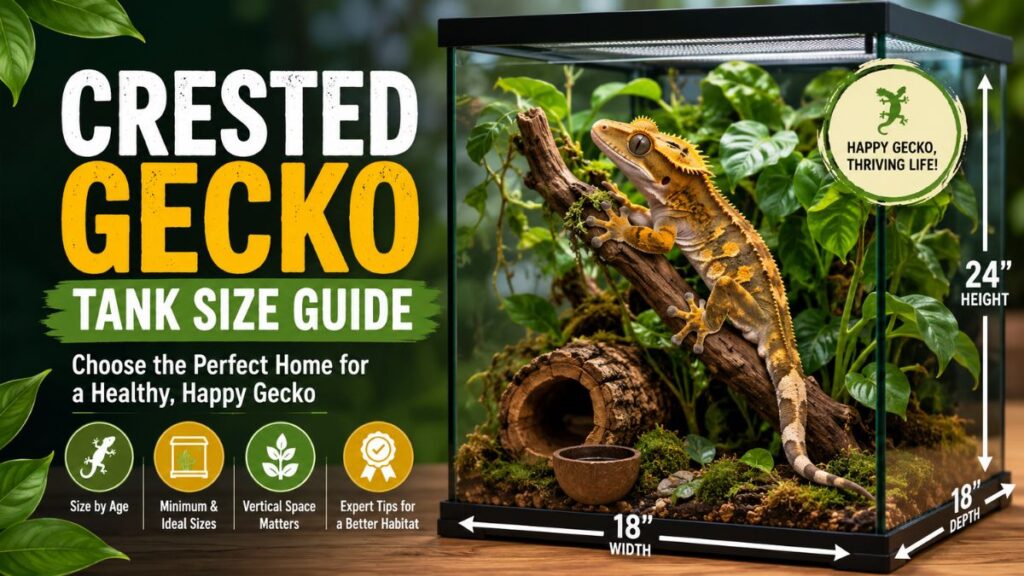
- 18″ x 18″ x 24″ enclosure
Many experienced keepers now prefer larger enclosures such as:
- 18″ x 18″ x 36″
- 24″ x 18″ x 36″
Larger tanks provide better enrichment and allow for more natural behavior.
Best Crested Gecko Tank Size for Adults
Minimum vs. Ideal Enclosure
While 18″ x 18″ x 24″ is commonly accepted as the minimum, bigger is usually better.
An ideal adult setup should include:
- Multiple climbing branches
- Dense artificial or live plants
- Several hiding spots
- Feeding ledges
- Proper temperature and humidity zones
Extra space allows you to create a more natural and visually appealing habitat.
Vertical Space Is More Important
Unlike many reptiles, crested geckos benefit more from height than floor space.
When selecting a terrarium:
- Choose vertical designs
- Prioritize climbing opportunities
- Avoid shallow, horizontal tanks
Height encourages exercise and supports natural nighttime activity.
Choosing the Right Enclosure Type
Glass Terrariums
Glass terrariums are one of the most popular choices.
Benefits include:
- Excellent visibility
- Good humidity retention
- Easy cleaning
- Widely available
They work especially well for bioactive setups.
PVC Enclosures
PVC enclosures are growing in popularity among reptile keepers.
Advantages:
- Lightweight
- Durable
- Better insulation
- Excellent humidity control
These enclosures can be a great long-term investment.
Screen Enclosures
Screen cages provide excellent ventilation but may struggle to maintain humidity levels needed by crested geckos.
For most keepers, glass or PVC enclosures are usually the better option.
How to Set Up the Tank Properly
Essential Decorations
A properly sized enclosure should contain:
- Climbing vines
- Branches
- Cork bark
- Hanging plants
- Secure hiding areas
These features make the habitat feel safe and encourage natural exploration.
Humidity and Temperature Management
The enclosure should support:
- Humidity between 50–80%
- Daytime temperatures around 72–78°F (22–26°C)
- Good airflow without excessive drying
Proper environmental conditions are just as important as tank size.
Use an Enclosure Calculator
If you’re unsure whether your setup is suitable, try the Crested Gecko Enclosure Calculator:
https://reptilecalc.com/tool/crested-gecko-enclosure-calculator/
This helpful tool can assist you in selecting an enclosure based on your gecko’s age and growth stage.
Common Tank Size Mistakes to Avoid
Choosing a Tank That Is Too Small
Many beginners purchase a tank that quickly becomes inadequate as their gecko grows.
Ignoring Vertical Height
Crested geckos are climbers first. Height should always be a priority.
Overcrowding the Enclosure
Too many decorations can reduce usable climbing space. Balance enrichment with open movement areas.
FAQs:
What is the minimum crested gecko tank size for an adult?
The generally accepted minimum is 18″ x 18″ x 24″, although larger enclosures are highly recommended.
Can a crested gecko live in a 10-gallon tank?
A 10-gallon tank may work temporarily for juveniles, but it is not suitable as a permanent adult enclosure.
Is a bigger tank better for a crested gecko?
Yes. Larger vertical enclosures provide more enrichment, exercise opportunities, and room for natural behaviors.
Conclusion:
Selecting the right crested gecko tank size is one of the most important decisions you’ll make as a reptile owner. A spacious, vertically oriented enclosure helps your gecko stay active, healthy, and stress-free throughout its life. By upgrading tank size as your pet grows and creating a habitat filled with climbing opportunities, you’ll provide the environment your crested gecko truly deserves.