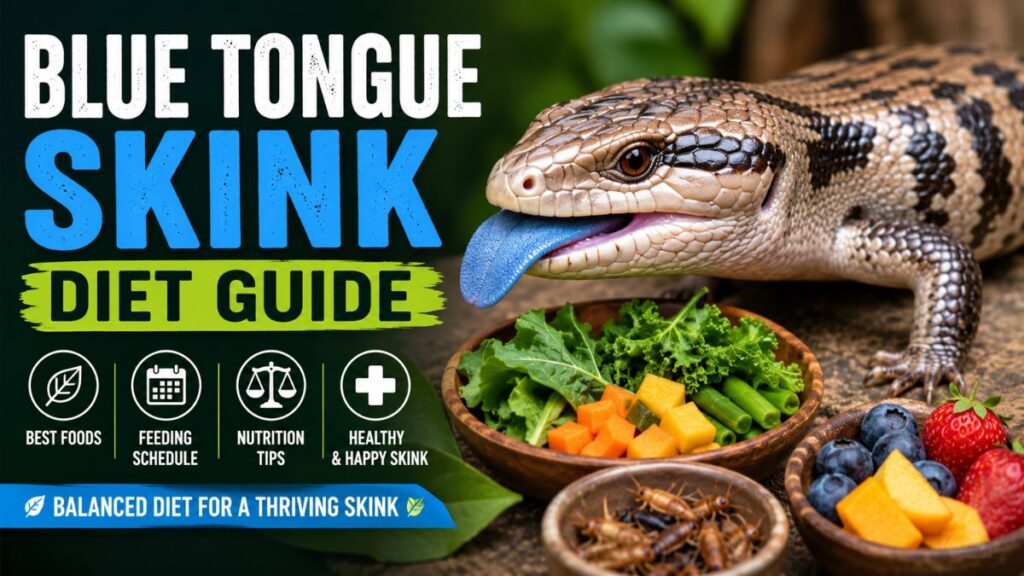
Blue tongue skinks are famous for their gentle personalities, curious nature, and striking blue tongues. But did you know that many health problems in these reptiles can be traced back to improper feeding? Understanding the right blue tongue skink diet is one of the most important parts of responsible skink ownership.
Whether you’re a first-time reptile keeper or an experienced enthusiast, feeding your skink correctly can mean the difference between a thriving, active pet and one that struggles with obesity, nutritional deficiencies, or poor growth. This guide will help you build a balanced feeding routine that keeps your blue tongue skink healthy for years to come.
Understanding Blue Tongue Skink Nutritional Needs
Omnivores by Nature
Blue tongue skinks are omnivorous reptiles, meaning they eat both animal and plant matter. In the wild, they consume a wide variety of foods, including:
- Insects
- Snails
- Small vertebrates
- Fruits
- Flowers
- Vegetation
A captive diet should mimic this natural variety as closely as possible.
The Ideal Diet Ratio
Most adult blue tongue skinks thrive on a diet consisting of:
- 50% vegetables and greens
- 40% protein sources
- 10% fruits and treats
Juveniles generally require more protein to support growth, while adults benefit from a higher proportion of vegetables.
Blue Tongue Skink Diet: Best Foods to Feed
Healthy Protein Sources
Protein is essential for muscle development and overall health.
Good protein options include:
- Dubia roaches
- Crickets
- Silkworms
- Boiled eggs (occasionally)
- Lean cooked chicken
- High-quality canned dog food
- Snails
Avoid heavily processed meats and foods high in salt.
Safe Vegetables and Greens
Vegetables should make up a large portion of an adult skink’s meals.
Excellent choices include:
- Collard greens
- Mustard greens
- Dandelion greens
- Squash
- Green beans
- Carrots
- Bell peppers
Rotate vegetables regularly to provide a broad range of nutrients.
Fruits as Occasional Treats
While skinks enjoy sweet foods, fruits should be fed sparingly.
Safe fruits include:
- Blueberries
- Mango
- Papaya
- Strawberries
- Apples (without seeds)
Too much fruit can contribute to obesity and digestive issues.
Feeding Schedule by Age
Juvenile Blue Tongue Skinks
Young skinks grow rapidly and need frequent feeding.
Recommended schedule:
- Feed daily
- Higher protein content
- Calcium supplementation several times per week
Adult Blue Tongue Skinks
Adult skinks have slower metabolisms.
Recommended schedule:
- Feed every 2–3 days
- Focus on vegetables and balanced nutrition
- Monitor weight regularly
Senior Blue Tongue Skinks
Older skinks may become less active and require fewer calories.
Adjust portions according to:
- Activity level
- Body condition
- Veterinary recommendations
Common Feeding Mistakes to Avoid
Overfeeding
One of the most common issues among pet blue tongue skinks is obesity.
Signs include:
- Excess fat around the limbs
- Difficulty moving
- Reduced activity
Portion control is just as important as food quality.
Feeding Unsafe Foods
Certain foods can be harmful or toxic.
Avoid:
- Avocado
- Onion
- Garlic
- Rhubarb
- Chocolate
- Processed human snacks
Ignoring Calcium and Vitamin Needs
A lack of calcium can lead to metabolic bone disease, a serious health condition in reptiles.
To support healthy bone development:
- Use calcium supplements
- Provide proper UVB lighting
- Offer a varied diet
How Much Should a Blue Tongue Skink Eat?
Portion Size Guidelines
A simple rule is to provide an amount roughly equal to the size of your skink’s head.
Observe your pet’s:
- Weight
- Growth rate
- Appetite
Adjust meal sizes accordingly.
Using a Diet Calculator
Estimating the right food portions can sometimes be challenging. To make feeding easier, use the Blue Tongue Skink Diet Calculator available here:
https://reptilecalc.com/tool/blue-tongue-skink-diet-calculator/
This helpful tool can assist you in determining appropriate feeding amounts based on your skink’s age and size.
Signs of a Healthy Diet
Positive Indicators
A well-fed blue tongue skink typically shows:
- Bright eyes
- Smooth shedding
- Healthy body weight
- Strong appetite
- Active behavior
Warning Signs
Consult a reptile veterinarian if you notice:
- Sudden weight loss
- Persistent lethargy
- Swollen limbs
- Poor shedding
- Lack of appetite
Early intervention can prevent more serious health problems.
FAQs:
What is the best food for a blue tongue skink?
A balanced combination of vegetables, quality protein sources, and occasional fruit provides the best nutrition for blue tongue skinks.
How often should I feed my blue tongue skink?
Juveniles should be fed daily, while adults typically eat every 2–3 days.
Can blue tongue skinks eat fruit every day?
No. Fruit should only make up a small portion of the diet and should be offered as an occasional treat.
Conclusion:
Creating the perfect feeding plan doesn’t have to be complicated. By offering a balanced variety of proteins, vegetables, and occasional fruits, you can support your skink’s long-term health and happiness. Monitor your pet’s weight, adjust portions as needed, and use the Blue Tongue Skink Diet Calculator to simplify meal planning. A thoughtful feeding routine today can help your blue tongue skink thrive for many years to come.