You bring home a tiny bearded dragon, and within days it’s snapping up crickets like it hasn’t eaten all week. Then the doubts creep in. Is three feedings a day too many? Do the greens matter at all? And why does every care sheet say something different?
A bearded dragon’s needs change in predictable stages, and a simple bearded dragon feeding chart can match food, portions, and frequency to your pet’s age. This guide gives you that chart, the best foods for each stage, and the small mistakes that quietly hold growth back.
Why Your Bearded Dragon’s Diet Changes as It Grows
Babies build, adults maintain
A hatchling can add several inches in its first few months, and that kind of growth runs on protein. That’s why young dragons eat mostly insects. By adulthood, growth slows to a crawl, and the body needs far less protein and far more plant matter. Feed an adult like a baby, and you’ll often end up with a pudgy, sluggish dragon.
What goes wrong when the balance is off
- Too few insects in babies: slow growth and low energy
- Too many insects in adults: weight gain and extra strain on the liver
- Too little calcium: weak bones, a soft jaw, or tremors (metabolic bone disease)
- Oversized prey: choking or gut blockages
Following a bearded dragon diet by age helps you avoid all four.
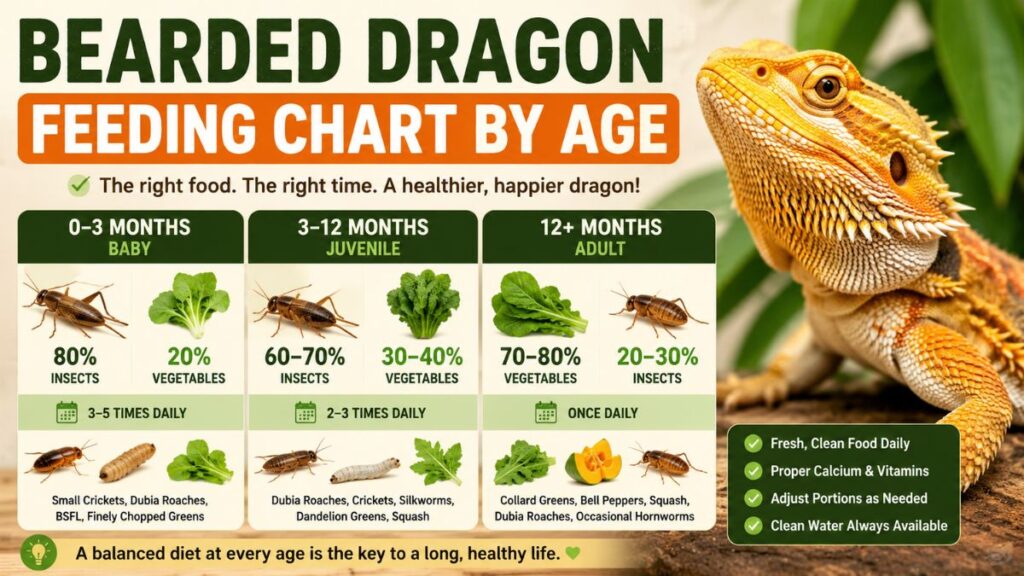
Bearded Dragon Feeding Chart by Age (Quick Reference)
Treat this table as a starting point. Every dragon is different, so adjust for appetite, body condition, and your vet’s advice.
| Age | Insects : Plants | Insect Feedings | Salad |
|---|---|---|---|
| Hatchling (0–4 months) | 70–80% : 20–30% | 3–5 times daily | Daily, finely chopped |
| Juvenile (4–12 months) | 50–60% : 40–50% | 2–3 times daily | Daily |
| Sub-adult (12–18 months) | 30–40% : 60–70% | 1–2 times daily | Daily |
| Adult (18+ months) | 20–30% : 70–80% | Every other day, or a few times a week | Daily |
The percentages show the rough split of insects to plants across your dragon’s overall diet, not what belongs in each bite.
Hatchlings (0–4 months)
Wondering how often to feed a baby bearded dragon? Offer insects three to five times a day, letting your dragon eat for 10–15 minutes each time. Keep every insect smaller than the space between its eyes. Serve a finely chopped salad daily, even if it gets ignored at first. Repeated exposure builds the habit.
Juveniles (4–12 months)
Growth is still fast but starting to level off. Cut insect sessions to two or three a day and let salad take a bigger role. Offering greens first thing in the morning, before the insects, works well for many keepers.
Sub-adults (12–18 months)
This is the transition stage. Drop to one or two insect feedings a day and make greens the main event. Dragons this age can turn picky and hold out for insects. Stay consistent. Salad first and insects later usually wins them over.
Adults (18 months and older)
A healthy adult plate is mostly leafy greens and vegetables, with a smaller serving of insects every other day or a few times a week. Fresh salad should be available daily.
If you’d rather skip the math, the Bearded Dragon Diet Ratio Calculator can help you check your dragon’s insect-to-plant balance in seconds.
How Much to Feed: Portions That Make Sense
The 10–15 minute rule
Rather than counting every bug, let your dragon set the pace. Offer insects for 10–15 minutes, then remove the leftovers. If your dragon is still hunting, add a few more. If it’s losing interest, it’s done.
So, how many crickets should you feed?
People often ask how many crickets to feed a bearded dragon, but there’s no magic number. A hatchling might eat dozens of tiny crickets across a day, while an adult may be full after a modest handful of larger insects. Size matters more than count: smaller than the gap between the eyes, always.
Building a better salad
- Chop finely for babies and use larger pieces for adults
- Mix colors and textures to spark curiosity
- Lightly mist greens for extra hydration
- Remove wilted leftovers daily
Best Foods for Healthy Growth
Staple insects
Dubia roaches, crickets, black soldier fly larvae, and silkworms make a solid foundation. Hornworms are a hydrating bonus. Waxworms and superworms are fatty, so keep them to occasional treats. Buy from reputable feeder suppliers, since wild-caught insects can carry pesticides and parasites.
What can bearded dragons eat daily?
These are reliable everyday choices:
- Collard, mustard, and turnip greens
- Pesticide-free dandelion greens
- Endive and escarole
- Butternut or acorn squash
- Small amounts of bell pepper
Fruit works best as a treat. A few berries or a small slice of mango once or twice a week is plenty. Spinach and kale are better as occasional rotation, since compounds in them can interfere with calcium absorption.
Foods to avoid
- Avocado and rhubarb, which are toxic
- Fireflies, which are deadly to reptiles
- Iceberg lettuce, which is mostly water with little nutrition
- Wild-caught insects
- Any insect larger than the space between the eyes
Supplements, UVB, and Heat: The Hidden Half of Feeding
Calcium and multivitamins
Dust insects with calcium at most feedings for babies and juveniles, and a few times a week for adults. Add a reptile multivitamin once or twice a week. Products vary (with or without vitamin D3), so follow the label and ask your vet what suits your setup.
Why lighting matters as much as food
Without proper UVB, your dragon can’t use calcium efficiently, no matter how perfect the menu. Pair a quality UVB tube with a basking spot around 100–110°F so your dragon can digest properly. UVB output fades before the bulb looks dim, so replace it on the manufacturer’s schedule, often every 6–12 months.
Gut-load your insects
Feed your insects nutritious greens and vegetables for about 24 hours before offering them. What’s inside the bug ends up inside your dragon.
Common Feeding Mistakes (and Easy Fixes)
- Feeding a cold dragon: let the lights run 30–60 minutes first so digestion can kick in.
- Too many fatty treats: waxworms are basically candy.
- Giving up on salad: keep offering it daily, even when it’s ignored.
- Leaving live insects overnight: crickets can nibble on a sleeping dragon.
- Guessing the ratio: a rough weekly check keeps you on track.
Signs Your Feeding Plan Is Working
- Steady growth and a healthy, rounded tail base
- Bright, alert eyes and active behavior
- Firm droppings with a white urate portion
- A strong grip and no tremors
Adults may eat less in cooler months during brumation, which can be normal. But rapid weight loss, or a young dragon refusing food, deserves a visit to an exotics vet.
FAQs
How often should I feed a baby bearded dragon?
Offer insects three to five times a day in 10–15 minute sessions, plus fresh chopped greens daily.
Can bearded dragons eat only insects or only vegetables?
No. Both extremes cause problems. Young dragons need more insects, adults need more plants, and every age needs a mix.
What if my bearded dragon refuses greens?
Offer salad first, before insects, and keep it fresh and finely chopped. Mixing in a few favorite veggies like butternut squash can help. Persistence usually pays off.
When is a bearded dragon considered an adult?
Around 18 months, though growth rates vary. Shift gradually toward more plants rather than all at once.
Conclusion
Feeding a bearded dragon well doesn’t take a perfect memory or a spreadsheet, just the right balance at the right age. Start with the chart, watch your dragon’s energy and body condition, and adjust as it grows.