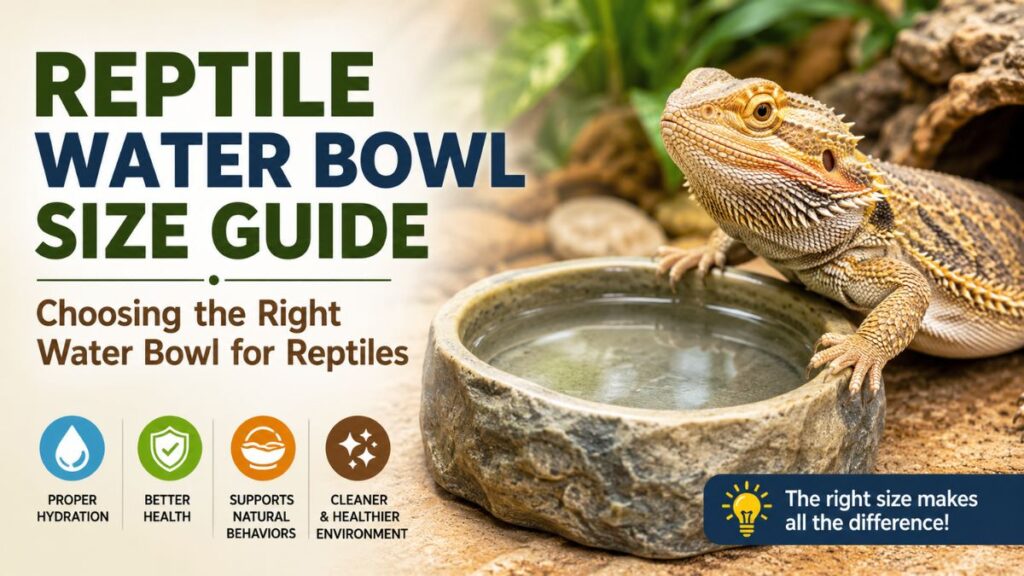
Have you ever noticed your reptile avoiding its water dish, soaking too often, or spilling water across the enclosure? These small behaviors can reveal a bigger issue: the wrong water bowl. Choosing the correct reptile water bowl size is one of the most overlooked aspects of reptile care, yet it directly affects hydration, hygiene, comfort, and overall health.
Whether you keep a snake, lizard, tortoise, or gecko, the right water bowl can make a significant difference in your pet’s daily life. This guide will help you understand exactly what to look for when selecting the perfect water dish.
Why Water Bowls Matter More Than You Think
Hydration and Health
Reptiles rely on clean, accessible water to stay hydrated. A poorly sized or designed bowl may discourage drinking, leading to dehydration and health complications.
Supporting Natural Behaviors
Many reptiles enjoy soaking, especially during shedding periods. The correct bowl allows them to engage in natural behaviors safely and comfortably.
Maintaining Proper Enclosure Conditions
Water bowls also influence enclosure humidity. Choosing the right size can help maintain suitable environmental conditions without creating excessive moisture.
How to Choose the Right Reptile Water Bowl Size
Match the Bowl to Your Reptile’s Body Size
The ideal reptile water bowl size should allow your pet to drink comfortably and, when appropriate, soak partially or fully.
General guidelines:
- Small geckos: shallow bowls with easy access
- Juvenile snakes: lightweight but stable dishes
- Adult snakes: bowls large enough for soaking
- Bearded dragons: medium-depth bowls
- Tortoises: wide, shallow dishes
A bowl that is too small may restrict access, while one that is too large can take up valuable enclosure space.
Consider Growth Over Time
Young reptiles grow quickly. If your pet is still developing, choose a bowl that can accommodate future size increases without becoming oversized immediately.
Evaluate Soaking Requirements
Some species benefit from regular soaking opportunities.
Best water bowl for ball python enclosure setups, for example, often includes a bowl large enough for the snake to curl inside comfortably during shedding cycles.
Material Matters: Choosing a Safe Water Dish
Ceramic Water Bowls
Ceramic dishes are among the most popular choices because they are:
- Heavy and difficult to tip over
- Easy to clean
- Durable and long-lasting
Resin Water Dishes
Modern resin bowls often mimic natural rock formations and blend beautifully into enclosures.
Benefits include:
- Natural appearance
- Good stability
- Wide variety of sizes
Plastic Water Bowls
Plastic options are inexpensive but may scratch over time, creating places for bacteria to accumulate.
If using plastic, inspect regularly and replace when worn.
Features to Look for in a Reptile Water Bowl
Stability and Weight
A stable bowl prevents spills and substrate contamination. Heavy bowls work particularly well for larger reptiles.
Smooth, Safe Edges
Sharp or rough edges can cause injuries. Always choose bowls with smooth surfaces and rounded corners.
Easy Access
When considering a shallow water dish for leopard gecko, accessibility is critical. Leopard geckos benefit from dishes they can enter and exit easily without risk of drowning or stress.
Water Bowl Placement Tips
Keep It Away from Heat Sources
Placing water directly under a heat lamp can cause excessive evaporation and encourage bacterial growth.
Monitor Humidity Effects
For tropical species, water placement may help increase humidity levels. Desert species typically require less humidity support.
Minimize Contamination
Position bowls away from feeding areas whenever possible to reduce waste and food contamination.
Common Mistakes Reptile Owners Make
Choosing Style Over Function
Natural-looking bowls are attractive, but functionality should always come first.
Ignoring Cleaning Requirements
Even the perfect bowl becomes a health hazard if not cleaned regularly.
Follow these basic practices:
- Change water daily
- Wash the bowl frequently
- Remove waste immediately
- Disinfect routinely using reptile-safe cleaners
Using a Bowl That Is Too Deep
Many owners underestimate the importance of depth.
If you’re wondering how deep should a reptile water bowl be, the answer depends on species and size. The bowl should allow easy access while preventing accidental drowning, especially for juveniles and small reptiles.
Calculate the Ideal Water Dish Size
Use a Specialized Tool
Estimating bowl dimensions can be difficult, particularly for growing reptiles or species that require soaking opportunities.
To make the process easier, use the Reptile Water Dish Pool Sizing Calculator:
https://reptilecalc.com/tool/reptile-water-dish-pool-sizing-calculator/
This helpful tool provides guidance for selecting an appropriate bowl size based on your reptile’s measurements and needs.
FAQs:
What size water bowl should I use for my reptile?
The bowl should be large enough for comfortable drinking and, for species that soak, large enough to fit most or all of the body safely.
How often should I clean a reptile water bowl?
Fresh water should be provided daily, and the bowl should be cleaned thoroughly several times per week or whenever soiled.
Can reptiles share a water bowl?
In multi-reptile enclosures, sharing may increase contamination risks. Providing multiple water sources is usually the better option.
Conclusion:
Choosing the right water bowl may seem like a small decision, but it plays a major role in your reptile’s comfort, hydration, and long-term health. By selecting the proper reptile water bowl size, considering your species’ unique needs, and maintaining excellent cleanliness, you create a safer and more natural environment for your pet.