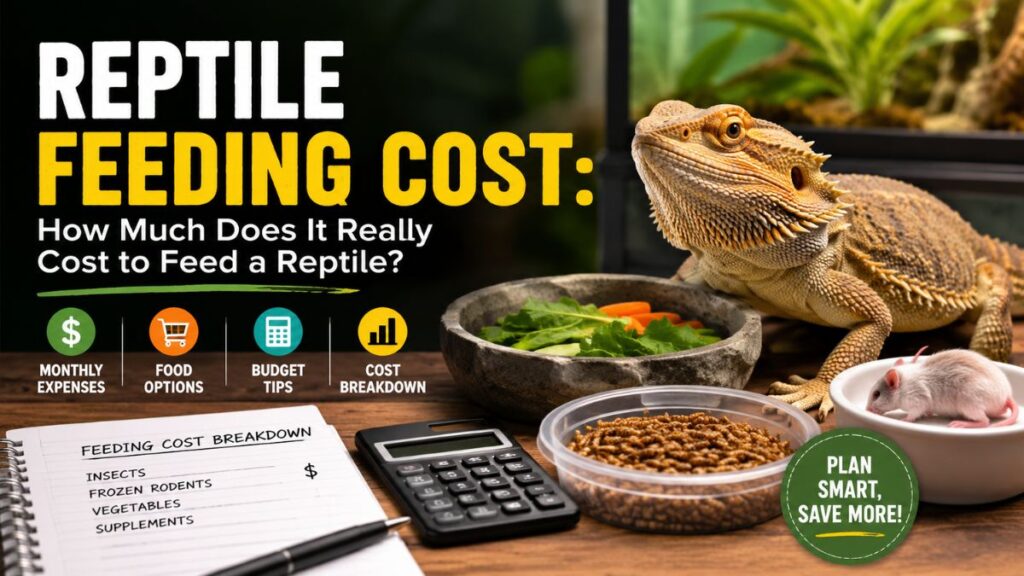
Bringing home a reptile can be exciting, but many new owners overlook one important question: how much will it cost to feed them over time? While reptiles are often considered affordable pets compared to dogs or cats, feeding expenses can vary dramatically depending on the species, age, diet, and feeding frequency.
Understanding the reptile feeding cost is essential before choosing a pet reptile. Whether you’re considering a bearded dragon, corn snake, leopard gecko, or tortoise, knowing the ongoing food expenses helps you budget properly and avoid surprises later.
Let’s break down the real costs and discover what influences your reptile’s food budget.
Factors That Affect Reptile Feeding Expenses
Species and Diet Type
Not all reptiles eat the same foods. Some are insectivores, others are carnivores, and many require a combination of plant and animal matter.
For example:
- Corn snakes typically eat frozen rodents.
- Leopard geckos mainly consume insects.
- Bearded dragons need insects and vegetables.
- Tortoises rely heavily on fresh greens and vegetables.
The type of food your reptile requires is one of the biggest factors influencing monthly feeding costs.
Age and Growth Stage
Young reptiles often eat more frequently than adults because they are growing rapidly.
A juvenile bearded dragon may consume dozens of insects daily, while an adult may only need a few feeding sessions each week. As a result, younger reptiles can sometimes cost more to feed than mature ones.
Food Availability and Location
Food prices vary depending on where you live and whether you purchase feeders in bulk.
Common food sources include:
- Crickets
- Dubia roaches
- Mealworms
- Frozen mice
- Fresh vegetables
- Commercial reptile diets
Buying in bulk often lowers the monthly reptile food budget significantly.
Average Reptile Feeding Cost by Popular Species
Corn Snakes
Corn snakes are among the most affordable reptiles to feed.
Typical monthly cost:
- Juveniles: $5–$10
- Adults: $10–$20
Since they eat frozen-thawed rodents every 7–14 days, food expenses remain relatively low throughout their lives.
Leopard Geckos
Leopard geckos require a steady supply of insects.
Typical monthly cost:
- $10–$25
Costs depend on insect variety and supplementation requirements.
Bearded Dragons
Bearded dragons are often more expensive to feed than many beginner reptiles.
Typical monthly cost:
- Juveniles: $30–$60
- Adults: $20–$40
Their mixed diet of insects and fresh vegetables contributes to higher expenses.
Tortoises
Tortoise feeding costs vary depending on size and species.
Typical monthly cost:
- $10–$40
Owners who grow their own greens can reduce expenses considerably.
How Much Does Reptile Feeding Cost Per Month?
Budget-Friendly Reptiles
If affordability is your priority, consider:
- Corn snakes
- Ball pythons
- African fat-tailed geckos
- Smaller tortoise species
These reptiles generally maintain lower feeding expenses throughout adulthood.
Higher-Cost Feeders
Some reptiles naturally require more food.
Examples include:
- Juvenile bearded dragons
- Large monitors
- Tegus
- Large tortoises
These species may require larger quantities of insects, rodents, or fresh produce, increasing long-term costs.
Ways to Reduce Feeding Expenses Safely
Buy Feeders in Bulk
Many reptile keepers save money by purchasing feeder insects or frozen rodents in larger quantities.
Benefits include:
- Lower cost per feeder
- Reduced shipping fees
- Better long-term budgeting
Raise Your Own Feeder Insects
Experienced keepers sometimes breed:
- Dubia roaches
- Mealworms
- Superworms
This can dramatically reduce the cost of feeding pet reptiles over time.
Track Your Feeding Budget
Monitoring food purchases helps identify spending patterns and avoid overspending.
A useful tool is the Reptile Feeding Cost Calculator:
https://reptilecalc.com/tool/reptile-feeding-cost-calculator/
This calculator helps estimate expenses based on species, food type, and feeding frequency, making budgeting much easier.
Hidden Feeding Costs Many Owners Forget
Supplements
Many reptiles require:
- Calcium powder
- Vitamin supplements
- Gut-loading foods
These additional expenses may seem small but add up over the year.
Food Storage
Frozen rodents often require freezer space, while fresh produce may need frequent replacement to maintain quality.
Food Waste
Not all purchased food gets eaten. Spoiled vegetables, escaped insects, and uneaten feeders can increase the actual reptile feeding cost beyond initial estimates.
Planning Your Long-Term Feeding Budget
Think Beyond Monthly Costs
A reptile may live for decades. Small monthly feeding expenses can become significant over the animal’s lifetime.
For example:
- $15 per month equals $180 annually.
- Over 15 years, that’s $2,700 in food costs.
Long-term planning helps ensure responsible pet ownership.
Research Before You Buy
Before choosing any reptile, research:
- Typical diet
- Feeding frequency
- Adult food requirements
- Local feeder availability
This prevents unexpected expenses and improves overall care.
FAQs:
How much does it cost to feed a reptile each month?
Most pet reptiles cost between $5 and $60 per month to feed, depending on species, age, and diet requirements.
Which reptile is the cheapest to feed?
Corn snakes and ball pythons are generally among the most affordable reptiles to feed because they eat infrequently and require relatively inexpensive prey items.
Can breeding feeder insects save money?
Yes. Breeding insects such as Dubia roaches or mealworms can significantly reduce long-term feeding expenses for insect-eating reptiles.
Conclusion:
Understanding the true reptile feeding cost helps you become a more prepared and responsible reptile owner. While many reptiles are affordable to feed, expenses vary based on species, age, and dietary needs. Taking time to research feeding requirements, buying food strategically, and tracking costs with tools like the Reptile Feeding Cost Calculator can help you stay on budget while keeping your pet healthy and thriving.