Have you ever noticed your reptile spending all its time in one corner of the enclosure? That behavior could be a sign that its habitat isn’t providing the temperature choices it needs to stay healthy. Creating a proper reptile temperature gradient is one of the most important aspects of reptile care, yet it’s often misunderstood by beginners.
Unlike mammals, reptiles cannot regulate their body temperature internally. They rely on their environment to warm up or cool down. A well-designed temperature gradient allows them to move between warmer and cooler areas as needed, supporting digestion, immunity, activity levels, and overall well-being.
If you want your reptile to thrive rather than simply survive, understanding temperature gradients is essential.
Why Temperature Gradients Matter
Reptiles Depend on External Heat
Reptiles are ectothermic animals, meaning they use external heat sources to control their body temperature. In the wild, they move between sunny and shaded areas throughout the day.
Without a proper temperature gradient, reptiles may struggle with:
- Poor digestion
- Reduced appetite
- Low energy levels
- Weakened immune function
- Increased stress
Mimicking Natural Conditions
A temperature gradient recreates the natural thermal options reptiles experience in their native habitats. This gives them the freedom to self-regulate their body temperature whenever needed.
Understanding a Reptile Temperature Gradient
What Is a Temperature Gradient?
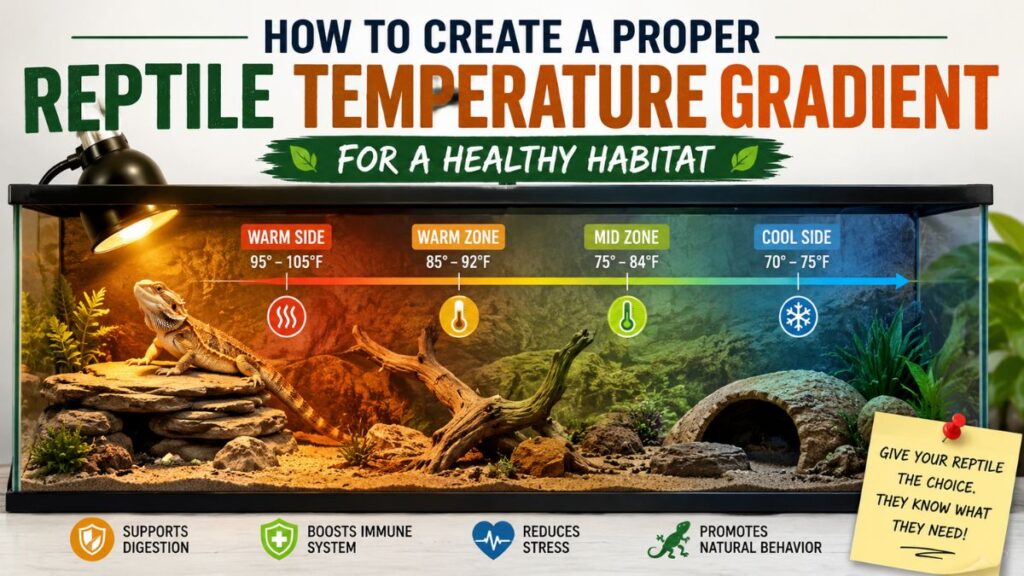
A reptile temperature gradient is the gradual transition from a warm side of the enclosure to a cooler side.
Typically, the habitat includes:
- A basking area (hottest spot)
- A warm zone
- A middle transition area
- A cool zone
This setup allows reptiles to choose the temperature that best suits their current needs.
Every Species Has Different Requirements
Not all reptiles require the same temperatures.
For example:
- Bearded dragons need higher basking temperatures.
- Corn snakes prefer more moderate heat levels.
- Leopard geckos require warm belly heat but cooler retreats.
Always research your species-specific requirements before setting up the enclosure.
How to Set Up the Warm Side
Choose the Right Heat Source
Several heating options can create a proper warm zone:
- Heat lamps
- Halogen basking bulbs
- Ceramic heat emitters
- Deep heat projectors
Position the heat source at one end of the enclosure rather than in the center.
Create a Dedicated Basking Spot
The basking area should be the warmest location in the enclosure.
Use:
- Flat rocks
- Branches
- Elevated basking platforms
This gives your reptile a comfortable place to absorb heat efficiently.
How to Create the Cool Side
Leave One End Unheated
The opposite side of the enclosure should remain cooler.
Avoid placing additional heat sources throughout the habitat, as this can eliminate the gradient entirely.
Provide Hiding Areas
A cool hide helps reptiles retreat when they need to lower their body temperature.
Ideal hiding spots include:
- Rock caves
- Cork bark hides
- Artificial shelters
This improves comfort and reduces stress.
Measuring Temperatures Accurately
Use Reliable Thermometers
One of the biggest reptile care mistakes is relying on inaccurate temperature readings.
For best results, use:
- Digital probe thermometers
- Infrared temperature guns
- Multiple temperature sensors
Place measuring devices on both the warm and cool sides.
Monitor Temperatures Regularly
Room temperatures can change throughout the year.
Check temperatures:
- Daily during setup
- Weekly after stabilization
- Seasonally when weather changes
Consistent monitoring ensures your reptile temperature gradient remains effective.
Common Temperature Gradient Mistakes
Using Only One Temperature Reading
A single thermometer cannot accurately measure the entire enclosure.
Always monitor multiple zones.
Making the Entire Enclosure Too Warm
Many keepers unintentionally overheat the habitat.
Remember, reptiles need choices. If every area is warm, they cannot cool down properly.
Ignoring Nighttime Temperatures
Many reptiles experience natural nighttime temperature drops in the wild.
Research whether your species benefits from a cooler nighttime environment.
Tools That Make Setup Easier
Calculate Temperatures With Confidence
Creating the ideal enclosure can involve some trial and error. Fortunately, online tools can simplify the process.
You can use the Reptile Temperature Gradient Calculator to estimate and optimize enclosure temperatures:
https://reptilecalc.com/tool/reptile-temperature-gradient-calculator/
This helpful tool can save time and help ensure your reptile’s habitat remains within safe temperature ranges.
Signs Your Temperature Gradient Is Working
Healthy Behavioral Indicators
A successful setup often results in:
- Regular basking behavior
- Healthy appetite
- Consistent digestion
- Active exploration
- Normal shedding patterns
Balanced Use of the Enclosure
If your reptile uses both warm and cool areas throughout the day, it is usually a good indication that the gradient is functioning properly.
FAQs:
How wide should a reptile temperature gradient be?
The gradient should extend across the entire enclosure, with a clear warm side and cool side so the reptile can regulate its body temperature naturally.
Can I use a heat mat instead of a basking lamp?
For some species, yes. However, many reptiles benefit from overhead heating because it more closely mimics natural sunlight.
How often should I check enclosure temperatures?
Check temperatures daily when setting up the enclosure and at least weekly once conditions are stable.
Conclusion:
A proper temperature gradient is the foundation of a healthy reptile enclosure. By providing distinct warm and cool zones, accurate monitoring, and species-specific temperatures, you give your reptile the ability to regulate its body temperature naturally. Small adjustments can make a huge difference in your pet’s health, comfort and longevity.