Watching your reptile struggle to shed can be worrying. One day everything seems normal, and the next, you notice patches of old skin stuck to its body, toes, or tail. If you’ve been dealing with reptile shedding problems, you’re not alone. Improper shedding, also known as dysecdysis, is one of the most common issues reptile owners face.
The good news? Most shedding difficulties can be prevented or corrected with the right care. Understanding why your reptile is having trouble shedding can help you improve its health, comfort, and overall well-being. Let’s explore the most common causes and practical solutions.
Understanding the Shedding Process
Why Reptiles Shed Their Skin
Unlike mammals, reptiles continuously grow throughout their lives. As they grow, their old skin becomes too tight and must be replaced.
Healthy shedding helps reptiles:
- Remove old skin
- Support growth
- Eliminate parasites and debris
- Maintain healthy scales
Different species shed at different rates depending on age, growth speed, and environmental conditions.
What Healthy Shedding Looks Like
A healthy shed usually appears:
- In one complete piece for many snakes
- In sections for many lizards
- Without excessive pulling or assistance
If skin remains attached after the shedding cycle, it may indicate a problem.
Common Causes of Reptile Shedding Problems
Low Humidity Levels
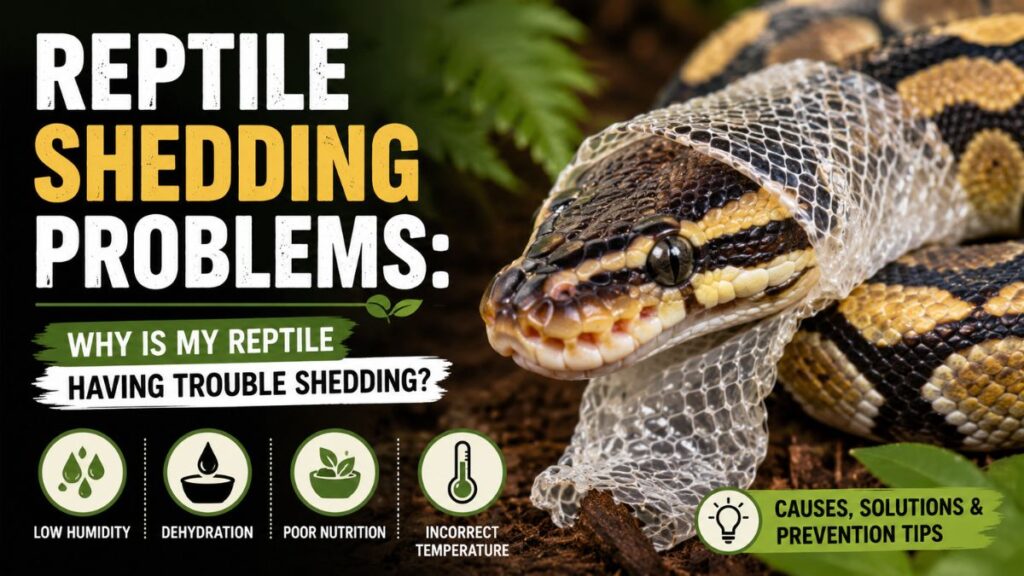
The most common cause of shedding issues is insufficient humidity.
When enclosure humidity is too low:
- Skin dries out prematurely
- Old skin becomes difficult to remove
- Shed may stick around the eyes, toes, and tail
Different reptile species have unique humidity requirements, so it’s important to monitor levels regularly.
Dehydration
Even if enclosure humidity is correct, a dehydrated reptile may still experience shedding difficulties.
Signs of dehydration include:
- Wrinkled skin
- Sunken eyes
- Reduced activity
- Incomplete sheds
Always provide access to fresh, clean water and species-appropriate humidity.
Poor Nutrition
A balanced diet supports healthy skin production.
Nutritional deficiencies may affect:
- Skin quality
- Growth rate
- Overall shedding success
Ensure your reptile receives proper vitamins, minerals, and a varied diet appropriate for its species.
Reptile Shedding Problems: Environmental Factors to Check
Incorrect Enclosure Setup
A poorly designed habitat can contribute to shedding issues.
Check whether your enclosure provides:
- Proper humidity
- Appropriate temperatures
- Adequate ventilation
- Suitable hiding spots
Small environmental mistakes can quickly impact shedding quality.
Lack of Rough Surfaces
Reptiles naturally rub against objects to loosen old skin.
Helpful enclosure items include:
- Cork bark
- Branches
- Rocks
- Textured hides
Without these surfaces, removing old skin becomes more difficult.
Temperature Problems
Temperature directly affects metabolism and skin health.
If temperatures are too low:
- Shedding cycles may slow down
- Skin can remain attached longer
- Healing and growth may be impaired
Always maintain species-specific temperature gradients.
Areas Most Vulnerable to Stuck Shed
Eyes and Eye Caps
Snakes are especially prone to retained eye caps.
Watch for:
- Cloudy eyes after shedding
- Vision problems
- Repeated retained sheds
Never attempt to peel eye caps off manually.
Toes and Tail Tips
Stuck skin around toes or tail tips can become serious.
If left untreated, it may:
- Restrict blood flow
- Cause swelling
- Lead to tissue damage
Regular inspections are essential after every shed.
Around Spikes and Crests
Certain lizards, such as iguanas and bearded dragons, often retain shed around decorative scales, spikes, and crests.
These areas should be monitored carefully.
How to Help a Reptile With Stuck Shed
Increase Humidity Safely
One of the easiest solutions is improving humidity levels.
Options include:
- Light misting
- Larger water dishes
- Humid hides
- Automatic misting systems
Avoid creating excessively wet conditions that could encourage mold growth.
Provide a Humid Hide
A humid hide creates a localized moisture-rich environment.
Fill it with:
- Damp sphagnum moss
- Coconut fiber
- Moist paper towels
Many reptiles will naturally seek it out during shedding periods.
Gentle Soaking and Observation
For species that tolerate soaking, a short soak in lukewarm water can help soften retained skin.
Important:
- Never force removal
- Avoid pulling stuck skin
- Monitor closely afterward
When in doubt, consult a qualified reptile veterinarian.
Preventing Future Shedding Issues
Monitor Humidity Consistently
Prevention is always easier than treatment.
To maintain proper humidity, consider using the Reptile Shedding Humidity Calculator:
https://reptilecalc.com/tool/reptile-shedding-humidity-calculator/
This helpful tool can assist you in maintaining ideal environmental conditions for successful sheds.
Track Shedding Cycles
Keeping a simple record can help identify patterns.
Track:
- Shed dates
- Humidity levels
- Feeding behavior
- Growth changes
These notes can reveal potential issues before they become serious.
Schedule Regular Health Checks
Persistent shedding problems may indicate underlying health concerns.
Seek veterinary advice if you notice:
- Repeated incomplete sheds
- Weight loss
- Lethargy
- Skin discoloration
Early intervention often prevents more serious complications.
FAQs:
Why does my reptile keep getting stuck shed?
The most common causes are low humidity, dehydration, improper temperatures, and inadequate enclosure setup.
Should I pull off stuck shed skin?
No. Pulling shed skin can damage healthy tissue underneath. Instead, improve humidity and allow the skin to loosen naturally.
How often should reptiles shed?
It depends on species and age. Younger reptiles often shed more frequently because they grow faster than adults.
Conclusion:
Shedding is a natural part of a reptile’s life, but when problems arise, they should never be ignored. Most reptile shedding problems are linked to humidity, hydration, temperature, or habitat conditions. By monitoring your reptile’s environment and responding quickly to signs of stuck shed, you can help ensure smoother, healthier shedding cycles.