
Have you ever looked at your reptile and wondered whether it’s at a healthy weight? Unlike dogs and cats, reptiles often hide health issues until they become serious. That’s why understanding your reptile healthy weight is one of the most important parts of responsible reptile care.
A reptile that is underweight may suffer from malnutrition, parasites, or illness, while an overweight reptile can develop mobility problems, organ stress, and a reduced lifespan. Knowing the normal weight range for your pet helps you spot problems early and make better decisions about feeding and husbandry.
In this guide, you’ll discover healthy weight ranges for some of the most popular pet reptiles and learn how to monitor their condition effectively.
Why Monitoring Reptile Weight Matters
Weight Changes Can Signal Health Problems
Weight is often the first indicator that something is wrong. Even before visible symptoms appear, sudden weight loss or gain may suggest:
- Improper diet
- Parasite infections
- Stress
- Dehydration
- Underlying disease
Regular weigh-ins help owners catch these issues before they become serious.
Every Species Has Different Needs
A healthy weight for a leopard gecko is very different from a healthy weight for a bearded dragon or ball python. Factors such as age, sex, genetics, and activity level also influence what is considered normal.
Reptile Healthy Weight Ranges for Popular Species
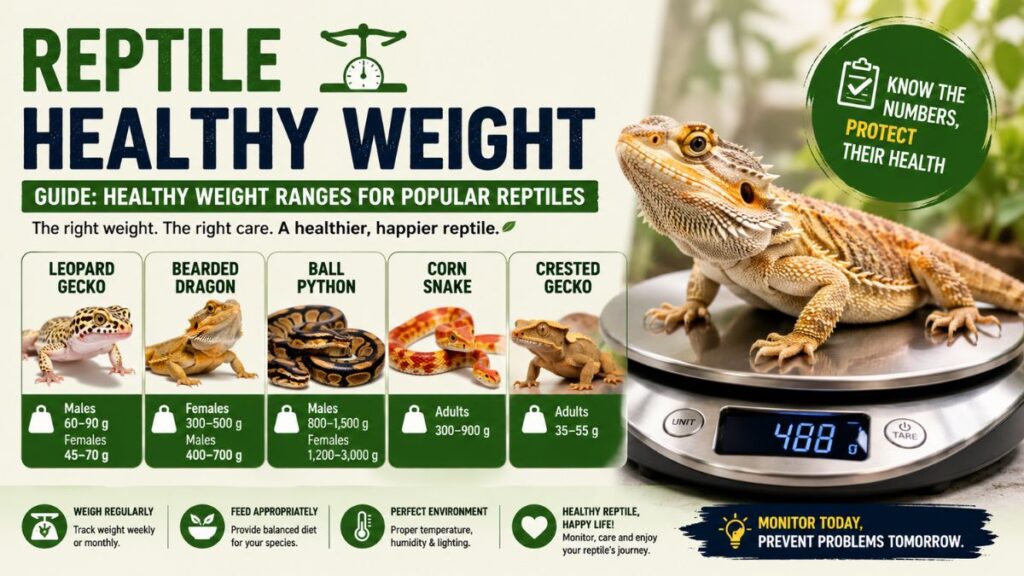
Leopard Gecko Healthy Weight Range
Adult leopard geckos typically weigh:
- Males: 60–90 grams
- Females: 45–70 grams
A healthy leopard gecko should have a moderately thick tail because fat reserves are stored there. Extremely thin tails may indicate health concerns.
Bearded Dragon Healthy Weight Range
Adult bearded dragons generally weigh:
- Females: 300–500 grams
- Males: 400–700 grams
Body shape is often more important than weight alone. A healthy dragon should have visible muscle tone without excessive fat deposits around the abdomen.
Ball Python Healthy Weight Range
Adult ball pythons commonly weigh:
- Males: 800–1,500 grams
- Females: 1,200–3,000 grams
Females are naturally larger than males. The snake should have a rounded body shape without pronounced spine visibility.
Corn Snake Healthy Weight Range
Adult corn snakes usually weigh:
- 300–900 grams
Healthy corn snakes have a smooth body profile with no sharp ridges along the spine.
Crested Gecko Healthy Weight Range
Adult crested geckos typically weigh:
- 35–55 grams
A healthy crested gecko appears well-filled out but not bulky. Their body should look proportional to their head and limbs.
How to Tell If Your Reptile Is Underweight
Common Signs of an Underweight Reptile
Watch for these warning signs:
- Prominent bones
- Sunken fat pads
- Thin tail base
- Muscle loss
- Reduced energy levels
If your reptile shows these symptoms, review feeding practices and consult a reptile veterinarian if necessary.
Causes of Weight Loss in Pet Reptiles
Common causes include:
- Parasites
- Incorrect temperatures
- Poor diet quality
- Chronic stress
- Illness
Rapid weight loss should never be ignored.
How to Identify an Overweight Reptile
Signs Your Reptile May Be Too Heavy
Many pet reptiles become overweight due to overfeeding.
Signs include:
- Fat deposits around limbs
- Sagging belly
- Difficulty climbing or moving
- Thick neck folds
- Reduced activity
Risks of Obesity in Reptiles
Excessive weight can contribute to:
- Fatty liver disease
- Joint stress
- Reduced mobility
- Shorter lifespan
Providing proper nutrition and exercise opportunities helps prevent obesity.
Best Way to Track Healthy Weight in Pet Reptiles
Use a Digital Scale
A small digital kitchen scale is ideal for most reptiles. Weigh your pet:
- Weekly for juveniles
- Monthly for adults
Record results in a notebook or spreadsheet.
Track Trends Instead of Single Measurements
One weight measurement rarely tells the full story. Consistent tracking helps identify gradual changes before they become major problems.
For a quick assessment, use the Reptile Healthy Weight Calculator here:
https://reptilecalc.com/tool/reptile-healthy-weight-calculator/
This tool can help you evaluate whether your reptile falls within a healthy range based on species and size.
Factors That Influence Reptile Weight
Age and Growth Stage
Juveniles gain weight rapidly, while adults typically stabilize after reaching maturity.
Sex Differences
Many species show significant size differences between males and females.
Feeding and Husbandry
Proper temperatures, lighting, hydration, and nutrition all play major roles in maintaining a healthy weight.
FAQs:
What is the easiest way to check my reptile’s healthy weight?
The most reliable method is using a digital scale and comparing results with species-specific healthy weight ranges.
How often should I weigh my reptile?
Juveniles should be weighed weekly, while healthy adults can usually be weighed once a month.
Can a reptile be overweight even if it looks healthy?
Yes. Many reptiles develop excess fat deposits that may not be obvious at first glance. Regular weighing helps identify obesity early.
Conclusion:
Understanding your reptile’s healthy weight is one of the simplest yet most powerful ways to protect its long-term health. Whether you own a leopard gecko, bearded dragon, ball python, corn snake, or crested gecko, regular weight monitoring can help you spot problems early and ensure your pet thrives.