
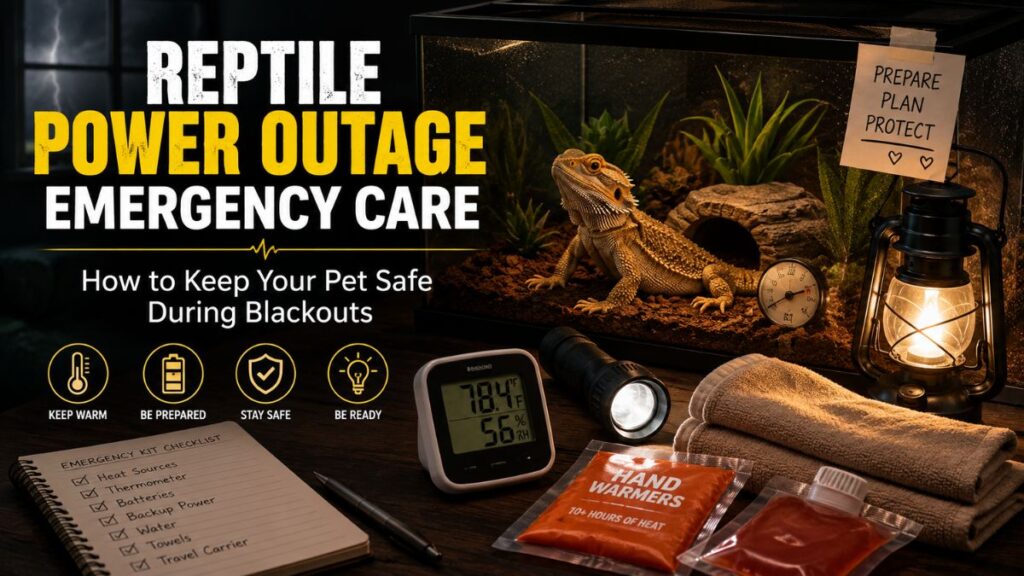
Imagine waking up in the middle of a storm to discover your home has lost electricity. While most people immediately worry about lights, food, or internet access, reptile owners face a far more urgent concern: their pets’ survival. A reptile power outage can quickly become dangerous because reptiles rely on external heat sources to regulate their body temperature.
Whether you keep a leopard gecko, bearded dragon, snake, or chameleon, knowing what to do during an unexpected outage can make the difference between life and death. This guide will help you protect your reptile and stay prepared when the power goes out.
Why Power Outages Are Dangerous for Reptiles
Reptiles Depend on External Heat
Unlike mammals, reptiles cannot generate their own body heat. Their metabolism, digestion, immune system, and overall health depend on proper environmental temperatures.
Without heat:
- Digestion slows or stops
- Immune function weakens
- Stress levels increase
- Risk of illness rises
Different Species Have Different Risks
Some reptiles tolerate cooler temperatures better than others.
Examples include:
- Leopard geckos can handle short periods of mild cooling.
- Tropical reptiles may experience stress much faster.
- Hatchlings and sick reptiles are especially vulnerable.
The duration and severity of a reptile power outage often determine the level of risk.
Emergency Reptile Care During Power Outages
Keep the Enclosure Warm
The primary goal is maintaining safe temperatures.
If power is expected to return soon:
- Keep enclosure doors closed.
- Cover part of the tank with blankets or towels.
- Reduce heat loss by avoiding unnecessary handling.
Avoid covering ventilation completely, as reptiles still require airflow.
Use Temporary Heat Sources
Several emergency heating methods can help during a power outage.
Safe options include:
- Chemical hand warmers wrapped in cloth
- Reptile-safe heat packs
- Warm water bottles wrapped in towels
- Battery-powered heating equipment
Never place hot items directly against your reptile, as burns can occur.
Move to a Smaller Temporary Container
Smaller spaces retain heat more efficiently.
A secure travel carrier lined with towels can help preserve warmth while reducing heat loss.
How Long Can Reptiles Survive Without Power?
Factors That Affect Survival Time
There is no universal answer because several variables matter:
- Species
- Age
- Health condition
- Room temperature
- Duration of outage
A healthy adult reptile may tolerate cooler temperatures for several hours or even longer, while tropical species may become stressed much sooner.
Use a Survival Time Calculator
For a more accurate estimate, use the Reptile Power Outage Survival Time Calculator:
https://reptilecalc.com/tool/reptile-power-outage-survival-time-calculator/
This helpful tool allows reptile owners to estimate potential risks based on enclosure conditions and environmental temperatures.
Preparing a Reptile Emergency Kit
Essential Supplies to Keep Ready
Every reptile owner should maintain an emergency kit.
Include:
- Digital thermometer
- Battery-powered thermometer
- Chemical heat packs
- Towels and blankets
- Portable travel carrier
- Backup power bank
- Flashlight
- Extra drinking water
Having these items ready can significantly reduce panic during an emergency.
Consider Backup Power Options
Long-term preparedness is important.
Popular solutions include:
- Portable power stations
- Uninterruptible Power Supplies (UPS)
- Gas or solar generators
These systems can power essential heating equipment during extended outages.
What to Avoid During a Reptile Power Outage
Avoid Feeding Your Reptile
One of the most important how to keep reptiles warm during power outage tips is to avoid feeding until proper temperatures return.
Without sufficient heat:
- Food may not digest properly.
- Digestive issues can develop.
- Regurgitation risk increases.
Wait until normal temperatures have been restored for several hours before feeding.
Avoid Frequent Handling
Many owners instinctively want to check on their pets constantly.
However:
- Excessive handling increases stress.
- Enclosures lose heat each time they are opened.
- Reptiles may become more vulnerable to temperature fluctuations.
Monitor carefully but disturb them as little as possible.
Long-Term Reptile Power Outage Preparedness
Create an Emergency Plan
A well-prepared owner responds faster and more effectively.
Your plan should include:
- Emergency heat sources
- Backup electricity options
- Temporary housing arrangements
- Contact information for exotic veterinarians
Monitor Weather Forecasts
Severe storms, hurricanes, and winter weather often provide advance warning.
Preparing before a storm arrives allows you to:
- Charge backup devices
- Activate emergency supplies
- Test generators
- Purchase extra heat packs
These simple steps improve reptile emergency care during blackout situations significantly.
FAQs:
How cold is too cold for a reptile during a power outage?
It depends on the species, but prolonged exposure below recommended temperatures can cause stress, digestive issues, and illness.
Can I use hand warmers to keep my reptile warm?
Yes, but always wrap them in cloth and ensure they do not directly contact your reptile to prevent burns.
Should I feed my reptile during a power outage?
No. Wait until normal heating conditions return and your reptile has reached proper operating temperatures.
Conclusion:
Power outages are unpredictable, but they don’t have to become a disaster for your reptile. Understanding the risks, preparing emergency supplies, and knowing how to maintain safe temperatures can dramatically improve your pet’s chances of staying healthy during an outage.