
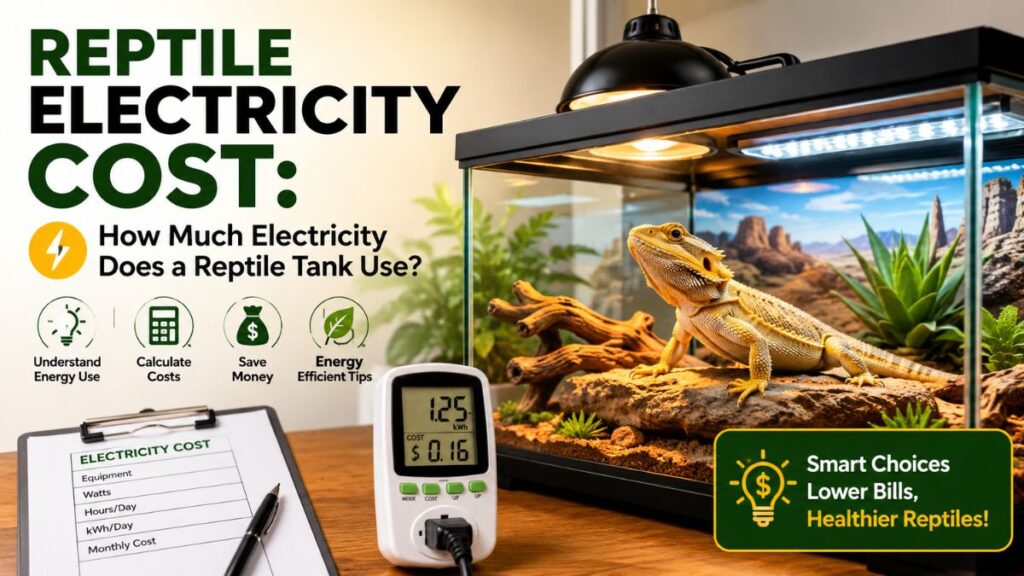
Bringing a reptile into your home is exciting, but many owners quickly discover that creating the perfect habitat involves more than just a tank and decorations. Heat lamps, UVB lighting, ceramic heaters, and thermostats often run for hours every day. This naturally raises an important question: how much does a reptile tank actually cost to power?
Understanding your reptile electricity cost can help you budget more accurately, avoid unexpected utility bills, and make smarter equipment choices. The good news is that most reptile enclosures use less electricity than many people think. However, costs can vary significantly depending on the species, enclosure size, and heating setup.
Let’s break down exactly what affects reptile tank energy consumption and how you can keep costs under control.
Understanding Reptile Tank Power Consumption
What Equipment Uses Electricity?
Most reptile enclosures rely on several electrical devices:
- Heat lamps
- Ceramic heat emitters
- UVB lighting
- LED lighting
- Heat mats
- Thermostats
- Humidifiers or misters (for some species)
Each device contributes to your overall electricity usage.
Why Energy Usage Varies
A tropical reptile requiring constant warmth typically consumes more electricity than a species that thrives at room temperature. Factors affecting power consumption include:
- Tank size
- Room temperature
- Climate
- Equipment wattage
- Daily operating hours
Reptile Electricity Cost: What Determines Your Monthly Bill?
Wattage Matters Most
Every heating or lighting device has a wattage rating. Higher wattage means greater electricity use.
For example:
| Equipment | Average Wattage |
|---|---|
| UVB Bulb | 15–40W |
| Heat Lamp | 50–150W |
| Ceramic Heater | 60–150W |
| Heat Mat | 8–40W |
| LED Light | 5–20W |
A setup using a 100W heat lamp for 12 hours daily consumes much more energy than a simple 25W UVB bulb.
Daily Runtime
Most reptile lighting systems operate between 10 and 14 hours per day. Heating devices may run longer depending on:
- Ambient room temperature
- Thermostat settings
- Seasonal weather changes
The longer equipment runs, the higher the monthly electricity cost.
Typical Electricity Usage by Reptile Species
Leopard Geckos
Leopard geckos generally have moderate energy requirements.
Common setup:
- Heat source
- UVB lighting
- Thermostat
Average monthly electricity usage is relatively low compared to tropical reptiles.
Bearded Dragons
Bearded dragons typically require:
- Strong basking lights
- UVB lighting
- Daytime heating
These enclosures often consume more electricity because multiple high-wattage bulbs operate daily.
Ball Pythons
Ball pythons commonly use:
- Heat mats
- Ceramic heat emitters
- Thermostats
Their electricity usage remains moderate, especially when thermostats efficiently regulate temperatures.
Chameleons
Chameleons often require:
- UVB lighting
- Basking lights
- Humidity systems
This combination can increase energy consumption compared to simpler reptile setups.
How to Calculate Reptile Tank Electricity Usage
Basic Formula
Use this simple calculation:
Watts × Hours Used ÷ 1000 = Kilowatt-Hours (kWh)
Example:
- 100W heat lamp
- 12 hours daily
100 × 12 ÷ 1000 = 1.2 kWh per day
Multiply by your local electricity rate to estimate daily and monthly costs.
Use a Dedicated Calculator
To get a more accurate estimate, try the Reptile Enclosure Lighting Cost Calculator:
https://reptilecalc.com/tool/reptile-enclosure-lighting-cost-calculator/
This tool helps reptile owners estimate enclosure energy expenses based on lighting wattage and usage schedules.
Ways to Reduce Reptile Tank Energy Costs
Upgrade to Efficient Equipment
Modern equipment often consumes less electricity while delivering better performance.
Consider:
- LED enclosure lighting
- High-efficiency UVB fixtures
- Quality thermostats
Use Thermostats Correctly
A thermostat prevents heating devices from running continuously.
Benefits include:
- Lower energy consumption
- More stable temperatures
- Longer equipment lifespan
Improve Room Insulation
A cold room forces heating devices to work harder.
Simple improvements include:
- Closing windows
- Using insulated backgrounds
- Avoiding drafty locations
Choose Appropriate Wattage
Many owners purchase higher-wattage bulbs than necessary.
Selecting the correct wattage can significantly reduce monthly operating costs without compromising reptile health.
Is Running a Reptile Tank Expensive?
The Reality for Most Owners
For many reptile keepers, electricity expenses are surprisingly manageable.
Most standard enclosures cost only a small amount per month to operate. Larger tropical habitats with multiple heat and humidity devices naturally cost more, but they still generally consume less electricity than major household appliances such as air conditioners or electric water heaters.
Budgeting for Long-Term Ownership
When considering a new reptile, remember to account for:
- Electricity costs
- Bulb replacements
- Thermostat maintenance
- Equipment upgrades
Planning ahead helps avoid surprises and ensures your pet always receives proper care.
FAQs:
How much electricity does a reptile tank use per month?
Most reptile tanks use between a few dollars and several dollars worth of electricity monthly, depending on equipment wattage and operating hours.
Do heat lamps use more electricity than UVB lights?
Yes. Heat lamps generally consume significantly more power because they operate at higher wattages.
Can thermostats reduce reptile tank energy costs?
Absolutely. Thermostats prevent heaters from running unnecessarily, reducing overall energy consumption while maintaining safe temperatures.
Conclusion:
Knowing your reptile electricity cost makes it easier to provide excellent care without worrying about unexpected utility bills. By understanding wattage, operating hours, and enclosure requirements, you can accurately estimate expenses and make smarter equipment choices.