Have you ever wondered why two reptiles of the same species can look completely different? One may have bright colors, unique patterns, or even no pattern at all. The secret lies in reptile morph genetics, a fascinating area of reptile breeding that determines how physical traits are inherited from parents to offspring.
Whether you’re a curious reptile owner, a beginner breeder, or simply fascinated by exotic pets, understanding genetics can help you make informed decisions and appreciate the incredible diversity seen in captive-bred reptiles today. The good news? You don’t need a science degree to understand the basics.
Understanding Reptile Morph Genetics
What Is a Morph?
A morph is a genetic variation that changes a reptile’s appearance. These changes can affect:
- Color
- Pattern
- Scale structure
- Eye color
- Overall appearance
Morphs occur naturally through genetic mutations, but breeders selectively pair animals to produce and enhance these traits.
Popular examples include albino snakes, hypo bearded dragons, and patternless leopard geckos.
Why Genetics Matter
Understanding genetics helps breeders:
- Predict offspring traits
- Avoid genetic health issues
- Plan breeding projects effectively
- Maintain healthy bloodlines
For pet owners, genetics provides insight into why certain morphs are rare and often more expensive.
Reptile Morph Genetics Explained: Key Genetic Terms
Dominant Genes
A dominant gene only needs one copy from either parent to be visible.
For example:
- Parent A carries the dominant morph.
- Parent B is normal.
- Some offspring may display the morph.
Dominant traits are generally easier for beginners to work with because they are visible immediately.
Recessive Genes
Recessive traits require two copies of the gene—one from each parent—to appear visually.
Examples include:
- Albino morphs
- Amelanistic morphs
- Certain patternless morphs
A reptile carrying only one recessive gene is called a “het” (heterozygous) and may look completely normal.
Co-Dominant and Incomplete Dominant Genes
These genes create different visual effects depending on whether the reptile inherits one or two copies.
Common outcomes include:
- Single-gene appearance
- Super form appearance with two copies
- Enhanced colors and patterns
Many popular snake morphs follow this inheritance pattern.
How Morph Inheritance Works
Understanding Punnett Squares
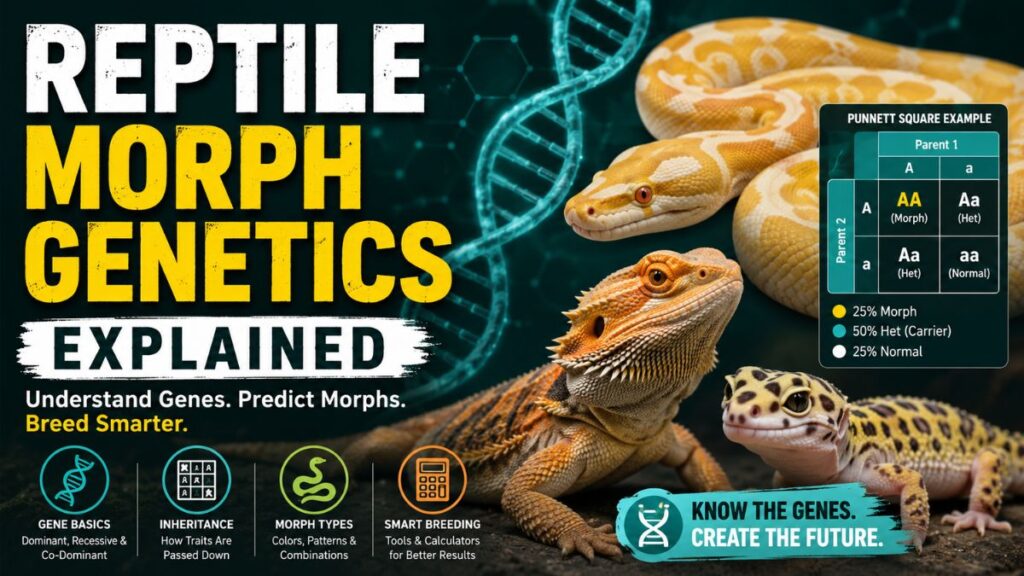
Breeders often use Punnett squares to predict possible offspring outcomes.
A Punnett square helps determine:
- Trait probabilities
- Visual morph percentages
- Hidden genetic combinations
While genetics can sometimes be more complex, these charts provide a useful starting point.
Example of Recessive Breeding
Imagine breeding two reptiles that both carry an albino gene.
Possible results:
- 25% visual albino offspring
- 50% albino carriers (hets)
- 25% normal offspring
This is one reason recessive projects often require patience and long-term planning.
Common Types of Reptile Morphs
Color Morphs
Color morphs alter pigmentation throughout the body.
Examples include:
- Albino
- Hypomelanistic
- Axanthic
- Melanistic
These morphs can dramatically change a reptile’s appearance.
Pattern Morphs
Pattern morphs affect markings and body designs.
Examples include:
- Stripe
- Jungle
- Patternless
- Spider-like variations
Pattern changes are often among the most visually striking traits.
Combination Morphs
Many breeders combine multiple genes to create unique designer morphs.
These combinations can result in:
- Brighter colors
- More complex patterns
- Rare appearances
- High market value
Some of today’s most popular reptiles contain several genetic traits working together.
Using Genetics Tools for Better Predictions
Why Breeders Use Morph Calculators
Even experienced breeders use genetics calculators because multiple genes can quickly become difficult to track manually.
A quality calculator can help you:
- Predict offspring outcomes
- Identify possible morph combinations
- Estimate inheritance percentages
- Plan breeding projects efficiently
You can simplify your breeding calculations with the Reptile Genetics Morph Calculator here: https://reptilecalc.com/tool/reptile-genetics-morph-calculator/
Avoiding Genetic Mistakes
Before breeding reptiles, always research potential genetic issues associated with specific morphs.
Responsible breeding focuses on:
- Animal welfare
- Genetic diversity
- Healthy offspring
- Ethical breeding practices
Producing healthy reptiles should always be the top priority.
Tips for Beginners Learning Reptile Genetics
Start Simple
New breeders should begin with:
- Single-gene morphs
- Basic inheritance patterns
- Easy-to-track breeding projects
This builds confidence before moving to more advanced combinations.
Keep Detailed Records
Record every breeding project, including:
- Parent genetics
- Hatch dates
- Offspring traits
- Growth and health data
Accurate records become invaluable over time.
Continue Learning
Genetics is constantly evolving as breeders discover new traits and combinations.
Reading, networking, and using genetics tools can significantly improve your understanding.
FAQs:
What does “het” mean in reptile genetics?
“Het” stands for heterozygous, meaning a reptile carries one copy of a recessive gene without visually displaying the trait.
Are all reptile morphs genetically inherited?
Most morphs are inherited genetically, though environmental factors can sometimes influence color intensity and appearance.
Can two normal-looking reptiles produce morph offspring?
Yes. If both parents carry the same recessive gene, they may produce visual morph offspring even if neither parent displays the trait.
Conclusion:
Understanding reptile morph genetics opens the door to a fascinating world of colors, patterns, and inheritance. Whether you’re keeping reptiles as pets or considering breeding projects, learning the basics helps you make smarter, more responsible decisions.