Have you ever wondered if you’re feeding your leopard gecko too much—or not enough? Many new reptile owners struggle to find the right balance, and feeding mistakes can lead to poor growth, obesity, or nutritional deficiencies. That’s why following a proper leopard gecko feeding chart is so important.
Leopard geckos have different nutritional needs at every stage of life. A hatchling requires frequent meals to support rapid growth, while an adult thrives on a less frequent feeding schedule. Understanding these age-based differences can help your gecko stay healthy, active, and live a long life.
Understanding Leopard Gecko Nutritional Needs
Why Age Matters in Feeding
As leopard geckos grow, their metabolism changes significantly. Younger geckos burn energy quickly and need more frequent meals, while adults require fewer feedings to maintain a healthy weight.
Key factors affecting feeding include:
- Age
- Body weight
- Activity level
- Reproductive status
- Overall health
What Leopard Geckos Eat
Leopard geckos are insectivores, meaning they eat insects exclusively.
Common feeder insects include:
- Crickets
- Dubia roaches
- Mealworms
- Superworms
- Black soldier fly larvae
- Silkworms
Always gut-load feeder insects and dust them with calcium and vitamin supplements before feeding.
Leopard Gecko Feeding Chart by Age
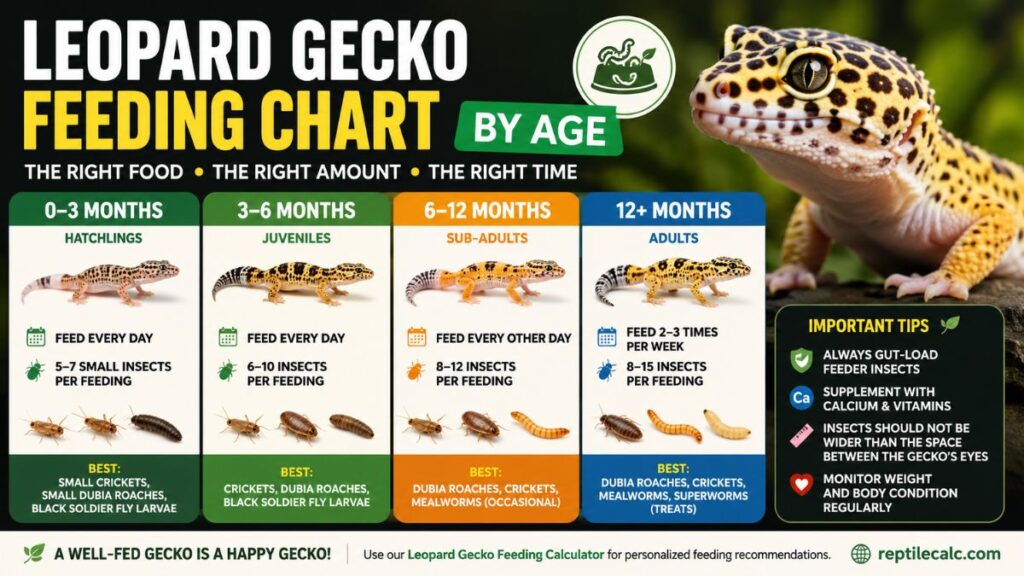
Hatchlings (0–3 Months)
Young hatchlings grow rapidly and need daily nutrition.
Feeding Schedule:
- Feed every day
- Offer 5–7 small insects per feeding
- Use appropriately sized insects
Best Feeders:
- Small crickets
- Small dubia roaches
- Black soldier fly larvae
Juveniles (3–6 Months)
Growth remains fast, but feeding can become slightly less frequent.
Feeding Schedule:
- Feed daily
- Offer 6–10 insects per meal
Signs of Healthy Growth:
- Steady weight gain
- Thickening tail
- Active behavior
Sub-Adults (6–12 Months)
At this stage, growth begins slowing down.
Feeding Schedule:
- Feed every other day
- Offer 8–12 insects per meal
Monitor body condition regularly to avoid overfeeding.
Adults (12+ Months)
Adult leopard geckos require fewer meals to maintain ideal body weight.
Feeding Schedule:
- Feed 2–3 times per week
- Offer 8–15 insects per feeding
This is the stage where many owners accidentally overfeed, leading to obesity.
How Much Should I Feed My Leopard Gecko?
The General Rule
A simple guideline is to allow your gecko to eat as many insects as it comfortably consumes within 10–15 minutes.
However, every gecko is different. Factors such as metabolism, enclosure temperature, and activity level can influence food intake.
Use a Feeding Calculator
For more precise recommendations, try the Leopard Gecko Feeding Calculator:
https://reptilecalc.com/tool/leopard-gecko-feeding-calculator/
This helpful tool estimates feeding amounts based on your gecko’s age and size.
Best Insects for Different Life Stages
High-Protein Feeders
These insects support healthy growth:
- Dubia roaches
- Crickets
- Silkworms
Treat Feeders
Offer occasionally:
- Mealworms
- Superworms
- Waxworms
Treat insects are higher in fat and should not become the primary diet.
Variety Is Important
Rotating feeder insects provides:
- Better nutrition
- Mental stimulation
- Reduced risk of picky eating
A varied diet is one of the best ways to maintain long-term health.
Common Feeding Mistakes to Avoid
Overfeeding Adults
One of the most common problems is excessive feeding.
Signs of overfeeding include:
- Thick, oversized tail
- Fat deposits behind the legs
- Reduced activity
Ignoring Supplementation
Leopard geckos need:
- Calcium supplementation
- Vitamin D3
- Multivitamins
Without proper supplementation, metabolic bone disease can develop.
Feeding Oversized Insects
A good rule is that insects should never be wider than the space between your gecko’s eyes.
Following this guideline helps prevent choking and digestive issues.
Signs Your Leopard Gecko Is Eating Properly
Healthy Indicators
Look for these positive signs:
- Bright eyes
- Alert behavior
- Strong appetite
- Healthy shedding
- Steady body weight
When to Be Concerned
Seek veterinary advice if your gecko:
- Refuses food for extended periods
- Rapidly loses weight
- Appears lethargic
- Has difficulty shedding
Early intervention can prevent serious health problems.
FAQs:
How often should an adult leopard gecko eat?
Most adults do well with feeding sessions 2–3 times per week, depending on activity level and body condition.
Can leopard geckos eat mealworms every day?
Mealworms can be part of the diet but should not be the sole food source. Variety provides better nutrition.
What is the best insect for leopard geckos?
Dubia roaches and crickets are often considered the best staple feeders due to their excellent nutritional profiles.
Conclusion:
Using a proper leopard gecko feeding chart takes the guesswork out of caring for your pet. By adjusting feeding frequency and portion sizes based on age, you can support healthy growth, prevent obesity, and help your gecko thrive for years to come.