Imagine opening your reptile enclosure and seeing lush plants, living soil, and tiny cleanup organisms working together just like they do in nature. That’s the magic of a bioactive vivarium setup. More reptile keepers are switching to bioactive habitats because they look stunning, support animal health, and reduce maintenance over time.
Whether you’re caring for a gecko, snake, or tropical lizard, a properly built bioactive enclosure can transform your pet’s environment into a living ecosystem. This guide will walk you through everything you need to know to create a successful bioactive vivarium from scratch.
What Is a Bioactive Vivarium?
Understanding the Concept
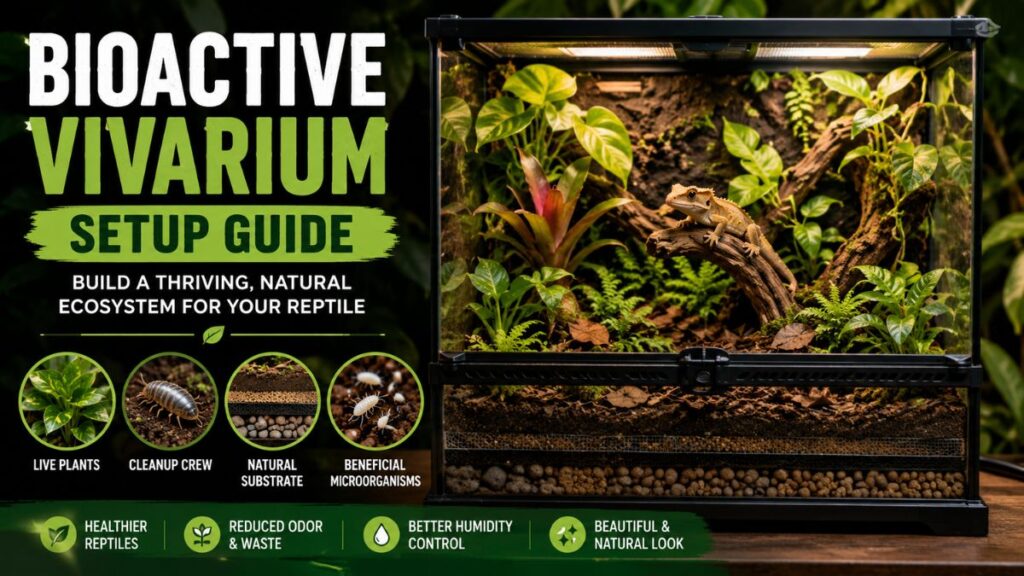
A bioactive vivarium is a self-sustaining enclosure that mimics a natural habitat. It combines:
- Live plants
- Beneficial microorganisms
- Cleanup crews such as isopods and springtails
- Natural substrate layers
These components work together to break down waste and maintain a healthier environment for your reptile.
Why Reptile Owners Love Bioactive Setups
Benefits include:
- More natural enrichment for reptiles
- Better humidity regulation
- Reduced odor and waste buildup
- Beautiful, natural-looking displays
- Less frequent substrate replacement
How to Plan Your Bioactive Vivarium Setup
Choose the Right Reptile Species
Not every reptile has the same habitat requirements. Research your species carefully before building the enclosure.
Common reptiles that thrive in bioactive environments include:
- Crested geckos
- Leopard geckos
- Ball pythons
- Gargoyle geckos
- Day geckos
Select the Appropriate Enclosure Size
A larger enclosure creates a more stable ecosystem and provides enough room for plants and cleanup crews to flourish.
Consider:
- Adult size of your reptile
- Temperature gradients
- Plant growth requirements
- Future maintenance access
Bioactive Vivarium Setup Essentials
Build the Drainage Layer
The drainage layer prevents excess water from saturating the soil.
Popular materials include:
- Clay balls
- Lava rock
- Aquarium gravel
Add a mesh barrier above the drainage layer to keep soil from mixing with it.
Create a Healthy Substrate
The substrate serves as the foundation of the ecosystem.
A common bioactive substrate mix contains:
- Organic topsoil
- Coco coir
- Sphagnum moss
- Leaf litter
- Sand (for certain species)
This combination supports plant roots and beneficial organisms.
Add a Cleanup Crew
Cleanup crews are essential for waste management.
The most common choices are:
- Springtails
- Isopods
These tiny organisms consume decaying matter, mold, and waste, helping maintain a cleaner enclosure naturally.
Choosing Plants for a Bioactive Reptile Enclosure
Safe Plant Options
Selecting reptile-safe plants is critical.
Popular choices include:
- Pothos
- Snake plant
- Spider plant
- Bromeliads
- Ferns
These plants are generally hardy and adaptable to vivarium conditions.
Plant Placement Tips
Place larger plants toward the back and smaller plants in the foreground.
This creates:
- Natural hiding spots
- Visual depth
- Better use of available space
Lighting and Environmental Conditions
Proper Lighting Requirements
Live plants require adequate lighting to grow.
Depending on your reptile species, you may need:
- Full-spectrum LED lighting
- UVB lighting
- Heat lamps
Proper lighting supports both plant health and reptile well-being.
Maintaining Humidity and Temperature
Monitor environmental conditions regularly using:
- Digital thermometers
- Hygrometers
Stable conditions help plants, microorganisms, and reptiles thrive together.
Common Mistakes to Avoid
Adding Animals Too Soon
A new bioactive enclosure needs time to establish.
Allow the ecosystem to mature for several weeks before introducing your reptile.
Overwatering the Vivarium
Too much moisture can cause:
- Root rot
- Mold growth
- Poor air quality
Always monitor moisture levels carefully.
Ignoring Cleanup Crew Health
Even the best setup can fail if the cleanup crew population declines. Occasionally replenish colonies if necessary.
Helpful Tool for Accurate Planning
Use a Bioactive Vivarium Calculator
Planning substrate depth, drainage layers, and enclosure dimensions can sometimes be confusing.
To simplify the process, use the Bioactive Vivarium Setup Calculator here:
https://reptilecalc.com/tool/bioactive-vivarium-setup-calculator/
This tool helps estimate materials and makes setting up your enclosure much easier.
FAQs:
How long does a bioactive vivarium take to establish?
Most bioactive vivariums need about 2 to 6 weeks to stabilize before introducing reptiles.
Do bioactive vivariums eliminate cleaning completely?
No. While maintenance is greatly reduced, occasional spot cleaning and monitoring are still necessary.
Are bioactive vivariums suitable for beginners?
Yes. With proper research and planning, beginners can successfully maintain a bioactive enclosure.
Conclusion:
A well-designed bioactive vivarium setup does more than house your reptile—it creates a living ecosystem that benefits both the animal and the keeper. By combining live plants, healthy substrate, and an active cleanup crew, you can build a beautiful habitat that closely resembles nature.