Bringing home a new reptile is exciting. Whether it’s a curious gecko, a colorful snake, or a friendly bearded dragon, the temptation to place your new pet alongside your existing reptiles can be hard to resist. But what if that seemingly healthy reptile is carrying hidden parasites, infections, or diseases?
This is where reptile quarantine becomes one of the most important steps in responsible reptile ownership. A proper quarantine period protects your current pets, helps you monitor your new reptile’s health, and can save you from costly veterinary treatments later.
Many reptile illnesses show no obvious symptoms during the first few weeks. By taking the time to quarantine, you’re giving your new pet the safest possible start while protecting your entire collection.
Why Reptile Quarantine Is So Important
Hidden Health Problems Are Common
Even reptiles purchased from reputable breeders or pet stores can carry:
- Internal parasites
- Mites and ticks
- Respiratory infections
- Fungal diseases
- Bacterial infections
Many of these conditions remain invisible at first, making quarantine an essential safety measure.
Protecting Existing Reptiles
If you already own reptiles, introducing a new animal without quarantine can spread disease quickly. One infected reptile can potentially affect every animal in your collection.
A quarantine period acts as a protective barrier and significantly reduces this risk.
How Long Should You Quarantine a New Reptile?
Recommended Reptile Quarantine Duration
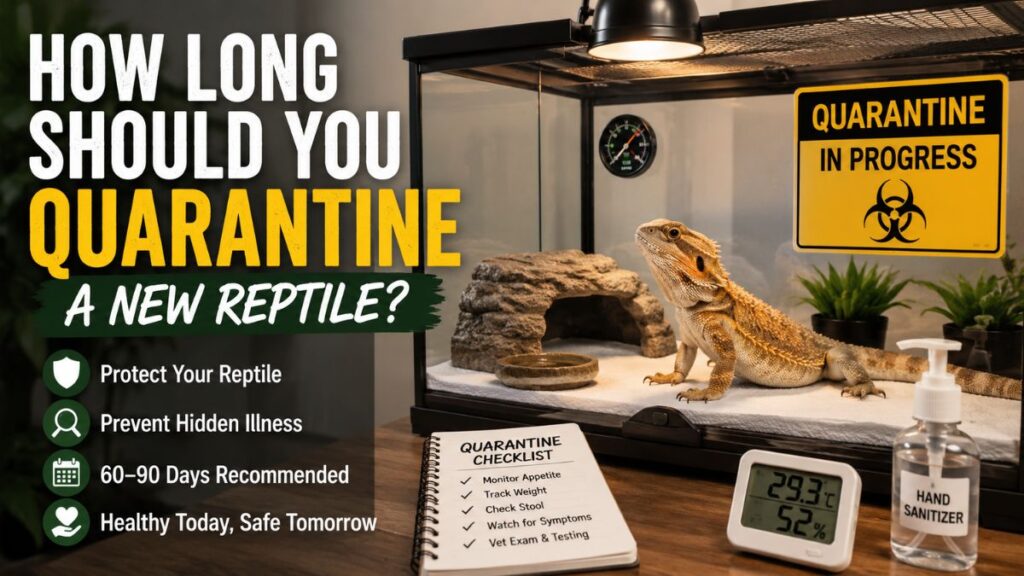
Most reptile experts recommend a minimum quarantine period of 60 to 90 days.
This timeframe allows enough opportunity to:
- Observe feeding behavior
- Monitor weight changes
- Watch for signs of illness
- Complete veterinary examinations
- Perform fecal testing if necessary
While some keepers use shorter periods, a full 90-day quarantine offers the highest level of protection.
Factors That May Extend Quarantine
Certain situations may require a longer quarantine:
- Newly imported reptiles
- Reptiles with unknown health histories
- Animals recovering from illness
- Positive parasite test results
In these cases, quarantine should continue until all health concerns have been resolved.
Setting Up a Proper Quarantine Enclosure
Keep the Setup Simple
A quarantine enclosure should be easy to clean and monitor.
Basic essentials include:
- Appropriate heating source
- Water dish
- Simple hide box
- Paper towels or disposable substrate
- Proper lighting if required by the species
Avoid complex decorations that make cleaning difficult.
Separate Location Matters
The quarantine enclosure should ideally be housed in a different room from your other reptiles.
This helps prevent:
- Airborne contamination
- Accidental contact
- Cross-contamination through handling
The greater the separation, the safer your reptiles will be.
What to Monitor During Reptile Quarantine
Feeding and Appetite
Healthy reptiles typically establish regular feeding habits.
Watch for:
- Refusal to eat
- Difficulty swallowing
- Sudden appetite loss
- Regurgitation
Keeping a feeding log can help identify problems early.
Weight and Body Condition
One of the best signs a reptile quarantine period is working is stable body weight.
Weigh your reptile weekly and record the results. Unexpected weight loss often indicates an underlying health issue.
Waste and Parasite Checks
Inspect feces regularly for:
- Abnormal consistency
- Visible parasites
- Blood
- Unusual odor
A veterinary fecal exam is highly recommended during quarantine.
Common Mistakes During Reptile Isolation
Handling Other Reptiles First
Always care for quarantined reptiles last.
After handling them:
- Wash your hands thoroughly
- Change gloves if used
- Disinfect equipment
This simple habit greatly reduces disease transmission.
Sharing Equipment
One of the biggest new reptile health monitoring mistakes is sharing tools between enclosures.
Avoid sharing:
- Feeding tongs
- Water bowls
- Cleaning supplies
- Decorations
Dedicated equipment helps maintain biosecurity.
Ending Quarantine Too Soon
A reptile may appear healthy for weeks before symptoms develop.
Rushing the process can expose your existing reptiles to hidden illnesses that have not yet become visible.
Using a Reptile Quarantine Duration Calculator
Simplify Your Planning
Different reptile species and health situations may require slightly different quarantine strategies.
To determine an appropriate timeframe, use the Reptile Quarantine Duration Calculator:
https://reptilecalc.com/tool/reptile-quarantine-duration-calculator/
This helpful tool can assist with how long to quarantine a new reptile based on your specific situation and provide a more structured approach to reptile care.
FAQs:
1. Can I quarantine a reptile for only 30 days?
Thirty days is generally considered too short. Most experts recommend at least 60–90 days to identify hidden health issues.
2. Do reptiles from breeders still need quarantine?
Yes. Even healthy-looking reptiles from trusted breeders should complete a quarantine period before joining other reptiles.
3. What if my reptile shows signs of illness during quarantine?
Extend the quarantine period and seek veterinary advice. The reptile should remain isolated until fully healthy.
Conclusion:
A proper reptile quarantine may feel like an inconvenience at first, but it is one of the smartest investments you can make in your reptile’s health. Taking 60 to 90 days to observe, monitor, and evaluate a new reptile can prevent disease outbreaks, protect your existing pets, and provide peace of mind.