You pick up your bearded dragon for his usual evening cuddle and something feels off. His skin looks a little loose, his eyes seem tucked back, and he’s far less bouncy than usual. Is it just a lazy day, or is it something more serious?
Reptile dehydration is one of the most common and most overlooked health problems in captive pets. It creeps in quietly, because reptiles don’t gulp from a water bowl the way a dog does, and they rarely look distressed until they’re well behind. The good news? Caught early, it’s very fixable at home.
In this guide, you’ll learn what to look for, why it happens, how to rehydrate your pet safely, and how to stop it from coming back.
Why Hydration Matters More Than You Think
Reptiles Lose Water Quietly
Reptiles don’t sweat, so there’s no dramatic warning sign when they run low. Water slips away through breathing, shedding, droppings and dry air. In the wild, a lizard might lick morning dew or sit in a puddle. In a glass enclosure under a heat lamp, those natural options disappear unless you recreate them on purpose.
What Happens Inside a Dehydrated Body
Water keeps blood moving, helps the kidneys flush out waste, and keeps skin soft enough to shed cleanly. When levels drop, waste builds up, digestion slows and sheds turn patchy. Left alone, mild dehydration can snowball into impaction or kidney trouble. A small fix today beats a big vet bill next month.
Reptile Dehydration Signs to Watch For
Knowing the signs of dehydration in reptiles is half the battle. Most of them are visible once you know where to look.
Early Warning Signs
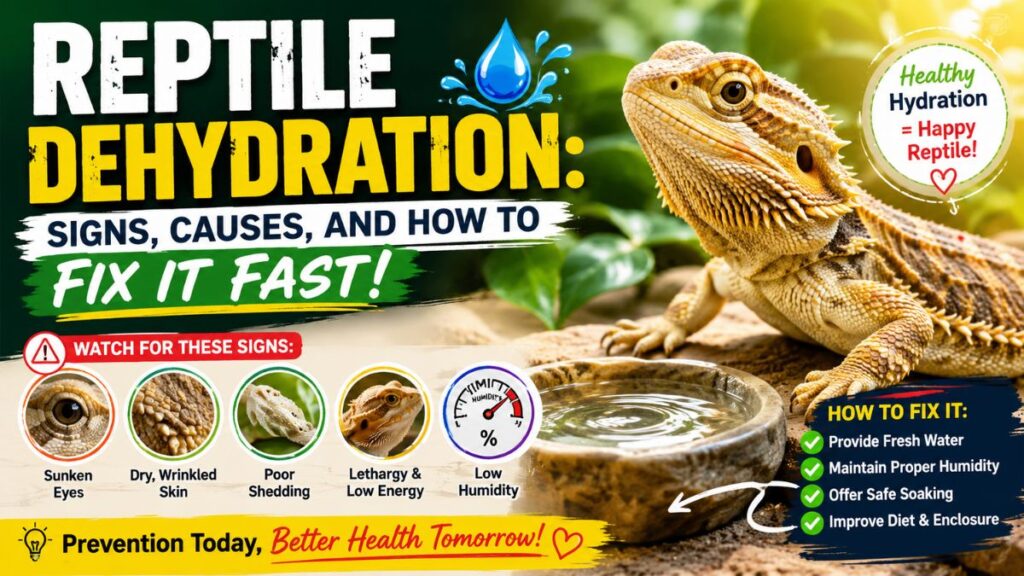
- Wrinkled or loose skin, especially around the neck, legs and tail base
- Dull, tight-looking scales
- Slightly sunken eyes
- Lower appetite and less energy
- Sticky, stringy saliva or a gummy mouth
- Fewer droppings, or dry, hard stool
- Chalky, gritty urates (the white part of the waste) instead of soft, creamy ones
Serious Signs That Need Attention
- Deeply sunken eyes
- Skin that stays “tented” after a gentle pinch
- Weakness, wobbling or a slow response when handled
- Stubborn stuck shed that clings in patches
- No urates or urine for several days
If you spot these, skip ahead to the vet section below.
The Gentle Skin Check
Lightly lift a tiny fold of skin on the side of the body and let go. Healthy skin snaps back almost instantly. If it stays raised or settles slowly, dehydration is a strong possibility. Be gentle: it should feel like a nudge, not a grab. This test is less reliable in very thin animals and some species, so always combine it with other signs.
Signs Look Different Across Species
- Bearded dragons: A dehydrated bearded dragon often shows loose skin along the belly, dull coloring and sunken eyes.
- Snakes: Dimpled or wrinkled scales, repeated bad sheds and a dry, sticky mouth.
- Geckos: Wrinkly skin and sluggishness. A thin tail can also point to other problems, so don’t rely on it alone.
- Chameleons: Sunken eyes and ignoring water droplets are big red flags.
What Causes Dehydration in Reptiles
Husbandry Mistakes
Most cases trace back to the setup, not the animal:
- Humidity that’s too low for the species
- Basking spots that run too hot and speed up water loss
- A water bowl that’s too small, too deep, dirty or hard to reach
- Screen tops and strong ventilation that pull moisture out
- Substrate that dries out fast
Diet and Health Factors
- A diet with very little moisture, such as only dry insects and no fresh greens
- Illness like parasites, kidney disease, respiratory infections or mouth rot, which can reduce drinking or increase water loss
- Stress, a recent move or brumation, when many reptiles drink less
Species That Don’t Drink the Way You Expect
Chameleons and many anoles rarely drink from a still bowl. They respond to moving water, like drips running down leaves. Some geckos lap droplets from plants and decor. If you only offer a bowl, these animals can quietly stay thirsty for weeks. A mister or dripper often solves the problem overnight.
How to Rehydrate a Reptile Fast (and Safely)
Mild cases usually improve within a day or two. If you’re wondering how to rehydrate a reptile without making things worse, follow this order.
Step 1: Check Temperatures and Humidity First
Before anything else, confirm that your basking temperature, cool side and humidity match your species’ needs. Rehydrating an animal and sending it straight back to a hot, dry tank just restarts the problem.
Step 2: Offer a Warm, Shallow Soak
Soaking is the fastest at-home option. Many reptiles drink and absorb water during a soak, and it often encourages a bowel movement too. Here’s how to do it right:
- Use lukewarm water, roughly 85 to 90°F (29 to 32°C) for most common pet species. It should feel comfortable, never hot.
- Keep it shallow. For lizards, about elbow to shoulder height is plenty. For snakes, enough to cover the lower half of the body. Never above the nostrils.
- Aim for a reptile soaking time of 15 to 20 minutes, and stay with your pet the entire time.
- Pat dry gently and return them to a warm enclosure.
Not sure how long to soak or how deep the water should be for your pet’s size? The Reptile Hydration & Soaking Calculator can take the guesswork out of it.
Step 3: Make Drinking Easy
- Provide fresh water daily in a shallow, stable dish
- Mist enclosure walls and plants for chameleons and many geckos, or add a dripper
- Hold a droplet near the snout and let your reptile lick it off
- Offer water-rich foods like leafy greens and squash for plant-eating species, and gut-loaded insects for insect-eaters
What to Avoid
- Never force water into the mouth. It can enter the lungs and cause serious harm.
- Don’t use cold water or sugary drinks.
- Don’t give electrolyte solutions unless a vet advises it.
- Don’t turn up the heat to “speed things up.” Heat increases water loss.
- Never leave your reptile unattended in water.
When to Call a Reptile Vet
Red Flags You Shouldn’t Wait On
- No improvement within 24 to 48 hours of safe rehydration
- Deeply sunken eyes, limpness or unresponsiveness
- No droppings or urates for several days
- A swollen or very hard belly
- Dehydration combined with poor appetite or labored breathing
What a Vet Can Do
An experienced reptile vet can give fluids under the skin or directly into the body, check kidney function and treat whatever is driving the problem. Dehydration is often a symptom, not the root cause, so a proper exam can save your pet’s life.
How to Prevent Dehydration Long-Term
Dial In Humidity for Your Species
Humidity needs vary a lot, so check a care sheet for your exact species. As a rough guide:
- Bearded dragons: around 30 to 40%
- Leopard geckos: around 30 to 40%, plus a humid hide
- Ball pythons: around 50 to 60%, higher during shedding
- Crested geckos: around 60 to 80%, with regular misting
Use a digital hygrometer placed at your reptile’s level, not just on the wall of the tank.
Build Better Water Habits
- Clean and refill the water dish every day
- Choose a dish your reptile can climb in and out of easily
- Add moisture-rich foods to meals
- Schedule occasional soaks if your species benefits from them
A Quick Weekly Check
- Look at skin, eyes and shed quality
- Check urates and droppings
- Confirm humidity and temperature readings
- Weigh your reptile and note any downward trend
These two-minute habits catch most problems before they turn serious.
FAQs
How long does it take to rehydrate a reptile?
Mild cases often improve within 24 to 48 hours of soaking, better humidity and easy access to water. If your pet isn’t improving by then, or looks very weak, contact a reptile vet.
How often should I soak a dehydrated reptile?
For mild dehydration, one or two supervised soaks per day for a short period can help, as long as your species tolerates it. Some reptiles, like chameleons, do poorly with soaking and need misting or drippers instead.
Can I give my reptile electrolytes or Pedialyte?
Only if a vet recommends it. The wrong mix or amount can do more harm than good, so ask before trying it at home.
How do I know if my tank humidity is causing the problem?
Place a digital hygrometer near your pet’s favorite spots. If readings sit below your species’ range and you also see wrinkled skin or messy sheds, humidity is a likely culprit.
Conclusion
Dehydration rarely announces itself, but your reptile is always giving you clues, from skin and eyes to droppings and energy. Learn those signs, fix the setup, and soak safely, and most problems can be reversed before they become emergencies.