You’ve set up the tank, added a heat lamp, and picked out the perfect hide. Then you ask three people about UVB and get three different answers. One says it’s essential, another says a sunny window is plenty, and a third says their lizard has been fine without it for years.
Here’s the truth: reptile UVB lighting is one of the most misunderstood parts of reptile care, and mistakes tend to stay invisible until your pet’s bones are already paying the price. The good news is that it’s far simpler than it sounds. Below, you’ll learn what UVB actually does, which reptiles need it, how to set it up properly, and the warning signs you should never ignore.
What Is UVB and Why Does It Matter?
The Sunshine Vitamin Connection
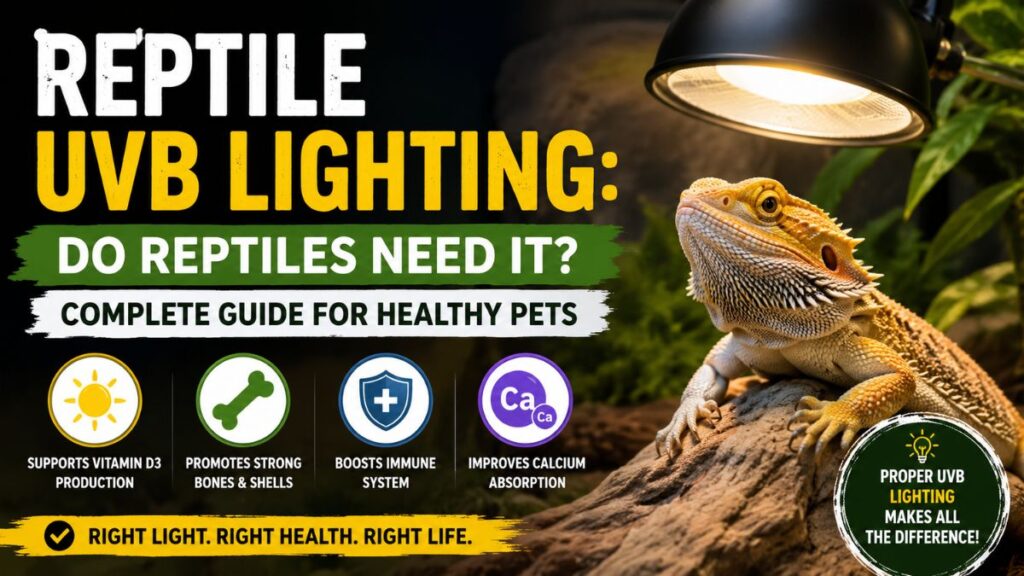
In the wild, most reptiles spend their days in open sunlight. That sunlight contains ultraviolet B (UVB) rays, and when those rays hit a reptile’s skin, the body begins producing vitamin D3.
Why should you care? Because vitamin D3 is what lets your pet absorb calcium from food. Without it, even a perfect diet of gut-loaded insects and fresh greens can’t build or maintain strong bones. The calcium simply doesn’t get used.
Think of UVB as the key that unlocks calcium. Your reptile can have a full pantry, but without that key, the door stays shut.
Why a Heat Lamp Isn’t Enough
This is the most common mix-up new keepers make. A basking bulb gives off heat and visible light, but most of them produce little to no UVB. Your reptile might look warm, bright, and cozy while still going without the one thing it needs to process calcium.
Here’s a quick way to keep the three straight:
- Heat helps your reptile digest food and regulate body temperature
- UVA influences behavior, appetite, and activity levels
- UVB drives vitamin D3 production and calcium absorption
A healthy habitat usually needs all three working together.
Do All Reptiles Need UVB?
Short answer: most do, but not all in the same way. The deciding factor is usually how the species lives in the wild.
Reptiles That Almost Always Need UVB
Daytime sun-lovers are the group most dependent on artificial UVB indoors. This includes:
- Bearded dragons
- Green iguanas
- Chameleons
- Uromastyx
- Water dragons
- Tortoises
- Most aquatic and semi-aquatic turtles, such as red-eared sliders
If your pet basks in the open and is active during the day, assume UVB is non-negotiable.
Reptiles Where UVB Is Optional but Helpful
Some species are active at dawn, dusk, or night and spend daylight hours hidden. Leopard geckos, crested geckos, and ball pythons fall into this group. Many have lived for years without UVB, and keepers often get away without it.
But “surviving” and “thriving” aren’t the same thing. A growing body of keeper experience and veterinary research suggests that low-level UVB, paired with plenty of shade, can benefit these animals too. If you’re curious, it’s worth discussing with a reptile-savvy vet.
When You’re Not Sure
Don’t guess. Look up your exact species, not just the general type. A quick check of the animal’s natural habitat, daily activity pattern, and sun exposure tells you a lot. When in doubt, a low, well-managed UVB setup with shaded retreat areas is generally safer than none at all.
Reptile UVB Lighting Setup: Getting the Basics Right
Owning a UVB bulb isn’t the same as using it correctly. Type, distance, timing, and replacement schedule all matter.
Choose the Right Type of Bulb
There are a few common options:
- Linear T5 High Output tubes: Widely considered the gold standard for most enclosures. They spread UVB evenly across a wide area.
- Compact or coil bulbs: Cheap and easy to find, but they tend to produce uneven UVB and can be problematic in larger tanks.
- Mercury vapor bulbs: These combine heat, light, and UVB in one fixture. They’re powerful but need a large enclosure and careful placement.
If you’re shopping for the best UVB bulb for bearded dragons, a T5 HO tube in a reflective fixture is a reliable starting point for most setups. Match the strength to your species’ needs, since a desert dweller requires more than a forest-floor species.
Placement and UVB Distance from Reptile Basking Spot
UVB fades quickly as it travels, so distance makes a big difference. Too far, and your pet gets almost nothing. Too close, and you risk overexposure.
A few ground rules:
- Follow the manufacturer’s recommended UVB distance from the reptile basking spot, since it varies by bulb and fixture
- Remember that mesh lids can block a noticeable share of UVB, so mount the light inside the enclosure when possible
- Never place the bulb behind glass or plastic, which filters UVB out
- Position it so your reptile can’t sit directly against the bulb
A UV Index (UVI) meter is the most accurate way to check your actual output, and it beats guessing every time.
How Long Should UVB Be On for Reptiles?
Most daytime species do well with about 10 to 12 hours of light per day, mimicking a natural day-night cycle. Put the light on a timer so it stays consistent. Reptiles thrive on routine, and a steady schedule also helps with sleep, appetite, and breeding cycles.
Turn the lights off at night. Your pet needs real darkness to rest.
Give Your Reptile a Choice
UVB should never fill every corner of the tank. In nature, reptiles move between sun and shade to regulate how much exposure they get. Build a gradient: a bright basking zone with UVB, a middle area with lower levels, and a shaded retreat where they can hide.
This simple design lets your pet self-regulate, which is exactly how they’d behave outdoors.
Signs of UVB Deficiency in Reptiles
UVB problems rarely announce themselves loudly. The damage builds slowly, which is why knowing the early signs is so valuable.
Early Warning Signs
Watch for these changes:
- Lethargy or sudden loss of energy
- Reduced appetite
- Tremors or twitching in the legs or toes
- Difficulty climbing or walking normally
- Soft or rubbery jaw
- Swollen limbs
These can point toward metabolic bone disease (MBD), a serious and sometimes irreversible condition caused by calcium deficiency. In advanced cases, you may see bent limbs, a curved spine, or fractures from minor movements.
What to Do If You Notice Them
Don’t wait and hope it passes. Take these steps:
- Check your UVB bulb’s age and output right away
- Review the distance, placement, and whether anything is blocking the light
- Book an appointment with an exotic or reptile veterinarian
- Avoid supplementing calcium on your own in large amounts without guidance
Caught early, many reptiles recover well with corrected lighting and veterinary support.
Common UVB Mistakes Keepers Make
Even experienced owners slip up here. Check your own setup against this list:
- Waiting for the bulb to burn out. UVB output fades long before a bulb stops glowing. Most tubes need replacing every 6 to 12 months, depending on the brand and type.
- Relying on window sunlight. Glass blocks UVB, so a sunny windowsill won’t help.
- Skipping the shade. Constant exposure can stress your pet.
- Using the wrong strength. Too weak causes deficiency, and too strong can irritate the eyes and skin.
- Ignoring enclosure size. Taller tanks may need stronger bulbs because of the extra distance.
Mark your replacement date on a calendar the day you install a new bulb. It takes ten seconds and could save your pet’s health.
Take the Guesswork Out of Your Setup
Every enclosure is different. Height, mesh type, fixture style, and species all change the numbers. If you’d rather not do the math by hand, the Reptile UVB Lighting Calculator can help you work out a setup that fits your pet and your tank.
Use it as a starting point, then confirm with a UV Index meter and your vet’s guidance. Small adjustments often make a bigger difference than buying a new bulb.
Frequently Asked Questions
Can my reptile get enough UVB from a sunny window?
No. Standard window glass filters out most UVB rays, so your pet would get warmth but very little vitamin D3 benefit. Supervised time outdoors in natural sunlight, with shade and a secure enclosure, is a better supplement.
How often should I replace a UVB bulb?
Most need replacing every 6 to 12 months, even if they still light up. The visible glow lasts much longer than the useful UVB output. Check your bulb’s manufacturer guidance for the specific timeline.
Can too much UVB harm my reptile?
Yes. Overexposure can cause eye irritation, skin damage, and stress. That’s why distance, strength, and a shaded retreat all matter.
Do baby reptiles need more UVB?
Growing reptiles build bone quickly, so consistent, correct UVB is especially important during early life. Rather than increasing intensity, focus on getting placement and duration right.
Conclusion
UVB isn’t a luxury add-on. For most reptiles, it’s a foundation of long-term health, helping them absorb calcium, stay active, and grow strong. The best part is that fixing your setup is usually quick and affordable compared with treating bone disease later.